

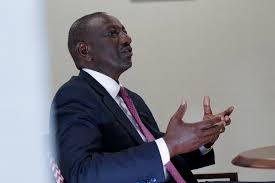
A coalition of Kenyan civil society organisations has formally urged the International Monetary Fund (IMF) to place governance conditions on any future financial support to Kenya, alleging that the government of President William Ruto is exacerbating poverty through mismanaged public finances and rising debt. Reuters+1
The briefing, submitted at the IMF-World Bank annual meetings in Washington D.C., argues that Kenya’s borrowing and spending decisions have increasingly served political patronage networks rather than development priorities. “Borrowing and spending decisions are used to sustain political patronage networks rather than advance development priorities,” the groups wrote. Reuters+1
The activists, operating under the umbrella organisation Okoa Uchumi (“Rescue the Economy”), highlighted:
-
A surge in public debt despite promises of economic stability.
-
New tax levies and contributions that burden low- and middle-income Kenyans.
-
Persistent poverty, inequality and a drop in real incomes. Reuters
IMF officials visited Nairobi between September 25 and October 9, 2025, conducting a governance diagnostic and meeting with Kenyan authorities. IMF+1 While the IMF has not publicly endorsed the activists’ call, the timing signals increased global scrutiny of Kenya’s fiscal strategy.
📊 Why This Matters
Kenya is at a critical juncture: while it has avoided a current default, the combination of high debt, rising taxes, and weak growth could erode investor confidence. The activists warn of a “multi-dimensional risk system” where macro-economic fragility, governance decay and social instability reinforce each other. Reuters
For the IMF, this poses a challenge. Future programmes with Kenya may need to go beyond traditional fiscal & monetary conditions and incorporate governance, transparency and anti-corruption benchmarks. If not, experts warn the cycle of borrowing without structural reform may persist.
🧭 What’s Next
-
The Kenyan government will likely engage in deeper talks with the IMF over a new programme, with governance being a key agenda item.
-
Civil society groups may push for public debt audits, open contracting, and more transparent allocations before supporting further lending.
-
If governance concerns are not addressed, Kenya could face higher borrowing costs, weaker growth, or stricter conditions from international lenders.