

A Peace Deal Wrapped in a Business Deal
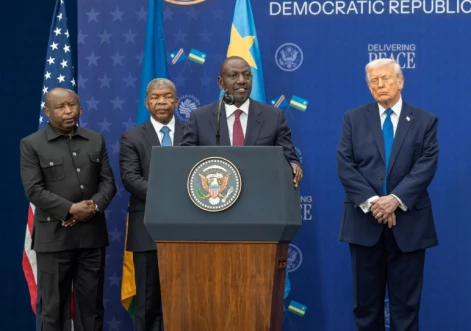
When Rwandan President Paul Kagame and DRC President Félix Tshisekedi signed the Washington Accord in December 2025, the headlines celebrated a “historic” peace breakthrough to end decades of war in Eastern Congo. The images of the ceremony, hosted by President Donald Trump and witnessed by regional leaders like Kenya’s William Ruto, projected a narrative of altruistic statesmanship. But seasoned observers noted a crucial, less-publicized element of the deal: a dense framework of bilateral economic agreements granting American companies preferential access to the region’s vast reserves of cobalt, lithium, and rare earth elements.
This was not merely a peace treaty; it was a strategic masterstroke in the new Great Game. The Washington Accord represents a clear-eyed fusion of high diplomacy and hard-nosed economic interest. For the United States, brokering peace was both a humanitarian goal and a direct pathway to secure the critical minerals essential for its technological and military supremacy in the 21st century, reducing dependence on Chinese-dominated supply chains. For the leaders of Rwanda and the DRC, the promise of American investment and a U.S.-backed security framework offered a way out of a debilitating conflict and a chance to monetize their geological wealth. The deal, therefore, must be read on two levels: as a peace accord for Africa, and as a pivotal move in the U.S.-China rivalry for global influence.
The Stakes: Why Eastern Congo Matters to Washington and Beijing
To understand the urgency behind the U.S. mediation, one must grasp the staggering mineral wealth of the DRC and its role in the global economy.
The “Saudi Arabia of Cobalt”: The DRC supplies over 70% of the world’s cobalt, a metal absolutely critical for manufacturing the rechargeable batteries that power electric vehicles (EVs), smartphones, and laptops. There is no global energy transition away from fossil fuels without Congolese cobalt.
A Rare Earths Frontier: The region is also believed to hold significant deposits of rare earth elements, a group of 17 metals vital for producing everything from advanced military hardware (jet engines, missile guidance systems) to consumer electronics and renewable energy technology.
The Chinese Dominance: For years, China has secured a commanding position in this supply chain. Through massive investments, state-owned companies, and often opaque contracts, Chinese firms control a majority of the DRC’s cobalt mining and processing. This gives Beijing immense leverage over the future of the global auto and tech industries.
For U.S. strategists, this dependency represents a critical national security vulnerability. The Washington Accord is a direct attempt to break this Chinese monopoly and establish a secure, friendly alternative for American industry.
The Architecture of the Deal: Security for Access
The brilliance of the Washington Accord is how it links the resolution of the security crisis to the economic payoff. The deal’s architecture creates a mutually reinforcing loop.
The Security Guarantee: The U.S., by brokering a deal that commits Rwanda to withdraw support for the M23 rebels and the DRC to disarm hostile militias, offers a promise of stability. For mining corporations, political risk is the single greatest barrier to investment. A U.S.-guaranteed peace framework dramatically lowers that risk, making multi-billion-dollar, long-term investments in Congolese mines suddenly viable and bankable.
The Economic Payoff: In return for this security umbrella and diplomatic effort, the U.S. secured what The Wall Street Journal reported as “preferential access” for American companies to the region’s mineral resources. This likely involves streamlined licensing, investment protection agreements, and support for building the infrastructure (rails, roads, processing plants) needed to extract and export these materials. The “Joint Prosperity” pillar of the accord is the vehicle for this.
A Win-Win-Win? The theory is that everyone benefits. The U.S. gains a secure mineral supply. Rwanda and the DRC gain investment, jobs, and infrastructure. The people of Eastern Congo gain peace. As President Ruto noted in his speech, true peace requires a “tangible stake in stability”—and here, that stake is direct economic partnership with the world’s largest economy.
The Shadow Over the Sun: Old Risks and New Dependencies
However, this grand bargain is fraught with historical echoes and fresh perils. Critics warn that the deal risks replacing one form of external dependency with another.
The “Resource Curse” Revisited: The DRC’s history is a tragic lesson in how mineral wealth fuels conflict rather than development—a phenomenon known as the resource curse. The new influx of U.S. investment must be managed with extreme transparency and robust local benefit agreements to avoid enriching elites while leaving communities in poverty, which would simply plant the seeds for future conflict.
Sovereignty for Sale? There is a delicate line between “economic partnership” and “economic imperialism.” The deal must ensure that the DRC and Rwanda are authentic partners in building their own industrial capacity (like mineral processing plants), not just exporters of raw ores. If the Accord merely creates a new, U.S.-aligned extractive corridor, it will have failed to deliver transformative development.
The China Factor: Beijing will not cede its dominant position quietly. We can expect Chinese firms to offer counter-deals, increase investments, and leverage their deep existing networks. This could lead to a new, tense competition for influence within the DRC, played out between U.S. and Chinese mining interests.
Conclusion: A New Chapter or a New Equation?
The Washington Accord is undeniably a geopolitical landmark. It showcases a modern U.S. foreign policy that explicitly ties diplomatic leverage to economic security. President Trump and his team have achieved what years of U.N. peacekeeping could not: a framework that addresses both the symptoms (violence) and a root cause (the illicit economy of conflict minerals) of the war, while advancing core American interests.
President Ruto’s praise for Trump’s “decisive leadership” was, in this light, an acknowledgment of a deal that serves multiple masters. For the people of the Great Lakes, the hope is that this geopolitical calculation translates into real peace and equitable prosperity. The Accord has rewritten the regional equation. Whether it writes a happier story for Congo depends entirely on the integrity of its implementation. The peace was signed in Washington, but its legacy will be determined in the mines and villages of Eastern DRC.