

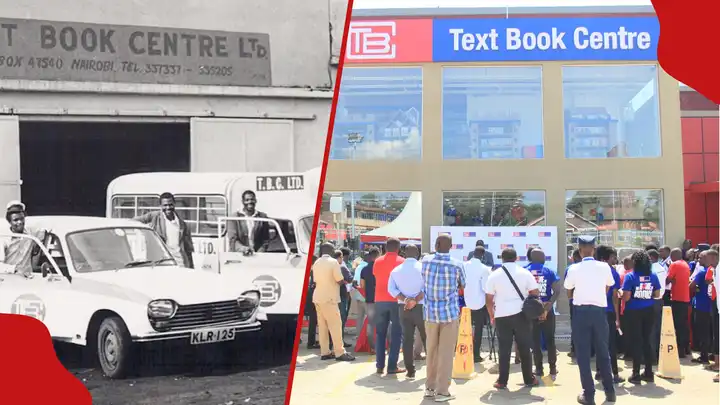
Many businesses start—few survive decades. Even fewer thrive across generations. Text Book Centre (TBC) didn’t just survive; it dominated, turning one modest bookstore into a KSh 6 billion revenue giant.
But how? Beyond the inspiring story lies a deliberate, repeatable playbook of strategic choices. This deep dive uncovers the 6 core strategies that fueled TBC’s remarkable growth—a blueprint any Kenyan entrepreneur or business leader can learn from.
1. Vertical Integration: Owning the Entire Value Chain
The Move:
Instead of just selling books, TBC moved upstream into distribution and publishing.
How It Worked:
Became a Master Distributor: Secured exclusive rights to distribute major international publishers (e.g., Oxford, Cambridge, Pearson) in East Africa.
Launched In-House Publishing: Started TBC Publishing, creating textbooks, revision guides, and fiction tailored to the Kenyan and East African curricula.
Controlled Printing & Supply: Partnered with local printers, ensuring quality and reducing dependency on imports.
The Impact:
Higher Margins: Profits from publishing + distribution + retail.
Market Control: Could influence what was available in the market.
Barrier to Entry: Made it difficult for new competitors to access key publishing brands.
2. Customer-Centric Diversification: Beyond “Just Books”
The Philosophy:
“We don’t sell books; we sell solutions for learning, creativity, and organization.”
The Expansion Timeline:
1970s–80s: Added stationery, art supplies, and office products.
1990s: Introduced educational toys, globes, maps, and library furniture.
2000s: Launched tech products—calculators, e-readers, educational software.
2010s: Added corporate gifting, branded merchandise, and café spaces inside stores.
Why It Worked:
One-Stop Shop: Schools, businesses, and students could get everything in one place.
Cross-Selling: A parent buying a textbook would also buy stationery, a school bag, and a calculator.
Risk Mitigation: When textbook sales slowed during holidays, stationery and office supplies kept revenue flowing.
3. Strategic Location & Store Experience Design
Location Strategy:
Anchor Institutions: Opened stores near schools, universities, and government offices (e.g., near University of Nairobi, Kenya Institute of Curriculum Development).
High-Traffic Urban Centers: Flagship stores in Nairobi CBD, Westgate, Garden City, and major county headquarters.
Store Formats:
Large Flagship Stores (experience centers)
Medium Community Stores (neighborhood needs)
Compact Kiosks (high-demand items only)
Experience Design:
Reading Corners & Seating Areas: Encouraged browsing and prolonged visits.
Author Events & Book Signings: Built community and buzz.
Knowledgeable Staff: Employees trained to recommend books, not just scan them.
Clean, Organized Layouts: Easy navigation by category, age, or subject.
4. Early & Strategic Digital Transformation
Phase 1: Digitizing Operations (Early 2000s)
Implemented ERP systems for inventory, sales, and supply chain management.
Used data analytics to track bestselling titles, seasonal trends, and regional preferences.
Phase 2: E-Commerce & Online Presence (2010s)
Launched one of Kenya’s first book e-commerce platforms.
Optimized for mobile browsing and payment (M-Pesa integration).
Social Media Engagement: Active on Facebook, Instagram, and X for new releases, promotions, and literary conversations.
Phase 3: Digital Content & Services (2020s)
Partnered with e-learning platforms to offer digital textbooks and subscriptions.
Developed TBC Mobile App for personalized recommendations and loyalty rewards.
Launched virtual author talks and online book clubs during COVID-19.
5. Building Institutional & B2B Partnerships
The B2B Powerhouse:
School Supply Contracts: Long-term agreements with thousands of public and private schools across Kenya.
Government Tenders: Supplier to ministries, libraries, and training institutes.
Corporate Accounts: Office supplies and corporate gifting for banks, NGOs, and multinationals.
University Partnerships: Official bookstore and supplier for multiple universities and colleges.
Relationship Management:
Dedicated B2B Teams for large accounts.
Customized Catalogs & Pricing for institutional buyers.
Reliable Delivery Logistics across the country.
6. Family Business Professionalization & Succession Planning
The Challenge:
Many family businesses fail by the third generation due to internal conflict, lack of innovation, or poor succession.
TBC’s Approach:
Clear Governance: Established a family council and professional board with independent directors.
Talent Mix: Family members in strategic roles alongside hired professional executives (CEO, CFO, CMO).
Next-Gen Preparation: Younger family members worked outside the business first, then joined with clear roles and expectations.
Values Preservation: Maintained founder’s ethos (trust, quality, community) while embracing modern management practices.
The Combined Effect: A Virtuous Growth Cycle
These strategies didn’t operate in isolation—they created a self-reinforcing growth cycle:
Vertical Integration → Lower costs, higher control
Diversification → More customers, stable revenue
Great Locations & Experience → Brand loyalty, repeat business
Digital Transformation → Efficiency, new markets
B2B Partnerships → Large, predictable contracts
Professionalization → Sustainable governance, innovation
Key Takeaways for Kenyan Businesses:
Don’t Just Sell—Solve: TBC sold “education solutions,” not just products.
Control Your Supply Chain: Where possible, own or partner deeply upstream.
Diversify Around Your Core: Expand into related categories your customers already need.
Embrace Tech Early: Use data and digital tools to stay ahead.
Build Institutional Bridges: B2B contracts provide stability in volatile markets.
Professionalize Family Business: Combine family values with professional management.
Conclusion: A Playbook Rooted in Kenyan Reality
Text Book Centre’s playbook works because it’s uniquely adapted to Kenya’s context—understanding the importance of education, the value of trust, the need for adaptability, and the power of relationships.
Their KSh 6 billion revenue isn’t magic—it’s the result of six deliberate, well-executed strategies that any serious entrepreneur can study, adapt, and apply.
As one executive noted: “We didn’t follow a global manual. We wrote our own—page by page, year by year.”