

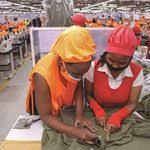
The global fashion industry is currently navigating a period of “The Great Re-alignment.” For decades, the supply chain relied on a few massive hubs in Asia. However, 2026 has solidified a shift toward geopolitically safe and environmentally sustainable alternatives. Kenya has stepped into this vacuum not just as a participant, but as a leader.
1. The AGOA 2026 Lifeline: Stability in an Uncertain World
The single biggest driver of Kenya’s dominance in 2026 is the renewal of the African Growth and Opportunity Act (AGOA).
After a period of anxiety following the 2025 expiration, the U.S. House of Representatives moved decisively in January 2026 to extend duty-free access for African apparel until at least 2028. For Kenyan manufacturers, this is a game-changer. It allows them to bypass the 15–42% tariffs that Asian competitors must absorb, making “Made in Kenya” garments significantly more cost-competitive on the shelves of New York and Los Angeles.
Key Takeaway: The extension has restored investor confidence, leading to a surge in multi-year sourcing contracts from brands like PVH (Calvin Klein, Tommy Hilfiger) and Levi Strauss.
2. From “Cut-and-Sew” to Vertical Integration
Historically, African manufacturing was criticized for being “thin”—importing fabric from China, sewing it in Africa, and shipping it out. In 2026, Kenya is breaking this cycle through vertical integration.
The modernization of the Rivatex East Africa facility and the resurgence of cotton farming in 24 counties mean that Kenya is beginning to produce its own yarn and fabric. By growing the cotton and processing it locally, Kenya is reducing lead times and insulating its supply chain from global shipping disruptions.
3. The Special Economic Zone (SEZ) Revolution
Kenya’s industrial landscape has been transformed by the “SEZ model.” New hubs like the Vipingo Special Economic Zone on the coast and the Athi River EPZ are providing “plug-and-play” infrastructure for global brands.
These zones offer:
Tax Incentives: Zero-rated VAT and corporate tax holidays.
Logistics Efficiency: Direct linkage to the Standard Gauge Railway (SGR) and the Port of Mombasa.
World-Class Compliance: Factories built to meet stringent International Labour Organization (ILO) standards, a non-negotiable requirement for modern brands.
4. The Green Edge: 90% Renewable Energy
In 2026, a brand’s carbon footprint is as important as its profit margin. Kenya has a secret weapon that Southeast Asian hubs can’t match: Geothermal and Wind Energy.
Over 90% of Kenya’s national grid is powered by renewable sources. For global brands under pressure to meet “Net Zero” targets by 2030, sourcing from a Kenyan factory means their Scope 3 emissions are automatically lower than sourcing from coal-heavy regions.
5. Navigating the “Mitumba” Balance
One of the most interesting developments in early 2026 is President William Ruto’s “Market Balance” policy regarding Mitumba (second-hand clothing).
Unlike some regional neighbors who banned second-hand imports to protect local industry, Kenya has opted for a dual-track approach. This pragmatism prevents trade friction with the U.S. (the largest exporter of used clothing) while simultaneously incentivizing local manufacturers to focus on the high-value export market. This “middle path” has kept trade relations smooth and predictable.
The Verdict: A Strategic Hub for 2026 and Beyond
Kenya’s emergence in the redrawn apparel supply chain is not an accident. It is the result of strategic trade policy, a commitment to green energy, and the massive scaling of industrial parks.