

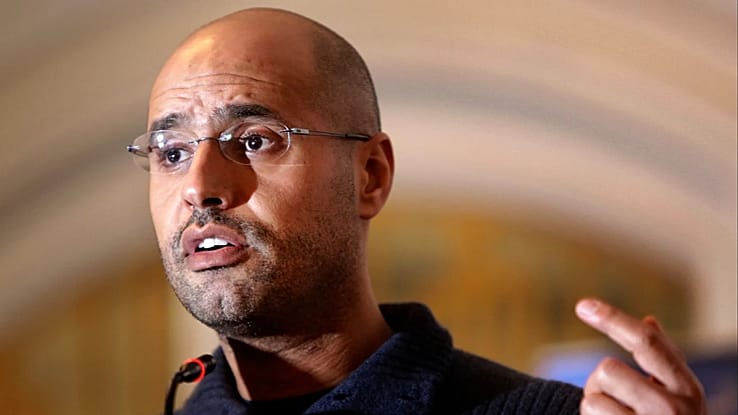
1. The “Two-Man” Solution
For years, Libya has been a three-way tug-of-war between the East (Haftar), the West (Dbeibeh), and the “Green” nostalgic base (Gadhafi).
The Strategic Obstacle: Seif al-Islam was the ultimate spoiler. His presence on a presidential ballot would have likely siphoned off enough votes to prevent either of the two giants from winning a clean mandate.
The Paris Accord: Reports from the Paris meeting suggest that a deal was being carved out to share power and oil revenues between the Haftar and Dbeibeh families. With Seif al-Islam now “removed from the board,” the path to a binary power-sharing agreement is officially clear of its most unpredictable variable.
2. The Professionalism of the Hit
Experts are pointing to the surgical nature of the assassination as proof of state-level or high-tier mercenary involvement.
The “Four Operatives”: The assassins didn’t just storm the building. They remotely disabled the CCTV network and moved with a level of coordination rarely seen in local militia skirmishes.
The Silence of the ICC: For the International Criminal Court, the “last person who had an outstanding arrest warrant for the 2011 violations” is now gone. While human rights groups like Libyan Lawyers for Justice have lamented the loss of a trial, many political actors in Tripoli and Benghazi are likely breathing a sigh of relief that Seif’s “secrets” will now remain buried with him.
3. The Martyrdom Effect: A New Green Insurgency?
While the political elite may see this as a “simplification,” the streets of the South may see it as a declaration of war.
The Green Awakening: Loyalist groups are already framing Seif al-Islam as a martyr for national unity. If the Haftar-Dbeibeh alliance fails to provide immediate stability, the “Green” movement—now radicalized by the murder of their leader—could pivot from political participation to armed insurgency.
The Foreign Fingerprints: With Donald Trump’s adviser, Massad Boulos, having been linked to the Paris mediation efforts, the “foreign interference” narrative is at an all-time high, potentially fueling anti-Western sentiment across Libya’s tribal heartlands.