

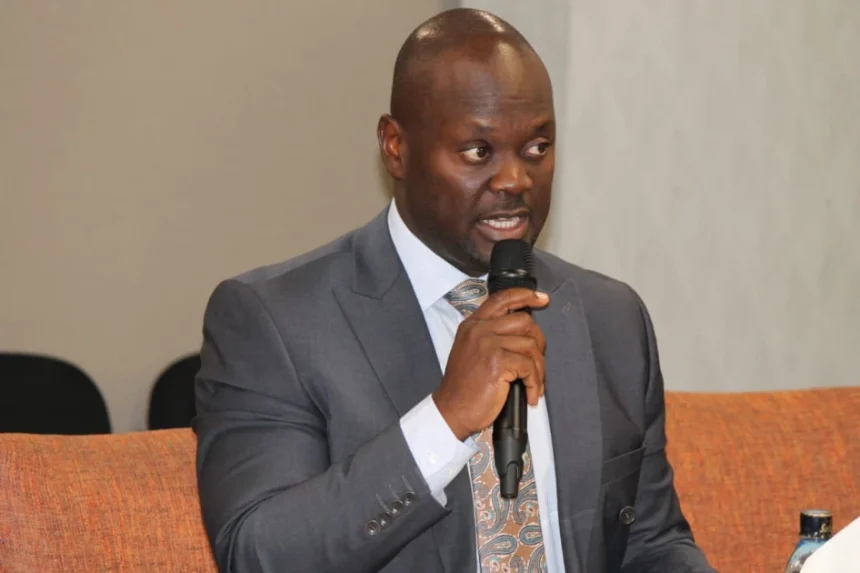
In the theater of Kenyan politics, the line between “parliamentary privilege” and “parliamentary punishment” is often razor-thin. On Tuesday, February 17, 2026, that line was crossed when Speaker Moses Wetangula invoked the heavy hand of the House rules to indefinitely suspend Kitutu Chache South MP Anthony Kibagendi.
The suspension wasn’t triggered by a fistfight on the floor or a snatched mace. Instead, it was sparked by a series of explosive words spoken in a television studio—words that have ignited a fierce debate about whether the National Assembly is becoming too thin-skinned to handle internal criticism.
1. The “Appendage” Allegation: What Was Actually Said?
The catalyst for this legislative storm was an interview on Citizen TV’s Daybreak. During the session, Kibagendi did not hold back, alleging that the 13th Parliament had been “auctioned” and stripped of its independence.
Specifically, he accused the leadership—Speaker Wetangula and Deputy Speaker Gladys Boss Shollei—of turning the legislature into an “appendage of State House.” Kibagendi argued that the House had become a “rubber stamp” for the Executive, failing in its constitutional mandate to provide checks and balances.
2. The Anatomy of a Suspension: The Standing Orders
Under the National Assembly Standing Orders, a Member can be disciplined for “gross disorderly conduct.” While usually applied to behavior within the chambers, the Speaker ruled that Kibagendi’s public remarks brought the entire institution into disrepute.
The terms of the suspension are absolute:
No Entry: Kibagendi is barred from the Parliament precincts (the main buildings, gardens, and offices).
No Voice: He is excluded from all plenary sittings and committee meetings.
No Resources: Access to his parliamentary office and staff facilities is effectively frozen.
The “Apology” Clause: Unlike a fixed-term suspension (e.g., 5 or 28 days), Kibagendi’s return is conditional. He must provide a “properly worded apology” to be vetted by the Clerk and the Speaker before he can be reinstated.
3. A History of Conflict: The Road to February 17
Kibagendi’s suspension doesn’t exist in a vacuum. He has been a consistent thorn in the side of the government throughout early 2026:
The Health Committee Clash: In October 2025, he was famously marched out of a Health Committee meeting after a heated exchange with CS Aden Duale over the Social Health Authority (SHA).
The “One-Term” Movement: He has been a vocal proponent of the “Wantam” (one-term) narrative, suggesting that the current administration should be voted out in 2027.
Legal Pressure: His recent arrest by the DCI over an assault incident at a Java House in Kisii—which he claims was politically motivated—added to the friction between him and the state machinery.
4. The Constitutional Conundrum: Can a Speaker Gag an MP?
Legal experts are already weighing in on whether this suspension constitutes a “gag order.” Article 117 of the Constitution provides for Parliamentary Privilege, ensuring that MPs cannot be held liable for what they say inside the House.
However, Kibagendi’s remarks were made outside. This raises a critical question: Does the Speaker’s authority to maintain “decorum” extend to what a Member says on a morning talk show? By suspending a Member indefinitely for political speech, critics argue that the Speaker is effectively disenfranchising the voters of Kitutu Chache South, who are now left without a representative in the nation’s most important decision-making body.
5. What Happens to Kitutu Chache South?
For the constituents of Kitutu Chache South, the impact is immediate and tangible. While their MP remains “in the cold,” their interests in the following areas are compromised:
NG-CDF Oversight: The management and lobbying for constituency development funds often require active parliamentary presence.
Petitions and Questions: Any local grievances that were to be tabled by Kibagendi are now on hold.
National Debates: On critical upcoming bills—including the 2026/2027 Budget cycle—Kitutu Chache South has lost its primary vote.
6. The Future: Apologize or Litigate?
The ball is now in Anthony Kibagendi’s court. He faces two distinct paths:
The Path of Pragmatism: Issue the “properly worded apology,” return to the House, and continue his work within the established rules.
The Path of Principle: Challenge the suspension in the High Court. If he chooses this route, it could lead to a landmark ruling on the limits of a Speaker’s power to punish Members for their out-of-house political commentary.
Conclusion
The suspension of MP Anthony Kibagendi is more than just a political spat; it is a litmus test for the independence of the 13th Parliament. If the “appendage” allegation is true, then the suspension proves the House cannot handle the truth. If the allegation is false, the Speaker is simply protecting the dignity of a national institution.