

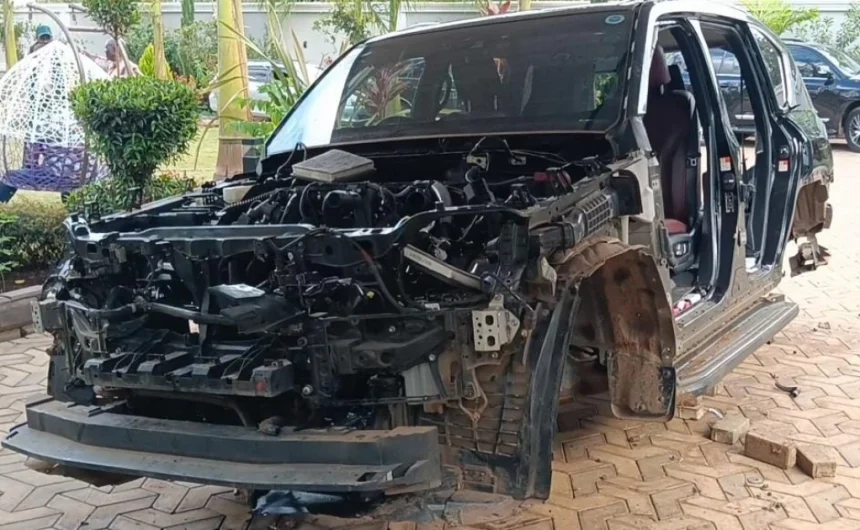
The recent news from Kiamuthambi village isn’t just another robbery report; it is a case study in the evolving sophistication of Kenyan organized crime. When a Ksh 35 million Lexus is dismantled within a four-hour window while the owners are physically present but chemically incapacitated, the conversation around residential security must change.
Here is an analysis of why this specific incident—targeting businesswoman Rose Muriuki—is a watershed moment for security in 2026.
1. The Professionalization of Theft
The “thug” of 2026 is no longer just an opportunist with a weapon. The gang that raided the Muriuki household was a 20-man specialized unit.
Mechanical Expertise: Stripping a Lexus without damaging its delicate electronic sensors requires training.
Logistical Support: They arrived in two vehicles, suggesting a pre-planned extraction route and immediate buyers waiting for the haul.
Surveillance: To know the layout of the compound and the exact location of the security guard and the master bedroom requires days, if not weeks, of pre-raid monitoring.
2. “Chemical Warfare” as a Standard Tactic
The use of an incapacitating gas to “silence” the household is the most terrifying aspect of this crime. It removes the risk of a “botched” robbery for the criminals. By ensuring the victims stay asleep until 9:00 AM, the gang buys themselves a five-hour head start before the police are even notified. This tactical shift makes traditional barking dogs or basic panic buttons obsolete.
3. The “Asset Stripping” Economy
Why didn’t they just steal the whole car?
The answer lies in the Global Supply Chain crisis of 2026. High-end spare parts for luxury brands like Lexus have become incredibly expensive and rare due to high import duties and manufacturing delays. A whole car is easy to track via GPS; a set of headlights, a spindle grille, and an ECU are virtually untraceable once they hit the black market in Nairobi or across the border.
4. The Death of the “Gated Community” Illusion
For decades, Kenyans have relied on “stone walls and a watchman” as the gold standard of safety. The Kirinyaga raid proves that these are mere speed bumps for a 20-man gang. When the watchman, Anthony Namanda, was neutralized in seconds, the compound became a private workshop for the thieves.
The Verdict: How Should Owners Respond?
This incident is a wake-up call for owners of high-value assets. Security in 2026 must be multi-layered:
Air-Quality Alarms: Smart home systems can now detect abnormal chemical concentrations in the air and trigger an external silent alarm.
Encrypted Tracking: Hidden GPS trackers should be placed inside individual high-value parts (like the engine or doors), not just the chassis.
Remote Monitoring: Security should be monitored by an off-site 24/7 command center that can dispatch “backup” the moment a guard’s check-in is missed.
As the DCI continues its manhunt, the skeletal remains of that Lexus serve as a reminder: the modern thief doesn’t want your keys—they want your components, and they have the tools to take them while you dream.