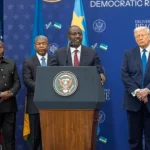


The recent diplomatic engagement between Ugandan President Yoweri Museveni and Kenya’s Foreign Affairs Cabinet Secretary Musalia Mudavadi represents a masterclass in African conflict resolution, demonstrating how mature diplomacy can transform potential crisis into opportunity for strengthened regional cooperation.
The Calm After the Storm
Just days after President Museveni’s controversial comments comparing East Africa to a “block of flats” where coastal nations shouldn’t monopolize ocean access, the diplomatic machinery of both nations swung into action. The resulting meeting between Museveni and Mudavadi wasn’t merely damage control—it was a strategic repositioning of one of East Africa’s most crucial bilateral relationships.
What made this diplomatic resolution particularly noteworthy was the willingness of both parties to address underlying concerns rather than simply papering over differences. “When brothers disagree, they don’t stop being brothers,” Mudavadi noted in his post-meeting comments, capturing the familial language that often characterizes successful African diplomacy.
Beyond the Headlines: Understanding the Core Issues
While media coverage focused on Museveni’s provocative “the ocean belongs to me” statement, seasoned Africa watchers recognized deeper currents at play. Uganda’s rapid economic growth and expanding middle class have created new pressures for reliable, cost-effective trade routes. With projections showing Uganda’s import-export volumes doubling in the next decade, access to maritime transportation isn’t merely convenient—it’s economically existential.
Kenya’s diplomatic response demonstrated sophisticated understanding of these underlying pressures. Rather than reacting defensively to Museveni’s rhetoric, Mudavadi’s team emphasized Kenya’s commitment to being a “reliable partner in Uganda’s growth story.” This forward-looking approach reframed the discussion from historical grievances to future opportunities.
The Infrastructure Dimension
Critical to understanding the resolution is recognizing the massive infrastructure investments at stake. The Northern Corridor Integration Projects, linking Mombasa to Kampala and beyond, represent billions of dollars in joint investment. Both nations understood that rhetorical sparring couldn’t be allowed to jeopardize these concrete economic interests.
The meeting reportedly included detailed discussions about ongoing projects, including the Standard Gauge Railway extension into Uganda and pipeline developments. By anchoring the conversation in specific, shared infrastructure goals, both parties created natural alignment that transcended the ocean access debate.
The Regional Context
This diplomatic resolution carries significance far beyond the Uganda-Kenya border. As the East African Community expands—now including the Democratic Republic of Congo—establishing predictable protocols for managing disputes becomes increasingly crucial. The Museveni-Mudavadi engagement sets a positive precedent for how larger EAC members can model constructive conflict resolution.
Other landlocked EAC members, particularly Rwanda and Burundi, watched these developments closely. The resolution’s emphasis on legal frameworks and mutual benefit provides reassurance that their access rights will be respected even during periods of political tension.
The Economic Imperatives
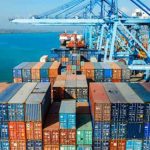
Trade statistics reveal why both nations had strong incentives for rapid resolution. Kenya remains one of Uganda’s largest trading partners, with bilateral trade exceeding $1 billion annually. Ugandan manufacturers depend on Kenyan ports for importing raw materials and exporting finished goods, while Kenyan businesses count Ugandan consumers as crucial customers.
This economic interdependence created natural pressure for resolution. As one trade analyst noted, “When business relationships run deep enough, political differences become speed bumps rather than roadblocks.”
Lessons in Diplomatic Maturity
The resolution process offered several lessons in effective diplomacy:
First, both parties allowed for face-saving narratives. Uganda could claim it had asserted its rights as a landlocked nation, while Kenya could position itself as a reasonable regional leader respecting international law.
Second, the engagement occurred at multiple levels simultaneously. While Museveni and Mudavadi met at the presidential level, technical teams continued working on implementation details, ensuring that the diplomatic breakthrough would translate into practical outcomes.
Third, both nations leveraged existing regional frameworks, particularly EAC protocols and UNCLOS provisions, providing neutral ground for resolving what could have become a purely bilateral dispute.
The Human Element
Behind the formal diplomacy, personal relationships played a crucial role. Museveni and Mudavadi are both seasoned political operators with deep understanding of East African politics. Their ability to separate political posturing from substantive negotiation created space for genuine problem-solving.
The role of technical experts also proved vital. Career diplomats and trade officials from both nations provided the factual foundation that enabled political leaders to move beyond rhetoric to practical solutions.
Looking Forward
The successful resolution of this tension creates positive momentum for addressing other regional challenges. Upcoming discussions about resource sharing in Lake Victoria, cross-border energy projects, and coordinated security efforts may benefit from the trust built during this process.
For the East African Community specifically, this episode demonstrates the resilience of regional integration efforts. Rather than weakening the bloc, working through this dispute has arguably strengthened institutional capacity for conflict resolution.
A Model for Africa
The Museveni-Mudavadi engagement offers a template for other African nations managing similar tensions. As continental trade increases under the African Continental Free Trade Area, similar disputes are inevitable. How nations manage them will determine whether economic integration delivers on its promise.
The ultimate success of this diplomatic resolution will be measured not by the headlines it generated, but by the seamless movement of goods, the continued infrastructure cooperation, and the strengthened trust between two nations whose futures remain inextricably linked. In this respect, the calm waters of diplomatic resolution may prove more powerful than the turbulent waves of political rhetoric.