

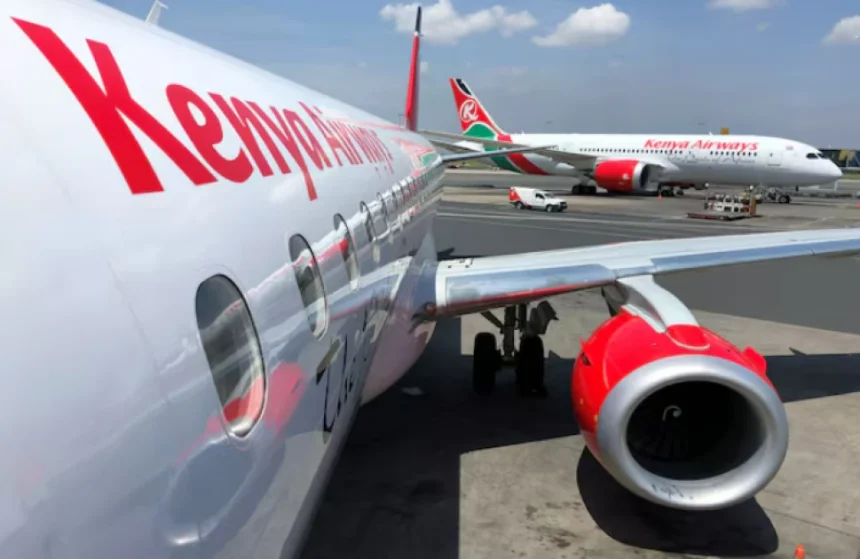
The wheels of East Africa’s largest aviation hub are finally spinning again. On the afternoon of Tuesday, February 17, 2026, a collective sigh of relief echoed through the terminals of Jomo Kenyatta International Airport (JKIA) as the Kenya Aviation Workers Union (KAWU) officially called off a strike that had paralyzed the nation’s airspace for nearly two days.
For Kenya Airways (KQ), the “Pride of Africa,” the end of the strike marks the beginning of a massive logistical recovery. With thousands of passengers displaced and a global schedule in disarray, the airline is now navigating the “post-strike hangover.”
The Breaking Point: Why JKIA Went Silent
The industrial action, which began on Monday, February 16, wasn’t a sudden flare-up. It was the result of a seven-day notice issued by KAWU to the Kenya Civil Aviation Authority (KCAA). The core of the dispute? A decade of stagnant wages and unresolved labor grievances dating back to 2015.
The strike hit the most sensitive part of the airport: Air Traffic Control (ATC) and ground handling. Without these “invisible” workers, planes were stuck on the tarmac, and incoming flights from London, Dubai, and Johannesburg were forced into holding patterns or diverted to neighboring hubs like Entebbe and Addis Ababa.
Anatomy of the Deal: The Return-to-Work Formula
The breakthrough didn’t happen by accident. It took an “urgent conciliatory meeting” chaired by Transport Cabinet Secretary Davis Chirchir, alongside the Ministry of Labour and the Kenya Airports Authority (KAA).
The key pillars of the agreement include:
Immediate Resumption: All workers returned to their posts by late Tuesday afternoon.
Grade Review: A commitment to reassess staff representation for grades 4 and 5—a major sticking point for the union.
Permanent Terms: A roadmap to transition temporary staff into permanent and pensionable positions.
Structured Conciliation: The Ministry of Labour will now lead a long-term process to finalize the Collective Bargaining Agreement (CBA) that has been stalled for years.
The “KQ Recovery” Plan: 1,500 Words of Logistics
Kenya Airways has confirmed that while the strike is over, normalcy will take approximately 24 hours to fully restore. If you are one of the thousands holding a ticket, here is the airline’s internal strategy to get you back in the air:
1. The 4-Hour “Ripple Effect”
Even though the strike has ended, departures at JKIA were still seeing delays of up to four hours on Tuesday evening. This is due to “aircraft rotation.” A plane that was supposed to fly to Amsterdam on Monday was stuck in Nairobi, meaning it wasn’t in Amsterdam to fly back. KQ is currently reshuffling its entire global fleet to plug these gaps.
2. Prioritizing Connectivity
The airline is prioritizing long-haul international flights to prevent further disruptions to global connections. Passengers on domestic routes (Nairobi to Mombasa or Kisumu) may see more frequent “consolidations,” where two half-empty flights are combined into one.
3. The Digital Command Center
KQ has urged all passengers to use the Kenya Airways Mobile App for real-time updates. The airline’s social media teams are operating 24/7 to handle rebooking requests, though they warn that wait times on phone lines remain high.
The Economic Cost of Silence
In the aviation world, time isn’t just money; it’s fuel, parking fees, hotel vouchers for stranded guests, and lost cargo.
Tourism: With the strike occurring in mid-February, a key window for international visitors, the disruption threatened Kenya’s reputation as a reliable destination. Tourism CS Rebecca Miano emphasized that seamless air connectivity is non-negotiable for the country’s economic health.
Exports: JKIA is a primary exit point for Kenya’s multi-billion shilling flower and vegetable export industry. A 48-hour delay in “perishables” can result in millions of dollars in losses for farmers in the Rift Valley.
Safety and the “Pilot’s Perspective”
Throughout the strike, the Kenya Airline Pilots Association (KALPA) remained a vocal advocate for a quick resolution. Their concern wasn’t just logistical—it was about safety. Captain Murithi Nyagah, KALPA’s CEO, noted that “operational pressure must never override safety standards.”
The union raised concerns about crew fatigue caused by extended ground holding times and the stress of managing frustrated passengers. As operations resume, the focus shifts to ensuring that every flight crew is well-rested and every aircraft is fully inspected after the brief hiatus.
Looking Ahead: A Fragile Peace?
While the planes are flying again, the peace at JKIA is fragile. The “Return-to-Work Formula” is essentially a promise of future negotiations. For the aviation sector to remain stable in 2026, the government must follow through on the pay reviews and contract conversions promised to the KAWU members.