

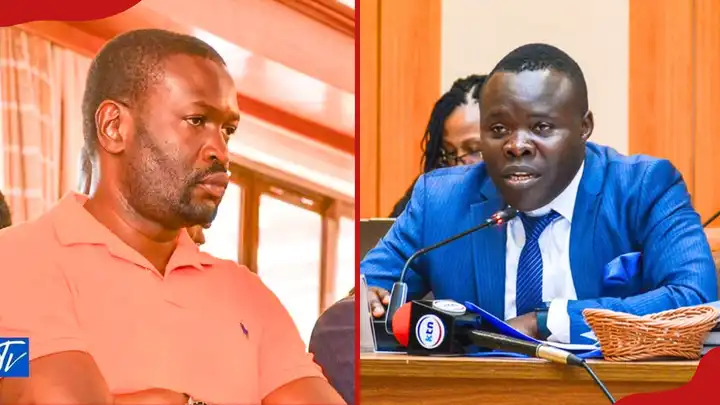
The motion by Eddy Oketch seeking to de-whip and expel Edwin Sifuna has opened a new chapter in the Orange Democratic Movement’s internal politics — one that places the party’s constitution and disciplinary mechanisms under intense scrutiny.
Beyond the political drama, the move raises a critical question: how does ODM handle alleged misconduct by its top officials?
Understanding the Motion Against Sifuna
Senator Oketch’s motion accuses the ODM Secretary General of conduct allegedly inconsistent with party values and discipline. While the allegations have not yet been exhaustively debated in public, the proposed penalties — de-whipping and expulsion — represent the harshest sanctions available within party structures.
De-whipping would effectively strip Sifuna of ODM’s formal backing in parliamentary matters, while expulsion would sever his membership altogether. Such actions are rare and signal a breakdown of trust within the party’s leadership.
What the ODM Constitution Says
ODM’s constitution outlines clear procedures for disciplining members, including senior officials. Disciplinary action is typically handled through internal organs such as the National Executive Council (NEC) and designated disciplinary committees.
The rules emphasize due process, including:
Notification of allegations
Opportunity for the accused to respond
Investigation and hearings
Recommendations before final decisions
This framework is designed to prevent arbitrary punishment and ensure fairness — especially in politically charged disputes.
Can a Senator Trigger Expulsion?
While individual members, including senators, can raise concerns or file motions, they cannot unilaterally expel a senior official. Any move against the Secretary General must pass through formal party structures.
Political analysts say Oketch’s motion is best viewed as a trigger rather than a final verdict. It forces the party to confront internal grievances that may have been simmering beneath the surface.
De-Whipping: A Political Statement?
De-whipping is often used as a disciplinary tool to enforce party loyalty in legislative voting. However, when applied to a senior official like the Secretary General, it takes on symbolic weight.
If pursued, de-whipping Sifuna would signal deep internal rifts and could embolden other factions to challenge party authority. Conversely, ignoring the motion could be interpreted as shielding leadership from accountability.
The Politics Behind the Process
Observers note that disciplinary processes in political parties rarely occur in a vacuum. Power struggles, succession planning, and ideological differences often shape how rules are applied.
Sifuna’s outspoken leadership style has earned him both allies and critics within ODM. Some view the motion as a genuine attempt to enforce discipline, while others see it as a political maneuver aimed at weakening a powerful voice within the party.
Risks for ODM as a Party
Public disciplinary battles carry significant risks. ODM has long positioned itself as a disciplined and organized opposition party. Internal wrangles, especially involving senior officials, risk undermining that image.
Voters tend to judge parties not only by their policies but also by how they manage conflict. A prolonged dispute could distract from ODM’s national agenda and hand political rivals an advantage.
What Happens Next?
The motion is expected to be referred to ODM’s internal organs for review. Party elders and senior leaders may step in to mediate, seeking to prevent escalation.
Whether the process results in disciplinary action, reconciliation, or dismissal of the motion, the outcome will shape perceptions of ODM’s internal democracy and leadership culture.
Conclusion
Eddy Oketch’s motion against Edwin Sifuna has placed ODM’s disciplinary framework under the spotlight. As the party weighs procedure against politics, it faces a delicate balancing act between enforcing discipline and preserving unity.
How ODM handles this test will not only affect Sifuna’s political future but also define the party’s credibility as Kenya’s leading opposition force.


