

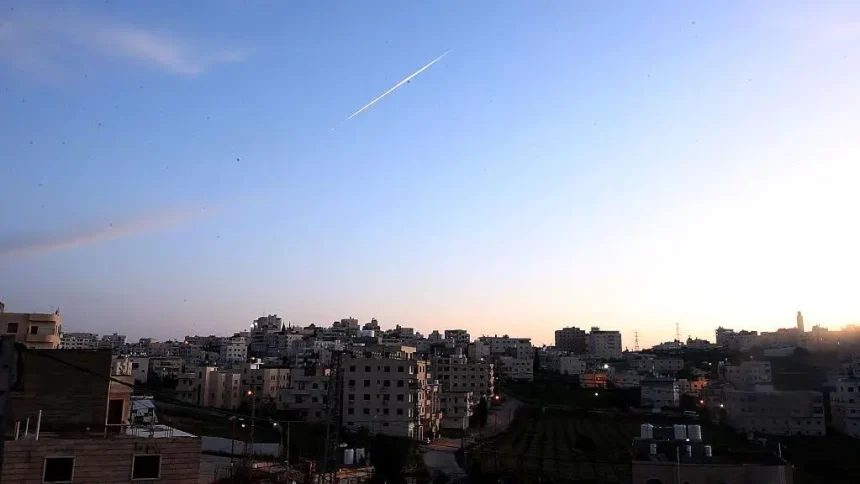
SANAA, Yemen — The shadow of a wider regional conflict has become a reality. Following their first-ever ballistic missile strike on Saturday, the Houthi movement (Ansarullah) has announced a second military operation targeting what they described as “vital and military sites” in southern Israel.In a televised address early Sunday, March 29, 2026, Houthi military spokesperson Brig.
Gen. Yahya Saree confirmed that the group utilized a barrage of cruise missiles and explosive drones in their latest assault. This follows Saturday’s ballistic launch that triggered air raid sirens across southern Israel, including areas near the city of Beersheva.
1. The “Holy Jihad” Coordination
This second operation marks a shift from a symbolic gesture to a coordinated military strategy. Saree emphasized that the strike was part of the “Holy Jihad Battle” and was specifically timed to “coincide with the military operations being carried out by our mujahideen brothers in Iran and Hezbollah in Lebanon.”
This level of synchronization confirms that the “Axis of Resistance” is now operating as a unified front, stretching from the Persian Gulf to the Red Sea.
2. Tactical Shift: Cruise Missiles and Drones
Unlike Saturday’s high-altitude ballistic missiles, Sunday’s wave focused on cruise missiles and drones.
The Goal: Cruise missiles fly at lower altitudes, designed to hug the terrain and evade traditional high-altitude radar and interceptors.
The Outcome: The Israel Defense Forces (IDF) reported that their multi-layered defense systems—including David’s Sling and the Iron Dome—successfully engaged the threats, but the persistent nature of the attacks has kept southern Israel on high alert.
3. The “Red Sea” Warning
Beyond the missiles, the Houthis have issued a chilling warning to the international community. They declared that they will not allow the Red Sea to be used as a “hostile launchpad” for operations against Iran.
Having successfully disrupted global trade in 2024, the Houthis’ re-entry into the war raises immediate fears for the Bab al-Mandab Strait.
With the Strait of Hormuz already effectively closed by Iran, a “double-choke” of both waterways could push global oil prices toward $130 per barrel by early April.