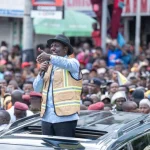

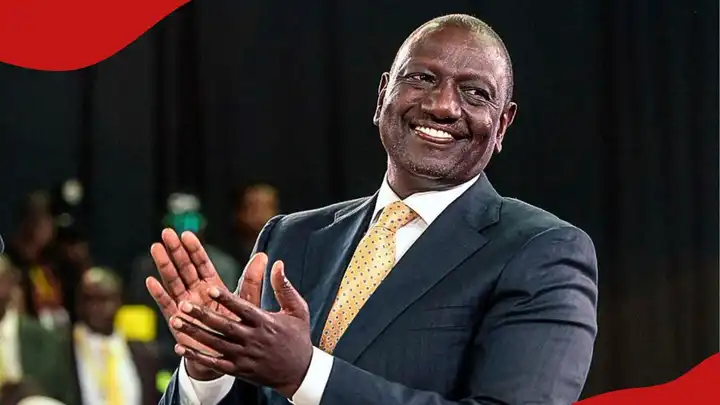
Kakamega County, Kenya — In a move that signals a major shift in Kenya’s political terrain, several opposition leaders have publicly thrown their weight behind the United Democratic Alliance (UDA) candidate in the upcoming Malava by-election — a development political observers describe as a strategic win for President William Ruto and his Kenya Kwanza government.
The endorsement comes at a critical moment as Ruto seeks to consolidate his support base in Western Kenya, a region that has traditionally leaned toward the opposition coalition Azimio la Umoja led by Raila Odinga.
🔄 Political Realignment in Western Kenya
For years, Western Kenya has been a political battleground, often determining coalition strength during national elections. However, recent weeks have seen a slow but steady realignment toward the ruling UDA party, as local leaders switch allegiance citing development opportunities.
The Malava by-election, triggered by the untimely death of the sitting MP, has turned into a mini-referendum on Ruto’s influence in the region.
“This by-election is about more than just one seat — it’s about whether Ruto’s development narrative has found fertile ground in Western Kenya,” said Dr. Edward Wekesa, a political analyst at Masinde Muliro University.
🗣️ Opposition Leaders Cross Over
Among the leaders who recently declared support for the UDA candidate are former ODM youth coordinators, ANC ward representatives, and local opinion leaders. Their message was clear: the region needs to work with the government to attract resources and development.
“President Ruto has shown goodwill in supporting Western Kenya projects. It’s time we reciprocate by supporting his agenda,” said Hon. Paul Wanyama, one of the defecting leaders during a rally in Malava town.
This marks a significant win for UDA, which has been keen on dismantling the Azimio dominance in Kakamega, Vihiga, and Bungoma counties.
🏗️ Development Politics at Play
Ruto’s political strategy has always leaned on development-driven persuasion rather than coercion. His Bottom-Up Economic Transformation Agenda (BETA) continues to serve as a rallying point, especially among youth and small business owners.
In Malava, UDA’s campaign has focused on infrastructure projects, market rehabilitation, and youth empowerment initiatives, giving locals a tangible reason to align with the ruling party.
UDA Secretary General Cleophas Malala, who hails from Kakamega, described the shift as “the region waking up to political reality.”
“Western Kenya has everything to gain by working with the government. We want our people at the decision-making table, not in the opposition cold,” Malala said.
📊 What This Means for Ruto’s 2027 Strategy
Political analysts believe the endorsement by opposition figures strengthens Ruto’s 2027 reelection roadmap, which relies heavily on expanding UDA’s footprint beyond the Rift Valley and Central Kenya.
Western Kenya, with its over 2.2 million registered voters, remains one of the most sought-after regions in every election cycle.
“If Ruto can secure even 40% of Western Kenya’s vote in 2027, he will have a clear numerical advantage,” said Dr. Wekesa.
The Malava by-election offers UDA a chance to test its grassroots machinery, voter mobilization, and messaging strategy — all of which will be critical in future national contests.
💬 Azimio Reacts: “This Is Temporary”
While the defections have drawn excitement in Ruto’s camp, Azimio leaders have brushed them off as “political theatrics.”
ODM Secretary General Edwin Sifuna accused the government of using promises of development funds to lure opposition figures.
“This is political opportunism. These leaders are chasing short-term gain. The people of Western Kenya remain firmly with Raila Odinga,” Sifuna said.
However, analysts argue that Azimio’s grip in Western Kenya has been weakened by internal rifts, leadership fatigue, and uncertainty about Raila’s succession plans.
⚖️ A Shifting Political Map
Western Kenya’s politics have historically been shaped by tribal alliances and party loyalty, but recent events suggest a gradual shift toward development-based decision-making.
Local residents interviewed by The Standard Digital said they are more concerned about job creation and infrastructure than partisan politics.
“We’ve been in opposition for years, and it hasn’t helped us. Maybe working with Ruto’s government will bring real change,” said Rose Atieno, a shop owner in Malava market.
🏆 Symbolic Victory for the Ruling Party
If UDA wins the Malava seat, it will be more than a numerical gain — it will be a symbolic victory. The region’s support would boost Ruto’s narrative of national unity and validate his Kenya Kwanza philosophy of inclusion.
Such a win would also give UDA the momentum to challenge Azimio’s dominance in neighboring counties like Busia and Vihiga, historically strongholds of Raila Odinga and Musalia Mudavadi’s earlier formations.
🔍 Looking Ahead
The Malava by-election is shaping up to be a political litmus test. For Ruto, it’s a chance to demonstrate his growing national appeal. For the opposition, it’s a wake-up call to reorganize and reconnect with grassroots supporters.
As the campaign season heats up, one thing is clear — Kenya’s political map is redrawing itself, and Western Kenya is now firmly in the spotlight.
🕊️ Conclusion: Ruto’s Western Gamble Pays Off — For Now
President Ruto’s charm offensive in Western Kenya appears to be paying off. By blending development promises with strategic alliances, he’s managing to reshape a region that once voted almost exclusively against him.
Whether the momentum lasts will depend on UDA’s ability to deliver real results — from roads and markets to youth employment — but for now, the Malava by-election stands as a clear win in Ruto’s widening political playbook.