
1. The Death of “Deal-Driven” Diplomacy
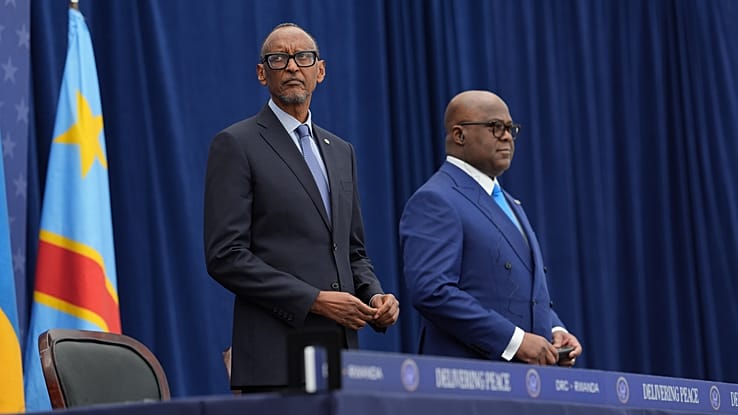
The Washington Accords, signed in late 2025, were touted as a breakthrough for U.S. interests in Africa—specifically for securing cobalt and lithium. However, the 2026 reality is a stalemate.
The 23.3% Problem: According to the February 2026 Barometer of Peace Agreements, only a fraction of the deal has been implemented. Kinshasa refuses to neutralize the FDLR, and Kigali refuses to pull back M23 “defensive measures” until they do.
A Failed Pact: Analysts now view the Accords as an “elite pact” that ignored the very rebels (M23) it sought to control. For Washington, the deal has become a symbol of how “transactional diplomacy” struggles to solve deep-rooted ethnic and security crises.
2. The BRICS+ and “Global South” Alternative
Kagame’s defiance isn’t just talk; it’s backed by a strategic pivot toward new allies. In 2026, Rwanda is increasingly looking to the BRICS+ bloc to offset U.S. trade unpredictability.
Diversifying Trade: With the African Growth and Opportunity Act (AGOA) facing uncertainty under the current U.S. administration’s tariffs, Rwanda is fast-tracking trade agreements with China and the UAE.
Sovereign Mining: Rather than acting as a middleman for Western firms, Rwanda is investing in its own domestic mineral processing. This allows Kigali to sell “refined” products directly to Asian and Middle Eastern markets, bypassing the traditional U.S.-led “transparency” hurdles that come with sanctions.
3. Africa-Led Mediation: The Togo Framework
Perhaps the most significant shift in early 2026 is the “Africanization” of the peace process. Following the breakdown of U.S. and Qatari-led efforts, a new unified framework emerged in Lomé, Togo.
Regional Ownership: Led by Togolese President Faure Gnassingbé, this new AU-backed structure seeks to merge the failed “Washington” and “Doha” processes into a single, African-led initiative.
The Logic of “African Solutions”: Kagame has signaled that he finds regional peers like Angola’s João Lourenço and Togo’s Gnassingbé more credible than Western diplomats who, in his words, “do not live with the consequences of their failed policies.”