
A Procedural Failure with Fatal Consequences
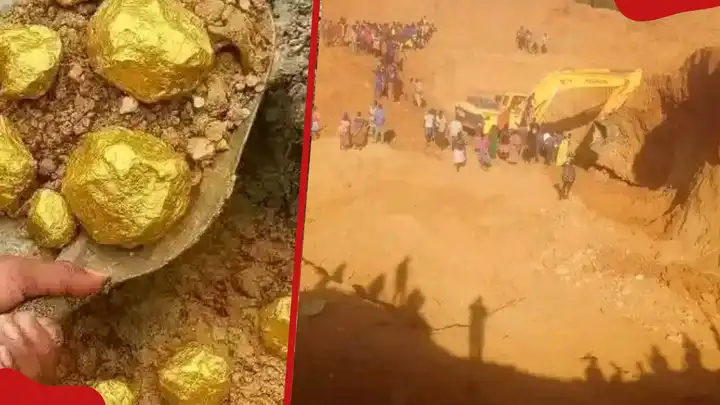
In the language of Kenya’s laws and development blueprints, “public participation” is a sacred principle. It is the bridge between a powerful government and the citizens it serves, a mandatory checkpoint designed to incorporate community voices into projects that will alter their lives forever. On paper, it is democracy in action. But on Thursday, December 4, 2025, in the Emusali area of Kakamega’s Ikolomani constituency, this bridge collapsed spectacularly and tragically. A public participation forum, convened by the National Environment Management Authority (NEMA) for the Sh680 billion Shanta Gold mining project, did not facilitate dialogue—it triggered a bloodbath that left three people dead and over a dozen wounded. This was not a protest that turned violent; it was a procedural failure that turned fatal. The events expose a profound and dangerous disconnect between the theory of public engagement and its messy, mistrustful reality on the ground.
The forum was a legal necessity. Before Shanta Gold Ltd could receive its environmental and social license to operate, NEMA was required to hear from the people who would be most affected. Yet, from the moment it was announced, the meeting was viewed by the local community not as an opportunity, but as a predetermined formality, a rubber stamp. This deep-seated cynicism is the first clue to understanding the disaster. For the over 800 families facing relocation, the concept of “participation” felt like a cruel joke when the fundamental decision—that a foreign company would mine their land—seemed already made. The forum became a focal point for pre-existing rage, not a channel for constructive feedback.
The Mechanics of a Breakdown: From Agenda to Agony
The descent from agenda to agony followed a predictable, almost scripted path of failed communication and escalating tension.
1. The Failure of Pre-Forum Trust-Building: Long before the December 4th meeting, the foundation for dialogue had crumbled. The community’s core concerns—”Where will we go?” “What is our land truly worth?” “Will our water be safe?”—had not been credibly addressed by the company or the government. Compensation figures were vague or contested. Details of the resettlement plan were unclear. Environmental impact assessments, often dense technical documents, were not adequately simplified and disseminated. The community felt they were being asked to comment on a done deal, with no real power to alter its course.
2. The Volatile Atmosphere on the Day: As locals gathered, the atmosphere was not one of civic engagement but of high-stakes confrontation. The very venue, a local school, symbolized what was at stake: the future of their children. Residents, fearing their voices would be drowned out or ignored, blockaded roads to prevent the meeting from taking place. Their action was a loud, desperate statement: “We reject the terms of this dialogue.” This turned the forum’s premise on its head; the people were no longer participants to be heard but obstacles to be managed.
3. The Lethal Escalation: The police, present to keep order, were now facing a crowd they perceived as an unlawful, threatening mob. The residents saw the police not as protectors of a lawful process, but as enforcers for a mining company and a distant government. In this tinderbox of mutual antagonism, the spark came. Confrontations turned physical, and police opened fire. The official report would later claim the dead were “hired goons,” a characterization that only poured salt on the community’s wounds, further dehumanizing the victims and deepening the belief that the state was aligned against them.
Beyond Kakamega: A National Crisis of Participation
The tragedy in Ikolomani is not an isolated incident. It is a symptom of a national crisis in the practice of public participation. Across Kenya, from Lamu to Nairobi to Narok, communities increasingly view these legally required forums with suspicion and hostility. They have become flashpoints because the process is often executed as a technical, tick-box exercise, devoid of the empathy, transparency, and—most importantly—the negotiating power that gives it meaning.
True public participation is not about informing people of what will happen to them. It is about negotiating with them. It requires:
Early and Continuous Engagement: Starting conversations years before a project is designed, not weeks before a permit is issued.
Transparent and Accessible Information: Presenting data on compensation, environmental risks, and benefits in clear, local languages.
Genuine Negotiation on Key Terms: Allowing communities to have a real say in the valuation of their land, the design of their new homes, and the structure of community benefit agreements.
Independent Facilitation: Having forums chaired by trusted, neutral third parties, not perceived allies of the project proponent.
In Kakamega, none of these conditions were met. The forum was a last-step hurdle, not a foundational pillar of the project. The result was a catastrophic loss of life and a hardening of positions that will make any future dialogue infinitely more difficult.
Conclusion: Rebuilding the Bridge
The three lives lost in Kakamega are a devastating price paid for a failed process. Governor Fernandes Barasa’s call for an investigation and calm is necessary, but it is insufficient. The investigation must go beyond determining who shot whom. It must be a forensic audit of the entire public participation process that led to that moment.
The Shanta Gold project is now indelibly stained with blood. For it to have any hope of proceeding legitimately, a completely new, more humble, and genuinely participatory process must begin. This time, it must start not with a NEMA agenda, but with an apology. Not with a presentation by consultants, but with a blank sheet of paper and a simple, honest question from the authorities to the people of Ikolomani: “How can we do this right, together?” Until that question is asked—and answered with actions, not just words—the ghost of those three victims will haunt not just the proposed mine, but the very concept of development in Kenya.