

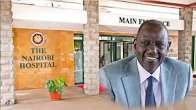
For the average Kenyan, The Nairobi Hospital is more than just a corporate entity; it is a critical pillar of our national healthcare infrastructure. However, as the Board of Management issues a defiant “hands-off” warning to President William Ruto, the conflict has moved beyond leaked memos and into the realm of national stability.
While the headlines focus on the “power play” between State House and the boardroom, the real question on everyone’s mind is: Is the hospital still safe, stable, and functional? Whether you are a patient with an upcoming surgery, a doctor with a private practice on-site, or a KHA member with a vote, here is the 2026 reality of the situation.
1. For the Patients: Is Care Compromised?
The most urgent concern is clinical safety. In their recent defense, the board was quick to emphasize that “clinical operations remain world-class and uninterrupted.”
What you need to know:
Service Continuity: All departments—from the A&E to the Cancer Centre—are currently fully operational.
The “Stability” Factor: While the leadership is in a “war of words” with the state, the medical staff (doctors and nurses) are insulated from the boardroom. Your primary care physician still has the same access to equipment and theater space as before.
The Risk: The primary danger to patients in a governance crisis is Supply Chain Disruption. If the “takeover” attempt involves freezing bank accounts or disrupting procurement contracts, the hospital could face a shortage of specialized reagents or imported medicine.
2. For the Doctors: Professional Autonomy Under Threat?
Nairobi Hospital is unique because many of Kenya’s top consultants operate “private clinics” within the facility. For these specialists, the board’s defiance of the President is a double-edged sword.
The Pro-Board View: Many doctors value the hospital’s independence. They fear that a “State Takeover” would lead to the same bureaucratic hurdles and procurement scandals often seen in public hospitals.
The “Stability” View: Others fear that by fighting the Executive so publicly, the board is inviting a “regulatory crackdown” from the Ministry of Health or the Medical Practitioners and Dentists Council, which could complicate licensing and accreditation.
3. For KHA Members: Your Vote is the Shield
As a member of the Kenya Hospital Association (KHA), you are effectively the “owner” of the institution. The board’s warning to President Ruto is fundamentally an assertion of your rights.
Your Power in 2026:
The Extraordinary General Meeting (EGM): This remains the only legal way to change the board. If you receive a notice for an EGM, your attendance is critical. The “hostile takeover” mentioned by the board can only succeed if members are divided or stay home.
Transparency Demands: Members have the right to demand a “Performance Audit.” If the board claims they are being intimidated because of their “good work,” they must be prepared to show the books to the members.
Legal Protection: Under the Companies Act, the State cannot override a member’s vote in a private company limited by guarantee. Your vote is the ultimate defense against “Institutional Capture.”
The “Ruto” Factor: Why the President was Named
By naming President Ruto directly, the board is using a “Publicity Shield.” In 2026, corporate entities often use social and mainstream media to “shame” political overreach. By framing the dispute as a “David vs. Goliath” battle for private property, the board hopes to gain the support of the wider Kenyan private sector, which is already wary of increased taxation and state interference.
The Road Ahead: What to Watch For
The coming days will be defined by “The Three R’s”:
Regulation: Watch if the Ministry of Health or KRA launches “sudden” audits or inspections. This is often the first sign of a state-led squeeze.
Resignations: Watch for any board members who “voluntarily” step down. This would indicate that the “intimidation” mentioned by the board is working.
Resolution: The final act will be the KHA General Meeting. This is where the “Hands Off” warning will either be ratified by the members or ignored in favor of a new leadership.
Conclusion: Protecting a Kenyan Legacy
The Nairobi Hospital has survived political transitions since 1954. While the current standoff with State House is intense, the institution’s strength lies in its members and its professional staff. As a stakeholder, your job is to remain informed, demand transparency, and ensure that the “Boardroom War” never crosses the threshold into the patient’s room.