

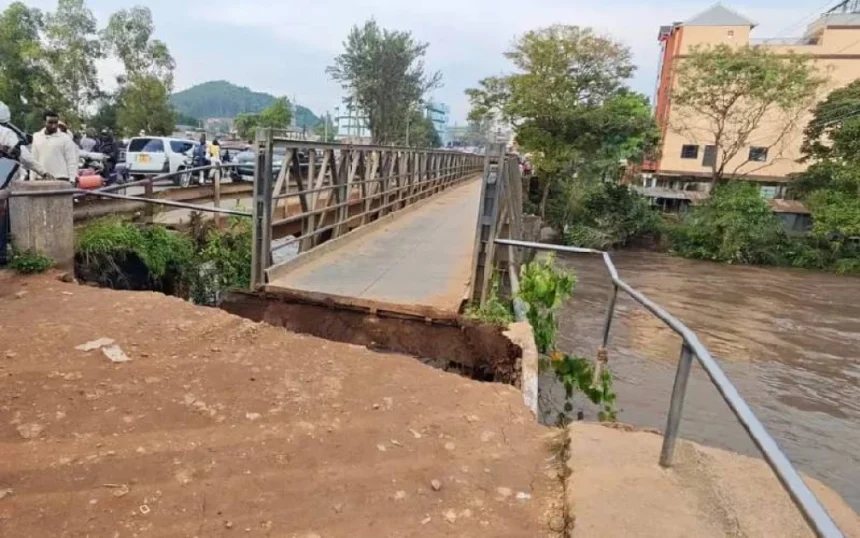
In Migori, a bridge is never just a bridge—it is a heartbeat. It is the path for the gold of Nyatike, the tobacco of Kuria, and the cross-border trade of Isebania. As of Monday, March 2, 2026, that heartbeat is stuttering.
The “Suspended Fear” triggered by the deterioration of the Suna West expansion joints on the main bridge and the total loss of the Migori Footbridge is now evolving into a full-scale economic blockade.
1. The “Border Bottleneck”
Migori sits on the A1 international highway, the primary artery for goods moving between Kenya and Tanzania.
The Slowdown: With the main bridge under “restricted use” advisories from Governor Ochilo Ayacko, heavy transit trailers are being spaced out or diverted.
The Price Hike: Traders in Migori Town report that the cost of onions, tomatoes, and grains—largely sourced from across the border—has jumped by 15% in just one week due to transport delays.
2. Education in the Crosshairs
The closure of the Migori Footbridge by KeNHA has created a daily nightmare for hundreds of students.
The Dangerous Detour: With the footbridge “hanging” and inaccessible, children who once took a 5-minute walk to school are now forced to navigate the busy, narrow main bridge alongside heavy trucks.
The “River Crossing” Risk: In rural areas like Ndemra, where bridges are weakened, some residents have reportedly resorted to using makeshift boats or wading through receding waters—a practice that has already claimed lives during the February flash floods.
3. The Macalder “Gold Standard” at Risk
In Nyatike, the security scare at the Kalangi Bridge (where an explosive was recently defused) has cast a shadow over the mining sector.
The Logistics Trap: The Kalangi Bridge is the only viable route for heavy machinery heading to the Macalder gold mines.
The Demand: Artisanal miners are now joining the call for a complete bridge audit, fearing that if Kalangi or Ongoche bridges fail, the region’s primary source of income will be literally cut off from the market.
4. A Call for “Resilient Dignity”
Residents are no longer asking for “repairs”; they are demanding redesign.
“We are tired of seeing gabions washed away every two years,” says a local Boda Boda operator. “We need bridges built for the 2026 climate, not the 1970s.”