
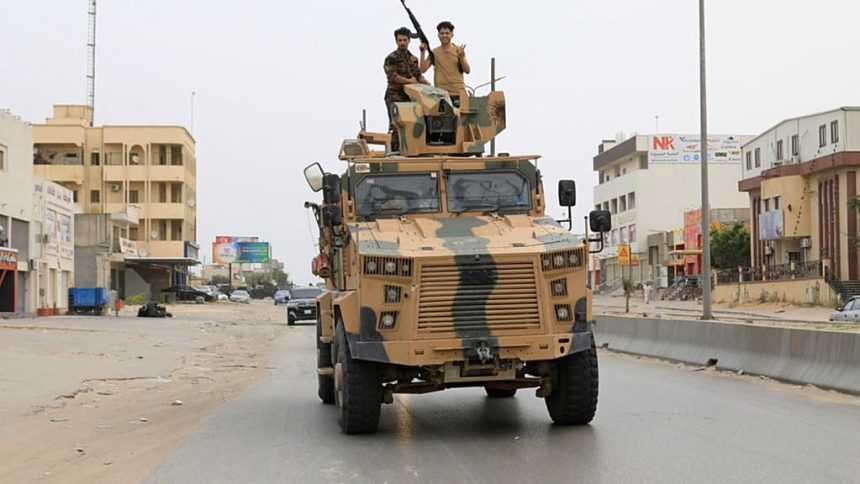
The aftermath of the January 31st assault has left the LNA in a race against time. While Field Marshal Khalifa Haftar’s forces have physically re-occupied the border posts, the “Operations Room for the Liberation of the South” claims to hold a significant bargaining chip: a group of captured LNA soldiers, including a high-ranking officer.
1. The Ransom of the South
The presence of LNA captives has changed the rules of engagement. In a televised interview, rebel leader Baraka Wardako al-Tabawi hinted that the prisoners are “guests of the South,” but their safety is tied to the withdrawal of Haftar’s forces from tribal lands in Murzuq and Fezzan.
The Military Gamble: Haftar has traditionally responded to such provocations with overwhelming force. However, a heavy-handed rescue attempt risks the lives of the captives and could trigger a general uprising among the Tebu and other marginalized southern tribes.
The Counter-Insurgency: The Fifth Brigade is currently conducting “sweeping operations” in the mountainous regions toward Niger, but the terrain is a labyrinth of caves and ancient smuggling routes that favor the local militants.
2. The Niger-Libya Diplomatic Rift
The fact that the militants retreated into Nigerien territory has placed the junta in Niamey in a delicate position.
The “Safe Haven” Allegation: LNA officials have subtly accused Niger of failing to secure its side of the border, or worse, providing a “safe haven” for the Tebu Revolutionaries.
The Sahel Alliance (AES): With Niger now part of the Alliance of Sahel States (AES) alongside Mali and Burkina Faso, any LNA cross-border “hot pursuit” could be interpreted as a violation of sovereignty, potentially drawing Niger’s new Russia-backed military units into the fray.
3. The Humanitarian Shadow
While the world watches the military maneuvers, a humanitarian crisis is brewing. The International Organization for Migration (IOM) reported on February 2 that migration flows through the Fezzan corridor have spiked by 78% compared to last year.
The Fallout: The closure of the Al-Toum crossing—even briefly—disrupts the flow of food and fuel to civilian populations in the deep south.
The Risk: If the border remains a “live combat zone,” over 2.6 million people in the region who already require humanitarian assistance will be cut off from life-saving supplies.