

The Ultimate Classroom
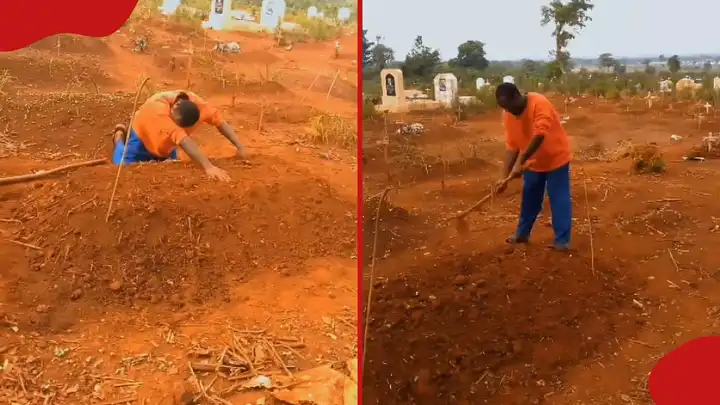
We expect life’s great lessons to come from dramatic triumphs, painful failures, or wise mentors. We rarely expect them to come from a patch of grass in a quiet cemetery. Yet, when a man kneels at his mother’s grave after three months, tears streaming as he whispers “Nakupenda Mama,” he is not just mourning. He is attending a final, profound lecture from his first and greatest teacher. His mother, in her silence, is imparting lessons more powerful than any she could give in life. This graveside is the ultimate classroom, and the curriculum teaches the meaning of time, the weight of presence, and the architecture of a love that outlasts mortality.
The scene is a masterclass in contrast and consequence. The vibrant, bustling life of the son contrasts with the absolute stillness of the mother. The three-month gap since his last visit contrasts with the eternal span now before her. This juxtaposition forces a brutal, clarifying honesty about the nature of our relationships with our parents while they are alive. The grave does not judge, but it illuminates. It shows us, in stark relief, what we prioritized and what we postponed, what we said and, more hauntingly, what we left unsaid.
Lesson 1: The Currency of Time is Spent, Not Saved
The most immediate lesson from the graveside is about time—our most non-renewable resource. For three months, this man’s life continued. Work deadlines were met, bills were paid, social events were attended. The world demanded his time, and he gave it. The visit to the grave was likely penciled into a schedule, a necessary appointment with grief. This is the central tragedy and teaching of parental loss: we treat time with our parents as a savings account we believe will always be there, when in fact, it is a daily spending account that is constantly being depleted.
The grave is the final bank statement. It shows a balance of zero. It teaches, too late for some, that the “quality time” we promise for “one day” is a myth. Quality is built from a quantity of ordinary moments: the unremarkable phone calls, the shared quiet meals, the rides to the shop. The man tending the grave is not thinking of the grand gestures he missed; he is likely thinking of the thousand small Tuesdays he will now never have. The lesson is searing: spend your time with your parents lavishly now, because soon, the only thing you can spend are tears on the stone that marks its end.
Lesson 2: The Physicality of Absence
We understand absence as a concept, but a parent’s grave teaches it as a physical, sensory reality. In life, a mother is a presence filled with sound, smell, touch, and sight. She has a voice that advises and comforts, hands that cook and hold, a scent that means home. The grave reduces this magnificent, multi-sensory universe to a name, two dates, and a plot of earth.
The son kneeling is experiencing this reduction firsthand. He is confronting the fact that he will never again hear her call his name, feel her hand on his shoulder, or smell her perfume. His act of tending the grave—touching the stone, arranging flowers—is a desperate attempt to recreate a physical connection that has been severed. It teaches those of us with living parents to engage fully with their physical presence. Hug them longer. Listen to the specific cadence of their laugh. Memorize the feel of their hand. These sensations become the most precious relics, and their loss is the most profound emptiness. The grave screams a silent warning: appreciate the living body before you are left caring for the cold stone that remembers it.
Lesson 3: The Unfinished Conversation of Love
The whispered “Nakupenda Mama” is the tip of an iceberg of unsaid things. A parent-child relationship is life’s longest, most complex conversation. It is filled with updates, advice, arguments, forgiveness, jokes, and silences. Death is not a period; it is a sudden, permanent interruption. The conversation is left hanging in mid-air.
The man at the graveside is trying to continue a dialogue that has lost its other participant. He is speaking into a void, hoping his words cross a barrier he cannot see. This teaches the critical lesson of completion. It urges us to have the difficult conversations now—to offer gratitude, seek forgiveness, express pride, and say “I love you” not as a habit, but as a deliberate, witnessed act. Don’t let love be the thing you only whisper to the wind over a mound of dirt. Let it be the thing that echoes in your parent’s living ears, so they carry its sound with them, and you are left with the peace of knowing nothing important was left unsaid.
Lesson 4: The Inheritance That Matters
Finally, the grave teaches us about legacy. As the son rises from his knees and walks away, what does he carry with him? Not money or property, but something far more significant: her values, her resilience, her love, and her memory. In tending her grave, he is showing what he learned from her: care, respect, devotion, and the importance of honoring one’s roots.
The ultimate lesson a parent imparts from the grave is that we are their ongoing story. Our character is their living testament. The best way to tend their memory is not to perfectly maintain a plot of land, but to live a life that would make them proud. To be kind because she was kind. To be strong because she endured. To love because she first loved us.
Conclusion: Learning Before the Test
The man in the video is taking a final, painful exam on a subject he only now fully understands. The rest of us have the privilege of still being in class. Our parents are still here, teaching us through their presence, their quirks, their needs, and their love.
Let his public grief be our private syllabus. Let us learn the lessons of time, presence, conversation, and legacy now, while our teachers are still here to see us pass the test. Visit not just the grave, but the living room. Kneel not just on cemetery grass, but at the foot of their chair to tie their shoelaces. Whisper “I love you” not to cold stone, but into a warm, hearing ear. The greatest honor we can give our parents is not a well-kept grave, but a life well-lived, inspired by their lessons, learned before it’s too late.
This response is AI-generated, for reference only.