

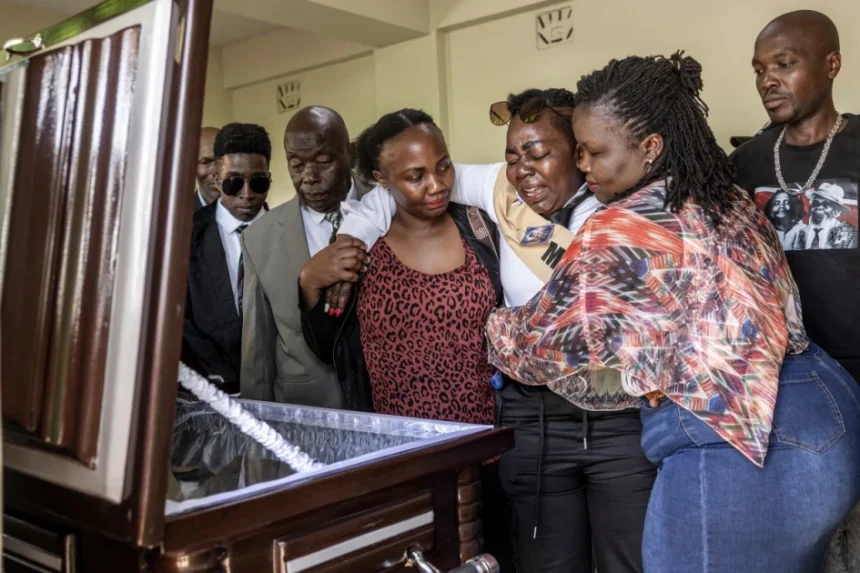
On February 14, 2026, the wind blowing across the Ngorika hills in Nyandarua County felt a little colder. It was the day the earth finally took back Christopher Njora Muronyo, better known by his forest name, General Kiambati.
At 106 years old, he was arguably the last of the “Twelve Generals”—the elite military high command of the Kenya Land and Freedom Army (Mau Mau) that operated in the Aberdare forests. His death isn’t just a loss of a grandfather; it is the closing of a living library of resistance.
1. From Mission School to the Aberdare Trenches
Born in the 1920s, Kiambati was not an “uneducated rebel” as colonial propaganda often suggested. He attended the Tumutumu Mission School, where his brilliance was noted early on. However, the mass dispossession of land in the “White Highlands” radicalized him.
In 1952, when the State of Emergency was declared, Kiambati vanished into the forests. He didn’t go alone; he went as a commander. For nearly eight years, he lived in the labyrinth of the Aberdare mountains, orchestrating guerrilla raids against colonial outposts.
2. The “One-Legged Devil”
Kiambati’s legend grew in 1953 after a fierce encounter with British forces. He was shot in the leg, an injury so severe it eventually led to amputation.
The Nickname: To the British soldiers, he became the “One-Legged Devil” because of his uncanny ability to move through the dense, vertical terrain of the Aberdares faster than men with two legs.
The Unremoved Shrapnel: Remarkably, Kiambati went to his grave in 2026 still carrying three bullets in his body. For 73 years, these pieces of lead served as a daily reminder of the price of freedom—a price he paid every time the weather turned cold and his old wounds throbbed.
3. The Betrayal of 1963
The most painful part of General Kiambati’s story isn’t the war; it’s the peace. When independence came in 1963, the Mau Mau expected land and recognition. Instead, they got silence.
The Taboo Movement: For decades under the Jomo Kenyatta and Daniel Moi administrations, the Mau Mau remained a “proscribed terrorist organization.”
Marginalization: While collaborators (Home Guards) often transitioned into the new black elite, many generals like Kiambati returned to find their land occupied. He spent his final decades in what his children describe as “abject poverty,” living in a modest home and relying on the support of his local community rather than the state he helped create.
The 2026 Funeral: A Bittersweet Goodbye
The burial in Nyandarua on Saturday was a study in contrasts. While the community turned out in hundreds, the absence of high-ranking government dignitaries was noted with anger by the family.
“My father fought to liberate this country, but the country never thanked him. We had to beg for donations to give him a decent burial,” Emily Kiambati told mourners.