
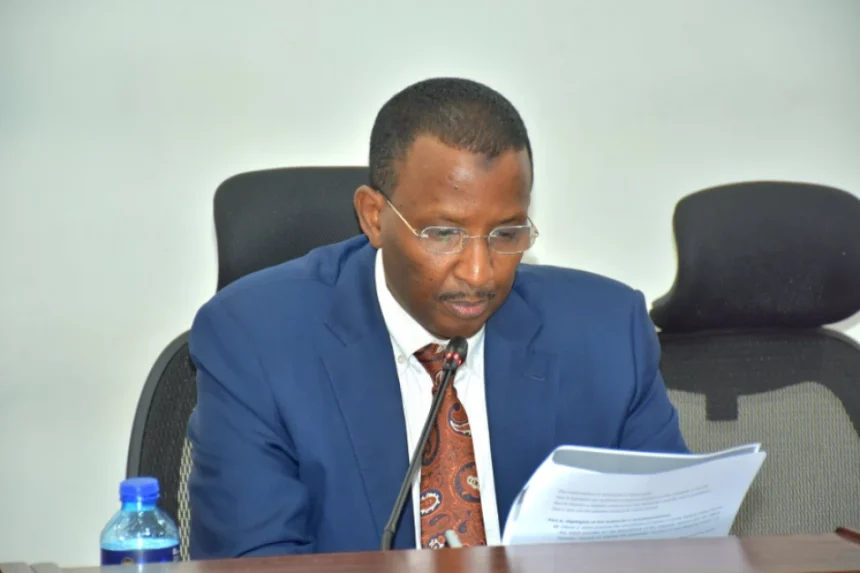
In the intricate landscape of Kenyan public service, transitions at the top are often shrouded in political mystery. However, the resignation of Ahmed Issack Hassan from his post as Chairperson of the Independent Policing Oversight Authority (IPOA) on Tuesday, February 17, 2026, is a clear-cut case of judicial elevation.
After just over a year at the helm of Kenya’s most critical police watchdog, Hassan is trading the “hot seat” of civilian oversight for the hallowed robes of the Court of Appeal. His departure marks the end of a short but high-stakes chapter for IPOA and signals a significant shift in the leadership of police accountability.
1. The Official Announcement: A Planned Exit
The IPOA Board confirmed on Tuesday that Hassan had formally tendered his resignation. This move was long-expected by insiders following his successful vetting by the Judicial Service Commission (JSC) in late January 2026.
Hassan’s appointment to the Court of Appeal was part of a broader expansion of the bench by President William Ruto, who recently swore in 15 new judges to help ease the massive case backlog currently strangling the Kenyan justice system.
2. A Tenure of Turbulence and Technology
Appointed in December 2024, Ahmed Issack Hassan stepped into IPOA during one of its most challenging periods. Public trust in law enforcement was fragile, and the authority was under immense pressure to deliver results on investigations into police brutality.
Despite the brevity of his stay, Hassan’s legacy is defined by three major pillars:
The 2025–2030 Strategic Plan: Launched alongside Chief Justice Martha Koome, this plan aimed to modernize IPOA by introducing digital reporting tools to bypass the “blue code of silence” often found in physical police stations.
A Focus on “Professional Distance”: Hassan worked to recalibrate IPOA’s relationship with the National Police Service (NPS), famously pushing for a 72% compliance rate on IPOA’s recommendations—up from the historical 59%.
The “Joint Briefing” Controversy: His tenure wasn’t without friction. In late 2025, Hassan faced significant backlash for appearing in a joint press conference with police top brass following a custody death. He eventually issued a rare public apology, reinforcing the need for IPOA to remain—and appear—strictly independent.
3. The Judicial Pivot: Why the Court of Appeal?
For Ahmed Issack Hassan, this resignation is less of an “exit” and more of a “homecoming.” As a veteran advocate and former Chairman of the IEBC, his legal acumen has always been his strongest asset.
By moving to the Court of Appeal, Hassan joins a bench that has been expanded from 27 to 42 judges. His experience navigating the intersection of law, politics, and human rights makes him a strategic addition to a court that will likely handle the legal fallout of police oversight cases he once oversaw from the outside.
4. What Happens Next for IPOA?
The vacancy at the top of IPOA comes at a delicate time. The authority is currently overseeing several sensitive investigations and the implementation of the Maraga Taskforce recommendations.
The Transition Roadmap:
Interim Leadership: Vice-Chairperson Ms. Ann Wanjiku is expected to take over in an acting capacity to ensure that active investigations do not stall.
Selection Panel: President Ruto must now appoint a selection panel to advertise the vacancy and shortlist candidates for the next Chairperson.
The Mandate: The new Chair will inherit a board committed to a six-year term (ending in 2030) and a mandate to ensure that Article 244 of the Constitution—which demands police professionalism—is fully realized.
5. Analysis: The Impact on Police Oversight
Does Hassan’s departure create a “leadership vacuum”? While the IPOA board remains functional, the loss of a high-profile legal heavyweight like Hassan may temporarily slow the authority’s political momentum.
However, his rise to the Judiciary could be a “win” for accountability in the long run. Having a former IPOA Chair on the appellate bench ensures that the nuances of police oversight and the challenges of civilian-led investigations are well-understood at the highest levels of judicial determination.
Conclusion
Ahmed Issack Hassan’s resignation is a testament to the fluid nature of Kenyan institutional leadership. He leaves IPOA with a clear five-year roadmap and a digitized vision for the future. As he takes his seat on the Court of Appeal, the eyes of the public now turn toward State House to see who will be entrusted with the task of “guarding the guardians.”
Stay tuned as we track the recruitment process for the next IPOA Chairperson and the impact this has on the 2026 police reform agenda.