

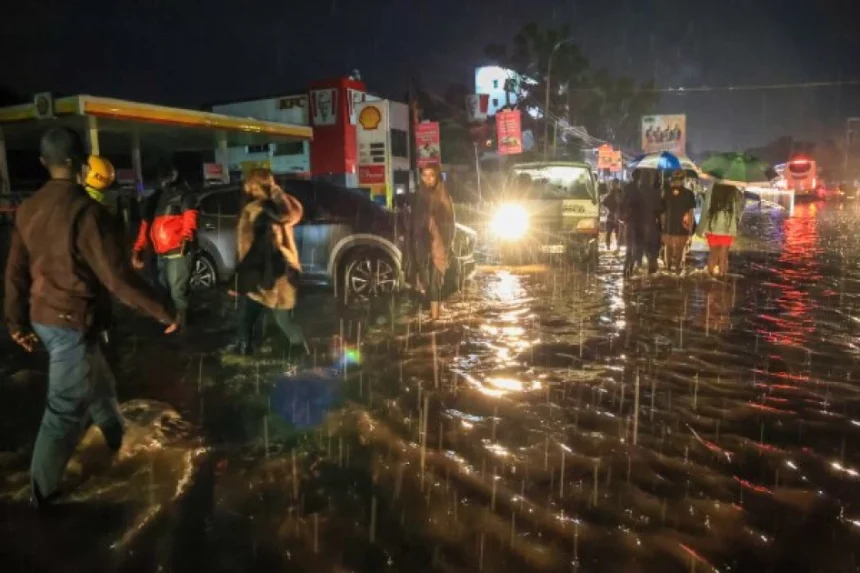
As we approach the predicted peak of the heavy rains this Sunday, March 22, 2026, the focus in Nairobi is shifting from “inconvenience” to “survival.” The Kenya Meteorological Department (KMD) has confirmed that Saturday night into Sunday morning will likely see the highest concentration of rainfall this season.
With the city’s infrastructure already under immense strain, the risk to public health and personal safety is at an all-time high. This isn’t just about avoiding traffic; it’s about protecting your family from the “invisible” dangers that floodwaters bring into our neighborhoods.
The Health Crisis: Preventing the “Second Wave”
When the Nairobi and Ngong rivers burst their banks, they don’t just carry water; they carry the contents of every burst sewer line and overflowing latrine in the city. This creates a high-risk environment for waterborne diseases that can spread faster than the flood itself.
1. The Cholera and Typhoid Threat
In early 2026, Nairobi has already seen localized outbreaks in areas with poor drainage.
The Rule: Assume all surface water is contaminated.
The Action: Boil all drinking water for at least one minute at a rolling boil. If you use dispensers, ensure the bottles haven’t been stored on a flooded floor.
2. Vector-Borne Diseases
Stagnant water left behind by the Friday and Saturday rains is the perfect breeding ground for mosquitoes.
The Risk: A spike in Malaria and Dengue Fever cases across the county.
The Action: Ensure your mosquito nets are treated and intact. If you have “puddles” in your compound, try to drain them or treat them with larvicide immediately after the rain stops.
The “Hidden” Danger: Electrical and Structural Risks
The combination of heavy wind and saturated soil often leads to fallen trees and power lines. In 2026, Kenya Power (KPLC) has implemented automated “Flood Cuts” in high-risk zones, but many areas remain live and dangerous.
Downed Lines: Never approach a fallen power line, even if it doesn’t seem to be sparking. Water conducts electricity; a line 20 feet away could electrify the puddle you are standing in.
Weakened Trees: The “Jacaranda” and “Acacia” trees common in Lavington and Kilimani are prone to “root heave” during heavy rains. Avoid parking your car or sheltering under large trees during the Sunday peak.
The “Sunday Protocol”: Survival Tips for the Peak
If the KMD forecast holds, Sunday morning will be the most dangerous time to be outdoors. Follow the “Sunday Protocol” to minimize risk:
Stay High: If your house begins to flood, move to the highest level immediately. Do not stay in basement or ground-floor rooms if the water is rising.
The “Two-Foot” Rule: Never attempt to drive through water that is deeper than the center of your wheels. For pedestrians, do not attempt to cross moving water that is higher than your knees.
Charge and Sync: Ensure all power banks are at 100% by Saturday evening. Use your phone sparingly for emergency updates only.
Community Watch: If you live near a riverbank or a steep slope, set up a “Watch” with your neighbors. If the water level reaches a marked “Danger Point,” evacuate to the nearest school or community center immediately.
The Post-Storm Cleanup: Starting Monday Safely
Once the rains subside on Monday, the temptation is to rush out and start cleaning. However, the “recede phase” is often when the most infections occur.
Wear Protection: Use gumboots and heavy-duty gloves when clearing debris.
Disinfect Everything: Any surface that touched floodwater must be scrubbed with a bleach solution (1 part bleach to 10 parts water).
Check the Foundation: Before re-entering a flooded house, look for new cracks or “leaning” pillars. If in doubt, stay out until an engineer clears it.
Conclusion: Nairobi’s Resilience
Nairobi has faced these “long rains” for generations, but 2026 presents new challenges with our increased urban density. By prioritizing health and safety this weekend, we can ensure that we emerge from this “Red Alert” without further loss of life.
Stay tuned to our live blog for real-time updates on the Sunday peak. Stay safe, stay dry, and keep your neighbors in mind.
3. Engagement & Conversion Block
Resources for Your Family:
Free Guide: [Download: The 5-Minute First Aid Guide for Flood Injuries]
Live Update Map: [Click here to see which clinics in Nairobi are open 24/7 this weekend]
Your Story: Have you found a clever way to keep the water out of your house? Share your tips in the comments to help others!


