

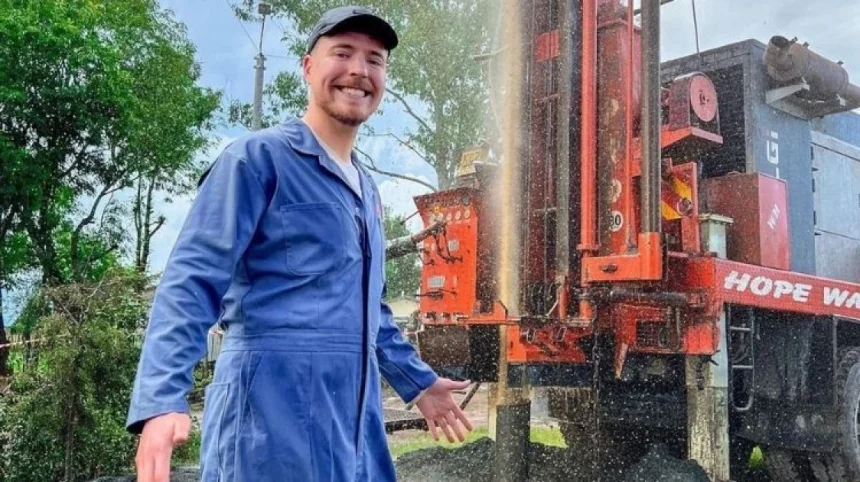
By February 25, 2026, Jimmy “MrBeast” Donaldson has become a household name in rural Kenya. From drilling 52 boreholes to rebuilding Nyakichiwa Primary School in Bomet, his “Beast Philanthropy” has delivered more visible infrastructure in two months than some counties have in two years.
However, as the dust settles on his latest viral upload, a more complex conversation is emerging among Kenyan policy experts and social critics. Is this high-speed, creator-led aid a genuine solution, or is it a “Band-Aid” that ignores the root causes of poverty?
The Success: Unmatched Efficiency
There is no denying the immediate impact. In January 2026, MrBeast cleared a backlog of 1,000 surgeries in counties like Narok and Kisumu. For the 80-year-old grandmother who can now see her grandchildren for the first time, the “ethics” of the video are irrelevant—the result is a miracle.
MrBeast’s model bypasses the three biggest hurdles in Kenyan development:
Corruption: No “middlemen” or tenderpreneurs taking a cut.
Bureaucracy: No three-year “feasibility studies.”
Apathy: Every dollar is tied to a visible outcome for an audience of 200 million people.
The Critique: The Problem with “Viral” Sustainability
Critics, including some Kenyan politicians and NGO leaders, argue that “Philanthro-tainment” has a hidden cost.
1. The “Maintenance” Gap
A school needs more than just stone walls; it needs a steady supply of teachers, curriculum materials, and long-term maintenance. While MrBeast has promised a five-year feeding program for the Bomet school, what happens in year six? Unlike government-led projects (however flawed), creator-led aid is often “one and done.”
2. The Danger of “Poverty Porn”
There is an ethical debate regarding the filming of vulnerable people in their moments of greatest need. When a patient’s surgery is “content” for a channel that generates millions in ad revenue, does it strip the recipient of their dignity? Some argue that this model turns Kenyan poverty into a spectacle for Western viewers.
3. Undermining Systemic Reform
Perhaps the most significant risk is that these “fast wins” allow the government to dodge its responsibilities. If YouTubers become the primary providers of boreholes and classrooms, the pressure on the Ministry of Water and Ministry of Education to fix the system may decrease.
A New Hybrid Model?
Interestingly, MrBeast’s team has begun to pivot. In his latest 2026 projects, they have partnered with local medical teams and established community-led maintenance committees for the boreholes. This suggests an evolution toward a more sustainable model that combines the speed of a creator with the longevity of a local institution.
Conclusion: The Mirror Effect
Ultimately, the value of MrBeast in Kenya isn’t just the classrooms or the surgeries. It is the Mirror Effect. He has held up a mirror to the Kenyan leadership, proving that the technical and financial “impossibilities” they often cite are actually solvable problems.