
From Community Dispute to Political Battleground
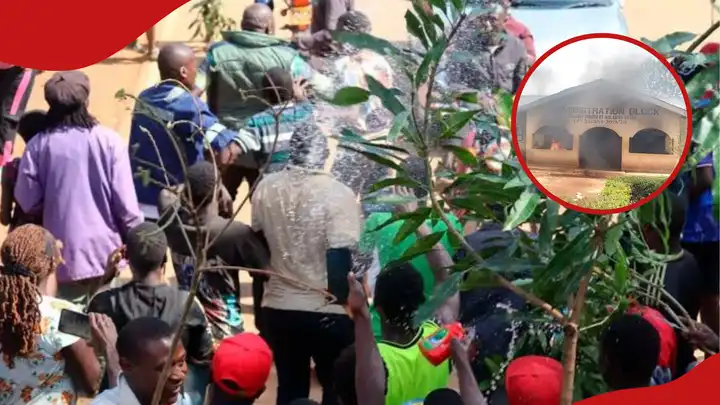
In the immediate aftermath of the deadly land clash in Ikolomani, Kakamega, that left four people dead, a singular fact cut through the chaos and reshaped the entire narrative: among the 63 people arrested were two sitting Members of the County Assembly (MCAs). This was not a random detail; it was a revelation. It transformed the tragedy from a heartbreaking but localized conflict between neighbors over 50 acres into a case study of political incitement. The clash was no longer just about land; it was about how that land became a weapon in a political contest, wielded by leaders who swore an oath to serve the very community now mourning its dead.
The swift, unambiguous warning from the Kakamega County Commissioner left no room for interpretation. He stated plainly that “political incitement” would not be tolerated and that leaders fanning violence would be held accountable. This official stance confirmed a suspicion many Kenyans hold but seldom see acted upon: that some of the ugliest local conflicts are not organic, but manufactured or aggressively fueled for political gain. The arrest of the MCAs pulled back the curtain, exposing the mechanics of how a simmering land dispute can be turned into a lethal political tool.
The Playbook of Incitement: How Leaders Light the Fuse
To understand what happened in Ikolomani, one must understand the cynical playbook some local politicians employ. A long-standing, unresolved dispute—like the one over 50 acres in Shieywe—is not a problem to be solved, but an opportunity to be exploited.
Identifying the Fault Line: The politician, often an MCA or aspiring candidate, aligns themselves with one side of the dispute. They don’t just represent the group; they become its chief advocate and radicalizer. They frame the conflict not as a complex legal issue, but as a simple story of “us versus them,” where “they” are trying to steal what is rightfully “ours.”
Mobilization and Militarization: Advocacy moves from the office to the field. The leader holds meetings (often framed as “community consultations”) where grievances are stoked. Language escalates from “claiming our rights” to “defending our land at all costs.” Followers are organized, not for peaceful protest, but for confrontation. In some cases, this can involve the direct or indirect provision of resources, from transportation to rallies to, in the worst cases, crude weapons.
The Strategic Spark: When tension is at its peak, a calculated action triggers the violence. This could be an attempt by one side to occupy the land, a provocative meeting, or a planned “security operation” by supporters. The politician may not throw the first stone, but they have orchestrated the conditions where violence is not just possible, but inevitable. Their goal is to create a crisis that demonstrates their strength and commitment to “their people,” solidifying a political base built on fear and tribalism.
In Ikolomani, the arrest of the MCAs suggests they were deeply embedded in this playbook, moving from community representatives to commanders of a faction.
Why They Do It: The Calculated Calculus of Violent Politics
This dangerous game is played for starkly rational, if morally bankrupt, reasons.
Solidifying a Political Base: In a crowded field, how does a politician stand out? By being the most vigorous defender of a specific group’s interests. By championing a land claim aggressively, even violently, they portray themselves as the only leader with the courage to “get things done,” creating a loyal, dependent constituency.
Disrupting the Opposition: A violent crisis can be a powerful distraction. It can discredit moderate opponents, force the administration to intervene in heavy-handed ways that create martyrs, and generally destabilize the area to make it fertile ground for more radical leadership.
Resource Control: Ultimately, land is wealth. Influencing the outcome of a major land dispute can lead to tangible financial rewards—kickbacks from eventual sales, control over development projects, or patronage opportunities from grateful “victors.”
For the politician, the clash is a strategic investment. The risk of arrest is weighed against the potential reward of unshakable local power. The four lives lost are, in this calculus, collateral damage—a tragic but acceptable cost of political business.
The Devastating Cost: Beyond the Body Count
The human cost of this political incitement extends far beyond the four fatalities.
A Poisoned Community: The violence deepens social fractures along the lines drawn by the politicians. Neighbors who lived side-by-side for generations become enemies. Mistrust becomes endemic, making future cooperation on any issue—from building a school to responding to a drought—nearly impossible. The community is left polarized and paralyzed.
The Erosion of the Rule of Law: When leaders are seen orchestrating violence, it sends a message that power and might trump legal process. Why go to court or a land tribunal when your MCA can mobilize youth to “reclaim” the land for you? This erodes faith in institutions and entrenches a culture of impunity.
A Cycle of Revenge: Violence begets violence. The deaths in Ikolomani create new grievances, new demands for vengeance. The conflict becomes self-perpetuating, a generational blood feud where the original land title is almost forgotten, replaced by a ledger of killings that must be answered.
Conclusion: Breaking the Cycle
The arrests in Kakamega are a rare and necessary step. For justice to be meaningful, the prosecution of the arrested MCAs must be rigorous and transparent, sending a clear signal that wearing a suit and title does not place one above the law.
But breaking the cycle requires more than prosecutions. It requires:
Strengthening Alternative Institutions: Land courts and conflict resolution committees must be resourced, expedited, and trusted. People need a credible, peaceful path to justice that is faster and more reliable than the politician’s promise of violent confrontation.
Community-Led Reconciliation: Parallel to any legal process, peace-building initiatives led by elders, religious leaders, and women’s groups—those often sidelined by the male-dominated politics of violence—must work to repair torn social fabric.
Voter Accountability: Ultimately, communities must recognize and reject leaders who trade in bloodshed. This requires a profound shift in political consciousness, where voters prize peacemakers over warmongers.
The Ikolomani clash is a warning written in blood. It shows that when politicians treat land and people as pawns in their game of power, the entire community loses. The challenge now is to ensure that the handcuffs placed on those two MCAs become a symbol, not of a single incident concluded, but of a new, unwavering refusal to let politics be a death sentence for Kenyan citizens.