
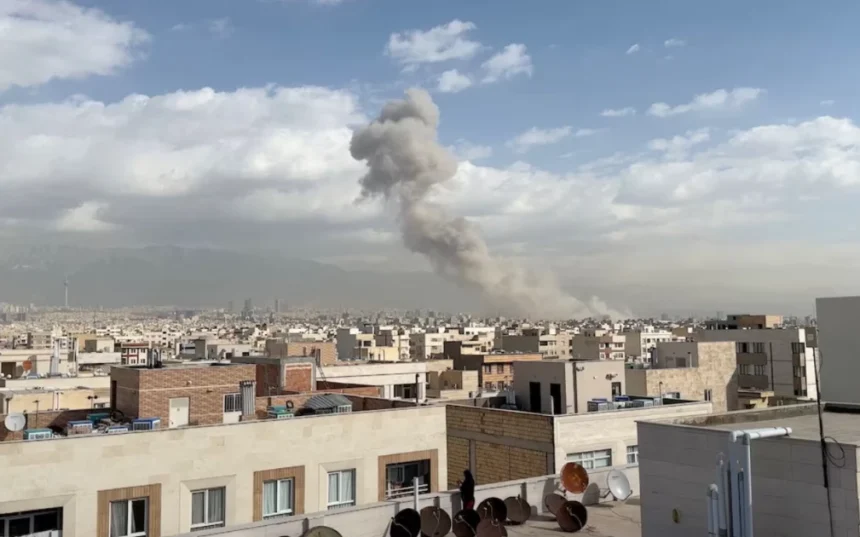
While the missiles are falling in the Middle East, the shockwaves are being felt in every corner of the globe. As Operation Roaring Lion and Operation Epic Fury enter their second phase this Saturday, February 28, 2026, the world is waking up to a new, more expensive, and more dangerous reality.
This isn’t just a regional conflict; it is a systemic shock to the 21st-century global order. Here are the four ways the strikes are already affecting you.
1. The “Strait of Hormuz” Premium: Oil and Inflation
The immediate fear of any conflict with Iran is the closure of the Strait of Hormuz, through which 20% of the world’s oil passes.
The Surge: Brent Crude futures spiked by 12% within four hours of the first explosion in Tehran.
The Pump: Analysts warn that if the “crushing retaliation” promised by the IRGC includes mining the Strait, gasoline prices globally could jump by 30% by the morning commute on Monday.
Supply Chains: Logistics giants like Maersk have already begun rerouting vessels around the Cape of Good Hope, adding weeks to delivery times for electronics and consumer goods.
2. The Digital Iron Curtain: Cyber Warfare Alert
In Tehran, internet connectivity has plummeted to 54% as the regime attempts to stifle internal dissent and protest coordination. However, the “Cyber War” is not contained within Iran’s borders.
Western Alerts: The U.S. Cybersecurity and Infrastructure Security Agency (CISA) and Israel’s National Cyber Directorate have issued “Red Level” warnings for critical infrastructure.
The Threat: There is a high probability of retaliatory “wiper” malware attacks targeting Western banking systems and power grids in the coming 72 hours.
3. The Humanitarian Crisis: 32,000 and Counting
In his address from Mar-a-Lago, President Trump cited a staggering figure: that the Iranian regime had killed at least 32,000 protesters during the recent unrest leading up to today’s strikes.
Despair to Hope: Reports from human rights groups like HRANA suggest that while the strikes are terrifying, parts of the Iranian public see this as a “final chance” for liberation.
Refugee Flows: Turkey and Iraq have already begun bracing for a massive influx of refugees as families flee the targeted cities of Isfahan, Qom, and Kermanshah.
4. A Divided Global Response
The world’s “superpowers” are lining up in a way that feels reminiscent of the Cold War:
The West: The UK and France have reaffirmed Israel’s “right to self-defense” while calling for ultimate restraint to prevent a nuclear meltdown.
The East: China and Russia have condemned the strikes as a “flagrant violation of international law.” Beijing has specifically warned that “preemptive” strikes undermine the very fabric of global diplomacy.
The Region: Countries like Jordan and Bahrain are in a delicate position, activating their own air defenses to protect their skies from being used as a “missile highway.”
What to Expect in the Next 48 Hours
Market Volatility: Expect a “Black Monday” on global stock exchanges as investors flee to safe-haven assets like gold and the US Dollar.
Travel Disruptions: Airspaces over Iraq, Jordan, Israel, and Iran remain closed. Expect total paralysis of flights between Europe and Asia.
The “Second Wave”: The Pentagon has signaled that the current strikes are “not a small operation” and are expected to continue for at least four days.
Summary of the 2026 Crisis (Current Status)
| Sector | Impact Level | Outlook |
| :— | :— | :— |
| Energy | Critical | Prices surging toward $120/bbl |
| Cyber | High Alert | Potential infrastructure attacks expected |
| Aviation | Total Lockdown | Middle Eastern hubs (Dubai/Doha) paralyzed |
| Geopolitics | Revolutionary | Explicit push for “Regime Change” in Tehran |