

In an interconnected global landscape, a single unverified social media post can spark panic across an entire nation faster than any biological pathogen. This reality was vividly illustrated recently when rumors of a suspected Ebola case in Kenya began dominating online conversations, triggering widespread public anxiety. Recognizing the potential for economic, social, and psychological damage, the Ministry of Health (MoH) intervened swiftly, issuing a comprehensive statement to expose the truth behind the rumors and reassure both domestic and international stakeholders.
The official verdict from the government is definitive: Kenya remains entirely free of Ebola. While the broader East African region remains on high alert due to fluctuating viral outbreaks in neighboring territories, the country’s defensive borders have not been breached.
This detailed analysis explores the origin of the recent health scare, examines the economic and trade implications of border health management, details how Kenya’s surveillance systems operate behind the scenes, and provides a framework for identifying medical misinformation.
Behind the Headlines: What Triggered the Scare?
Public scares rarely occur in a complete vacuum. They are typically born from a combination of heightened regional awareness, standard clinical precautions, and an overactive digital grapevine. In this instance, the rumor mill ignited when a patient exhibiting symptoms that overlapped with viral hemorrhagic fevers was admitted to a prominent regional referral hospital in western Kenya.
Because the patient had recently traveled near a border transit zone and presented with an acute fever, severe bodily weakness, and gastrointestinal distress, medical personnel immediately executed standard safety protocols. The hospital staff correctly applied their training:
Immediate Isolation: The patient was moved to a designated infectious disease containment room.
PPE Deployment: Healthcare workers donned high-level Personal Protective Equipment (PPE) before conducting further evaluations.
Rapid Specimen Collection: Blood samples were drawn under strict biosafety conditions and dispatched via a secure courier network to national reference laboratories.
To an untrained observer or a worried visitor at the facility, the sudden appearance of hazmat-style protective gear and strict isolation boundaries looked like definitive proof of a deadly outbreak. Within hours, a localized precautionary measure was transformed into an online narrative claiming that an active, confirmed case of Ebola was being treated in the country.
Fact-Checking the Rumor: The MoH Sets the Record Straight
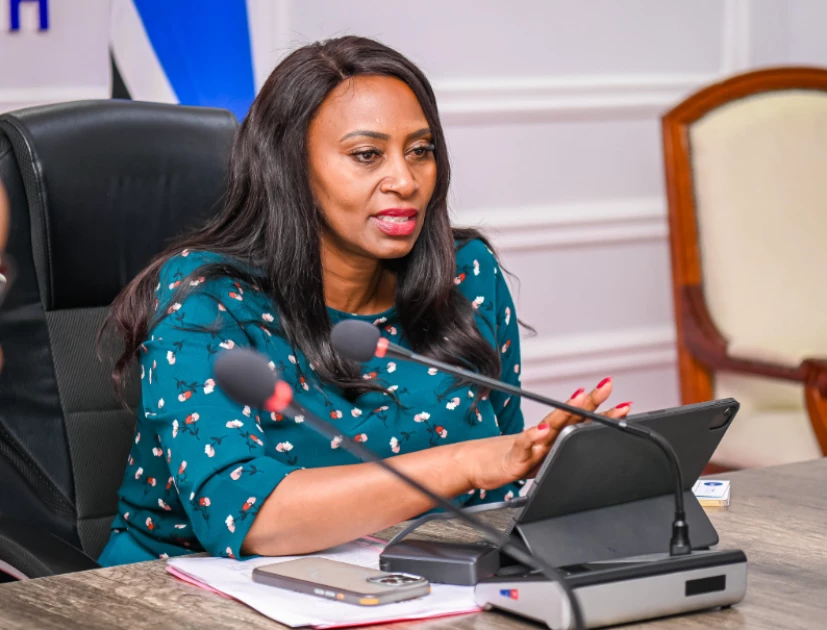
To prevent public panic from disrupting daily life, senior public health officials, including Public Health Principal Secretary Mary Muthoni and Health Cabinet Secretary Hon. Aden Duale, issued an immediate clarification.
The Ministry confirmed that the patient under observation had been thoroughly evaluated using advanced molecular diagnostics. The results from the national reference laboratories were completely negative for Ebola and all other known viral hemorrhagic fevers. The patient’s symptoms were subsequently attributed to a severe, localized bacterial infection compounded by acute malaria, both of which are common and treatable.
“A suspected Ebola case in Kenya is an administrative classification used to trigger immediate safety measures, not a medical diagnosis. The fact that this case was flagged, isolated, and cleared within hours is evidence that our early warning architecture is functioning at peak efficiency. We urge the public to cease spreading unverified medical alerts that cause unnecessary fear.” — Ministry of Health Official Press Release.
The ministry emphasized that treating a patient as a “suspected case” is a sign of system strength rather than vulnerability. In public health, waiting for absolute certainty before isolating a patient is a dangerous gamble; out of an abundance of caution, containment must always precede laboratory confirmation.
The Ripple Effect: How Health Scares Impact East Africa’s Economy
A false alarm regarding a highly contagious virus does more than cause temporary social anxiety—it can have real financial consequences for a developing economy. Kenya serves as the primary logistical and commercial hub for the entire East and Central African region, making its borders exceptionally sensitive to public health scares.
Tourism and Hospitality Stagnation
The tourism sector is highly sensitive to news of infectious diseases. When unverified reports of a suspected Ebola case emerge, international travel agencies, tour operators, and prospective visitors often hesitate, leading to immediate cancellations of safari bookings, hotel reservations, and corporate conferences. For a country reliant on tourism for foreign exchange earnings and employment, maintaining an accurate, rumor-free international health profile is a economic necessity.
Disruptions Along the Northern Transit Corridor
The Northern Corridor is a vital trade lifeline, seeing thousands of long-haul cargo trucks move daily from the Port of Mombasa through Nairobi, Eldoret, and Malaba into Uganda, Rwanda, South Sudan, and the Democratic Republic of Congo.
If border entry points become bogged down by panic-driven health delays, transport timelines stretch, supply chains stall, and the cost of essential goods rises across the region. Border officials must strike a delicate balance: enforcing thorough health screenings without causing logistical bottlenecks that freeze regional commerce.
The Surveillance Architecture: How Kenya Tracks Biological Threats
To ensure that any potential viral threat is stopped before it spreads into local communities, the Kenya National Public Health Institute (KNPHI) utilizes a multi-layered surveillance infrastructure. This system relies on real-time data collection, rapid laboratory processing, and coordinated local action.
[Point of Entry Screening] —> [Local Isolation & Alert] —> [Reference Lab PCR Testing] —> [National Response/Clearance]
1. Digital Health Screenings at Points of Entry
At critical border towns like Busia, Malaba, and Namanga, alongside major aviation hubs like Jomo Kenyatta International Airport (JKIA), traditional paper forms have been replaced by digital health tracking platforms. Travelers coming from areas with active outbreaks must pass through thermal screening corridors and provide digital contact traces. This allows epidemiological teams to monitor and locate individuals rapidly if a regional contact link is discovered after their arrival.
2. Specialized PCR Laboratory Networks
Kenya has decentralized its diagnostic capabilities across four key national reference laboratories. These facilities are equipped with real-time Polymerase Chain Reaction (PCR) instruments capable of identifying specific viral RNA sequences within hours. By avoiding the need to ship biological samples to international laboratories, the country can confirm or dismiss a suspected case with minimal delay, providing rapid clarity during a health scare.
3. Integrated Disease Surveillance and Response (IDSR)
The IDSR framework links community health promoters, local dispensaries, sub-county hospitals, and major national referral institutions into a single information network. If a local clinic anywhere in the country records an unusual spike in high-fever cases or encounters a patient with atypical symptoms, an automated alert is generated, prompting regional epidemiologists to launch an immediate field investigation.
Strategic Comparison: Understanding Outbreak Containment Protocols
Managing highly infectious diseases requires distinct operational strategies based on how a pathogen spreads, its incubation period, and available medical interventions.
The table below outlines how Kenya’s public health frameworks adapt their containment, isolation, and diagnostic strategies depending on the nature of the biological threat.
Containment Element Viral Hemorrhagic Fevers (e.g., Ebola) Respiratory Pathogens (e.g., Influenza/COVID) Vector-Borne Threat (e.g., Severe Malaria)
Primary Transmission Route Direct contact with infected bodily fluids, blood, or contaminated surfaces. Airborne droplets, close-range aerosol inhalation, hand-to-mouth surface contact. Biological transmission via the bite of an infected female Anopheles mosquito.
Isolation Protocol Level Strict Level-4 biocontainment; negative-pressure wards, mandatory full-body PPE suit. Standard airborne isolation; negative-pressure airflow, N95/FFP3 respirators. Standard medical ward admitting; placement under long-lasting insecticide-treated nets (LLINs).
Diagnostic Validation Method Real-time PCR molecular assay, enzyme-linked immunosorbent assay (ELISA). Nasopharyngeal swab PCR testing, rapid antigen lateral flow assays. Microscopic blood smear examination, rapid diagnostic test (RDT) cassettes.
Primary Border Control Action Non-contact thermal scanning, mandatory physical travel history mapping. Universal visual screening, random mask compliance checks, voluntary testing. Vector control spraying at cargo bays, standing water drainage near transit points.
Managing “Infodemics”: How to Fact-Check Health News
The World Health Organization coined the term “infodemic” to describe an overabundance of information—both accurate and inaccurate—that co-occurs during a health emergency. Infodemics can make it incredibly difficult for the public to identify reliable guidance, often leading to panic or misplaced complacency.
To help protect your community from the harmful effects of health-related misinformation, consider incorporating these practical verification steps into your digital routine:
Verify the Primary Source: If an alarming message or social media post lacks a direct link to an official statement from the Ministry of Health, the World Health Organization, or the Africa CDC, treat it with caution.
Analyze the Terminology: Be wary of sensationalist language. Professional public health alerts use precise, clinical terms (e.g., “an isolated alert undergoing laboratory verification”), whereas rumors rely on emotionally charged phrases (e.g., “deadly virus outbreak cover-up”).
Cross-Reference with Mainstream News: Major domestic and international news agencies maintain dedicated health desks that verify stories with medical authorities before publishing. If a massive health event is claimed online but absent from reputable news outlets, it is highly likely to be inaccurate.
Check the Date and Context: Misinformation campaigns often recycle old photos, videos, or news articles from past regional outbreaks and present them as current events. Always verify the timestamps on images and media files before sharing.
The recent false alarm regarding a suspected case of Ebola in Kenya demonstrates that the country’s public health surveillance framework is alert and operational. By relying on verified scientific data, practicing good personal hygiene, and resisting the urge to share unverified rumors, citizens can help ensure that Kenya remains safe, stable, and resilient against public health challenges.