
A leaked internal Pentagon memo has ignited the most serious transatlantic rift in NATO’s 76-year history — but the alliance itself just slammed the door on Washington’s most explosive threat.
In a stunning rebuke to the Trump administration, NATO has confirmed there is no legal mechanism to suspend or expel member states from the alliance, directly undermining a reported Pentagon proposal to punish Spain for refusing to support U.S. military operations in the escalating war with Iran.
The crisis erupted after Reuters revealed the existence of an internal Pentagon email outlining punitive options against NATO allies deemed “difficult” — with Spain singled out as the primary target. The memo, circulating at the highest levels of the Pentagon, floated suspending Spain from the alliance and even reassessing U.S. diplomatic support for Britain’s claim to the Falkland Islands, according to a U.S. official who spoke on condition of anonymity.
The Pentagon Email That Shook the Alliance
The email’s contents read like a geopolitical bombshell. Frustrated by Spain’s refusal to grant the United States access, basing, and overflight rights — known in military shorthand as “ABO” — for operations against Iran, Pentagon officials drafted a series of retaliatory measures.
“ABO is just the absolute baseline for NATO,” the email reportedly stated, reflecting mounting anger within the Trump administration over what it sees as European freeloading in a conflict that has closed the Strait of Hormuz to global shipping since February 28.
President Donald Trump has already threatened to withdraw from NATO entirely, telling Reuters in an April 1 interview: “Wouldn’t you if you were me?”
His Defense Secretary, Pete Hegseth, has been equally blunt: “You don’t have much of an alliance if you have countries that are not willing to stand with you when you need them.”
But here is where the Pentagon’s plan hits a legal brick wall.
Why NATO Cannot — and Will Not — Expel Spain
The North Atlantic Treaty, signed in 1949 and joined by Spain in 1982, contains no provision for suspending or expelling members. Article 13 of the treaty allows only for voluntary withdrawal — and even then, only after a one-year notice period following 20 years of membership.
A NATO spokesperson made this crystal clear in a public statement, effectively neutralizing the Pentagon’s most aggressive option before it could even be formally proposed.
This legal reality leaves the Trump administration in an awkward position. The email itself acknowledged that suspending Spain would have “limited effect on U.S. military operations but a significant symbolic impact” — suggesting the move was designed more as political theater than strategic necessity.
Spain’s Defiant Response: ‘We Are Completely at Ease’
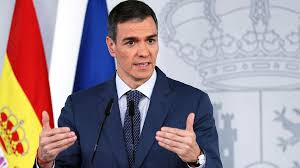
Spanish Prime Minister Pedro Sánchez wasted no time firing back. Arriving at an informal EU summit in Nicosia, Cyprus, Sánchez dismissed the Pentagon email as irrelevant to actual policy.
“We don’t base our decisions on emails; we base them on official documents and government positions,” he declared. “The Spanish government’s position is clear: full cooperation with our allies, but always within the framework of international law.”
Sánchez emphasized that Spain remains a “loyal partner” meeting its NATO obligations, noting that Spanish defense spending currently stands at 2.1% of GDP — above the traditional 2% threshold, though still far below the ambitious 5% target set at last year’s summit in The Hague.
Spain’s stance is not isolated. The United Kingdom, France, and Italy have all restricted the use of their military facilities or banned overflights for strikes against Iran, arguing that joining the U.S. naval blockade would amount to entering the war itself.
Britain initially refused a U.S. request to launch attacks from two British bases, later permitting only defensive missions to protect regional residents — including British citizens — amid Iranian retaliation.
The Bigger Picture: Is NATO Unraveling?
This crisis goes far beyond Spain. The U.S.-Israeli war with Iran has exposed deep fractures within the 32-member alliance, raising unprecedented fears that Washington might not honor its mutual defense commitments to European allies if they are attacked.
The Pentagon email’s stated goal was to “decrease the sense of entitlement on the part of the Europeans” — language that signals a fundamental shift in how the Trump administration views the transatlantic partnership.
Trump has repeatedly insulted British Prime Minister Keir Starmer, calling him “no Winston Churchill” and mocking Britain’s aircraft carriers as “toys.”
The memo’s inclusion of the Falkland Islands — a flashpoint between Britain and Argentina, whose Trump-aligned President Javier Milei claims sovereignty over the territory — suggests the administration is willing to weaponize long-standing diplomatic positions to force compliance.
What Happens Next?
For now, NATO’s legal structure protects Spain from formal expulsion. But the damage to alliance cohesion may already be done.