

For 47 years, no Iranian foreign minister had sat across from American negotiators at this level. For 48 hours in Islamabad, it looked like history might finally bend toward peace. Then it shattered.
Abbas Araghchi’s journey to Pakistan’s capital was supposed to be the diplomatic breakthrough the Middle East desperately needed. Instead, it has become a case study in how quickly high-stakes negotiations can collapse — and how a single social media post can turn a near-agreement into a naval blockade threat.
The talks, held in Islamabad on Saturday, represented the most intensive direct engagement between Tehran and Washington in nearly half a century. According to Araghchi himself, the two sides were “inches away” from signing what he called the “Islamabad MoU” — a memorandum that could have eased the spiraling military confrontation that has closed the Strait of Hormuz and pushed the region to the brink of full-scale war.
Then everything fell apart.
‘Maximalism, Shifting Goalposts, and Blockade’
In a blistering post on X early Monday, Araghchi laid the blame squarely on Washington. “In intensive talks at highest level in 47 years, Iran engaged with US in good faith to end war,” he wrote. “But when just inches away from ‘Islamabad MoU,’ we encountered maximalism, shifting goalposts, and blockade.”
The message was unambiguous: Tehran believed it had a deal. Washington, in Iran’s telling, moved the finish line at the last moment.
Araghchi’s closing line carried the weight of a warning shot across the diplomatic bow: “Zero lessons earned. Good will beget good will. Enmity begets enmity.”
The reference to “lessons” was pointed. Iranian diplomats have long argued that the Trump administration’s 2018 withdrawal from the JCPOA nuclear agreement — followed by the “maximum pressure” sanctions campaign — taught Tehran that American commitments are reversible. The Islamabad collapse, from Iran’s perspective, was déjà vu in real time.
Trump’s Blockade Threat: From Diplomacy to Gunboat
If Araghchi’s post was a diplomatic grenade, President Donald Trump’s response was a naval artillery shell.
In a Sunday post on Truth Social, Trump announced that the U.S. Navy would begin blocking ships trying to enter or leave the Strait of Hormuz — the world’s most critical oil chokepoint through which roughly one-fifth of global petroleum shipments pass.
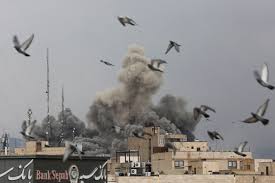
The threat was not abstract. The Strait has already been effectively closed to commercial traffic since February 28, when the U.S.-Israeli war with Iran erupted and Iranian forces began targeting vessels in the waterway. A formal U.S. naval blockade would transform a de facto shipping crisis into an explicit act of economic warfare, with consequences for energy markets from Tokyo to Berlin.
Iran’s response was immediate and defiant. Navy Commander Shahram Irani described Trump’s blockade threat as “very ridiculous and laughable,” telling the semi-official Tasnim news agency that Iranian naval forces are monitoring all American military movements in the region.
More ominously, Iran’s Islamic Revolution Guards Corps (IRGC) issued a statement warning that any U.S. military vessels approaching the Strait of Hormuz under “any title or pretext” would be considered a ceasefire violation and “dealt with severely.”
The diplomatic temperature in the Gulf just went from simmering to boiling.
Why Islamabad? The Pakistan Factor
The choice of Islamabad as a venue was never accidental. Pakistan occupies a unique position in the Iran-US matrix: a Muslim-majority nuclear power with deep historical ties to Tehran, yet also a long-standing — if complicated — partner of Washington in regional security.
By hosting the talks, Pakistani Prime Minister Shehbaz Sharif positioned his country as the indispensable intermediary in a conflict that threatens to engulf South Asia as well as the Middle East. Pakistan shares a 560-mile border with Iran. Any expansion of the war — whether through missile strikes, refugee flows, or economic collapse — would hit Islamabad directly.
For Araghchi, traveling to Islamabad was also a strategic signal. It allowed Iran to negotiate on neutral ground, under the diplomatic cover of a friendly Muslim nation, rather than in a European capital perceived as aligned with American interests. The fact that the talks failed anyway suggests the gulf between the two sides runs deeper than geography can bridge.
What Was the ‘Islamabad MoU’?
Neither Tehran nor Washington has released the text of the proposed memorandum, but the contours can be inferred from the public statements.
Araghchi’s emphasis on “good faith” and “ending war” suggests Iran was seeking a ceasefire framework — possibly including a halt to Israeli strikes on Iranian nuclear and military facilities, a relaxation of the Hormuz shipping blockade, and a pathway to sanctions relief.
Washington’s “maximalist demands,” in Iranian framing, likely included unconditional Iranian withdrawal from proxy operations in Syria, Lebanon, and Yemen; full access for international inspectors to military sites; and potentially regime-adverse security guarantees.
The “shifting goalposts” accusation implies that U.S. negotiators either introduced new conditions late in the process or redefined previously agreed terms — a tactic that has derailed Iran negotiations before.
The Diplomatic Debris Field
The Islamabad failure leaves the region with no off-ramp from escalation. The last direct channel between Tehran and Washington is now contaminated by mutual accusations. European allies, already fractured over NATO’s handling of the Iran war, have no framework to reinsert themselves. And Russia and China — both veto-wielding Security Council members with Iranian ties — are watching from the sidelines, calculating how a prolonged conflict serves their interests.