

The Irreversibility of Taifa Care
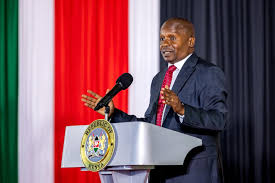
Deputy President Kithure Kindiki has sent a clear message to critics of the government’s health reforms: the Social Health Authority (SHA) is here to stay. While chairing recent sessions of the Intergovernmental Budget and Economic Council (IBEC), Kindiki noted that the program has crossed the threshold of “irreversibility.”
“We have to perfect it. With millions of Kenyans on board, we cannot imagine this program not working. It would amount to letting the whole country down,” Kindiki stated.
By the Numbers: The Scale of the Transition
The shift from the National Hospital Insurance Fund (NHIF) to SHA (often referred to as Taifa Care) has seen a massive surge in enrollment:
-
Total Registered: Over 29.4 million Kenyans are now on board as of April 2026.
-
Previous Reach: Under the old NHIF system, only about 7 million people were covered.
-
2027 Goal: The government is targeting 55 million Kenyans by next year to achieve true universality.
What’s New for the Citizen?
Kindiki’s commitment comes with several promises aimed at making healthcare more accessible for the average Kenyan:
-
Free Outpatient Services: The DP announced that Kenyans will soon enjoy free outpatient medical services in all hospitals under a new government initiative.
-
Support for the Vulnerable: The national government is currently paying premiums for 2.2 million vulnerable Kenyans, ensuring they aren’t left behind by the 2.75% contribution model.
-
Direct Delivery of Supplies: To fix the perennial “no medicine” problem, a new direct delivery system has been introduced to bypass county bureaucracies and get supplies straight to hospital shelves.
Fixing the Teething Problems
Kindiki acknowledged the “noise and litigation” that slowed the initial rollout but insisted that the focus is now on results. The National Treasury has already disbursed over Ksh 102.3 billion to health facilities to clear outstanding claims and ensure that hospitals don’t turn away SHA cardholders.
The Deputy President urged counties to emulate regions like Murang’a, Migori, and Mombasa, which have already begun paying premiums for their most indigent residents.
The Verdict
For DP Kindiki, the success of SHA is a legacy project for the Ruto administration. By framing the program as “irreversible,” the government is betting everything on a digitized, well-funded healthcare system. Whether the “Taifa Care” model can overcome its remaining logistical hurdles remains the biggest question of 2026, but the Deputy President is clearly prepared to stay the course.
Have you registered for SHA yet? Or are you still facing challenges at your local hospital? Let us know your experience in the comments!