

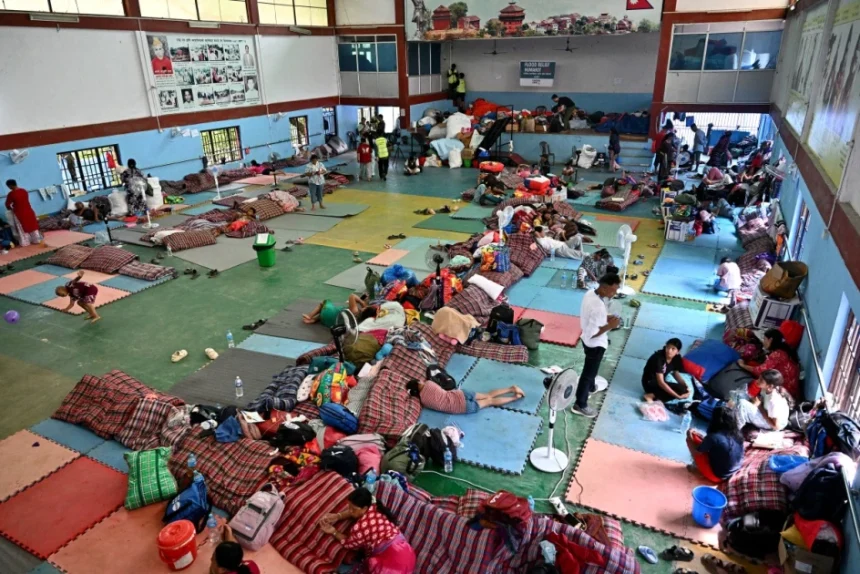
Around 9:20 AM on August 26, 2026, the quiet morning routine at Tribhuvan Trishuli Secondary School in Nuwakot District, Nepal, was shattered by a series of frantic phone calls. A colleague upstream in Betrawati warned that a massive surge of water, mud, ice, and debris was tearing down the Trishuli River. Moments later, the school accountant rushed through the doors, shouting: “The flood is coming, the flood is coming!”
With no official emergency alerts from authorities, 47-year-old principal Rajendra Dawadi faced a agonizing choice: ignore the unconfirmed warnings and keep classes running, or evacuate nearly 1,600 children and risk losing a day of school.
He chose to act immediately—a decision that saved hundreds of young lives with only seconds to spare.
1. A Split-Second Decision Against Unthinkable Odds
The disaster was triggered by a sudden, massive glacial and rock collapse along the Nepal–Tibet border. The collapse unleashed a tsunami-like wall of water that tore through mountain villages and infrastructure across the Himalayan region.
RACE AGAINST THE GLACIAL SURGE
[ 9:20 AM: Phone Warning ] ──► Upstream contact reports massive river surge
│
▼
[ Emergency Action ] ──► School bell rung; 900 students moved uphill
En route buses ordered to reverse
│
▼
[ 10 Minutes Later ] ──► Torrent destroys 76-year-old school building
Understanding the geography of the Trishuli Valley, Dawadi refused to wait for visual confirmation.
“If the information was wrong, we would lose a day of schooling. But if it was true, we were going to lose our lives… Even if the flood was not coming, it was just a matter of a single day’s classes.”
— Rajendra Dawadi, Principal
He ordered a non-teaching staff member to ring the emergency school bell, halting all lessons and directing teachers to move students out of classrooms toward a nearby hillside.
2. A Coordinated Evacuation Under Extreme Panic
Managing over 1,600 pupils spread across classrooms, school buses, and campus hostels required instant operational coordination:
900 Students on Campus: Teachers guided terrified students up a steep, muddy incline. Some children panicked, and at least one student fainted, but staff kept the crowd moving upward.
700 Students En Route via Buses: Realizing several buses packed with children were making their morning runs, Dawadi frantically phoned the drivers, commanding them to turn around immediately. One bus carrying dozens of students reversed direction just moments before the adjacent bridge collapsed into the torrent.
30 Girls in Campus Hostels: Female students staying in the on-site hostel were rounded up by staff and ushered up the hill alongside the main student body.
+———————————–+———————————————————————————+
| Evacuation Group | Operational Action Taken by Staff |
+———————————–+———————————————————————————+
| **On-Campus Students (~900)** | Rung emergency bell; escorted up muddy hillside away from riverbanks. |
+———————————–+———————————————————————————+
| **En-Route Bus Students (~700)** | Drivers contacted via cell phone; vehicles turned back before bridge collapsed. |
+———————————–+———————————————————————————+
| **Hostel Residents (30)** | Evacuated directly from dormitories to high-ground safety zones. |
+———————————–+———————————————————————————+
3. Watching History Disappear in Minutes
Within 10 to 15 minutes of the alarm, a roaring avalanche of mud, boulders, ice, and water surged over the banks of the Trishuli River.
From the safety of the hillside, students and teachers watched in horror as their 76-year-old school campus—an 18-room, three-storey building rebuilt following the devastating 2015 Nepal earthquake—was completely swallowed by the torrent.
> “I, along with my friends, survived by just 10 seconds. Within no time, the bazaar was swept away in front of my eyes.”
> — Yunisha (16), Student at Tribhuvan Trishuli Secondary School
While all students inside the school grounds escaped, the tragedy was not without loss. Two members of the school staff—non-teaching employee Chulrim Lama and teacher Santos Parihar—were unable to reach safety in time and remain missing.
4. The Road Ahead: Rebuilding Education After Disaster
The devastation at Tribhuvan Trishuli Secondary School is part of a broader educational catastrophe across northern Nepal. According to international relief organizations like Save the Children, at least 69 schools were damaged or destroyed by the flash floods, leaving nearly 19,000 children without functioning classrooms.
EDUCATIONAL CRISIS AT A GLANCE
[ 69+ Schools Destroyed ] ──► 19,000+ Students Disrupted
│
▼
[ Urgent Needs ] ──► Psychological Counseling for Trauma
Safe Ground to Rebuild Infrastructure
Revisited by grateful parents who embraced him in tears days after the disaster, Dawadi has deflected titles of heroism, maintaining that protecting his students was simply his fundamental responsibility.
Now describing himself as a “principal without a school,” Dawadi’s focus has turned to trauma counseling for his frightened students and appealing to international partners and the Nepalese government to find safe ground to rebuild.