

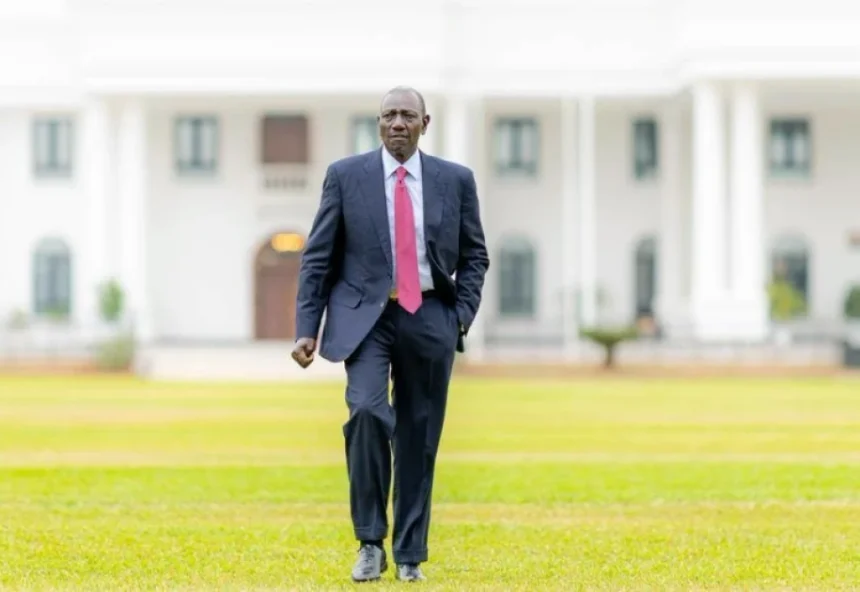
President William Ruto built his international brand as a tireless advocate for a borderless Africa. From calling for a single continental market and championing visa-free regimes to demanding an end to dollar dominance in intra-African trade, he positioned Kenya as the beating heart of African integration.
Standard Newspaper
+ 1
A direct order issued at State House Nairobi has sparked a major debate over his foreign policy vision.
www.thecitizen.co.tz
Addressing representatives of Micro, Small, and Medium Enterprises (MSMEs), President Ruto ordered a administrative crackdown on foreign nationals operating small-scale businesses and hawking. Setting a tight deadline, he declared that non-citizens running low-capital street retail must close shop.
www.thecitizen.co.tz
+ 1
“We have built investor confidence so that investors come to Kenya to manufacture and build industries, not hawkers and traders… It cannot be that someone comes from China or elsewhere just to become a hawker or open a small shop.”
— President William Ruto
Anadolu Ajansı
The announcement sparked immediate praise from local traders struggling against tight profit margins, but it has sent waves of anxiety through regional diplomatic circles and foreign trader communities across East Africa.
Citizen Digital
This move highlights a sharp, recurring friction in modern diplomacy: the clash between domestic protectionism and a Pan-African continental vision.
Citizen Digital
1. The Pan-African Rhetoric
On global and continental stages, President Ruto’s message has been consistent, ambitious, and uncompromising:
Citizen Digital
Borderless Movement: Championing visa-free access for African visitors to Kenya to boost intra-continental trade, movement of ideas, and enterprise creation.
Citizen Digital
Economic Integration: Acting as a leading voice for the African Continental Free Trade Area (AfCFTA) and urging member nations to tear down regional tariff and non-tariff barriers.
Citizen Digital
Monetary Sovereignty: Calling for a Pan-African Payment and Settlement System so African nations can trade in local currencies rather than remaining “hostage to foreign currency” like the US dollar.
Standard Newspaper
2. The Protectionist Reality
The directive to push foreign nationals out of street hawking and micro-retail shifts the political focus from grand continental ideals to domestic survival.
Citizen Digital
Feature The Pan-African Vision The Domestic Directive
Market Access Open borders, free trade, and seamless establishment for regional citizens. Foreign traders barred from low-capital retail, stall shops, and street hawking.
Primary Audience African Union summits, regional trade blocs, and global financial summits. Local MSMEs, informal vendors, and domestic voter bases facing high costs of living.
Legal Strategy Harmonizing cross-border protocols and lowering trade friction. Fast-tracking the Local Content Bill to legally reserve micro-sectors for Kenyans.
3. The Practical Dilemmas
A. The EAC Common Market Dilemma
Kenya is a founding pillar of the East African Community (EAC). Under the EAC Common Market Protocol, partner states agree to the free movement of goods, services, labor, and the right of establishment. Restricting micro-traders from member countries—such as Uganda, Rwanda, Tanzania, or Burundi—runs directly against these legal commitments. While the government stresses that validly documented foreign traders remain protected, policing informal street retail without infringing on treaty rights is a legal tightrope.
Citizen Digital
+ 1
B. The Risk of Regional Retaliation
Hundreds of thousands of Kenyan entrepreneurs, transport workers, and informal traders operate in neighboring countries across Central and East Africa. Enforcing a blanket ban on foreign hawkers at home risks provoking reciprocal restrictions or informal crackdowns against Kenyan traders living abroad.
C. Drawing the Line: Investors vs. Hawkers
The government argues that its target is not foreign investment, but unfair competition in low-capital sectors where large-scale foreign suppliers skip wholesale structures to hawk directly to consumers. Distinguishing between a predatory supply chain and an independent micro-entrepreneur on the street is notoriously difficult, risking administrative overreach and rising anti-immigrant sentiment.
Sacco Review
Bridging the Divide
Can a leader champion borderless trade abroad while reserving street corners for citizens at home?
Citizen Digital
Supporters argue that true Pan-Africanism cannot mean abandoning local citizens to unregulated competition in the informal sector. Critics contend that criminalizing micro-trade damages Kenya’s standing as a welcoming regional hub and undermines the very integration the President preaches.
Citizen Digital
How Parliament shapes the upcoming Local Content Bill—and how regional partners respond—will determine whether Kenya can balance local livelihoods with its broader Pan-African ambitions.
Sacco Review