

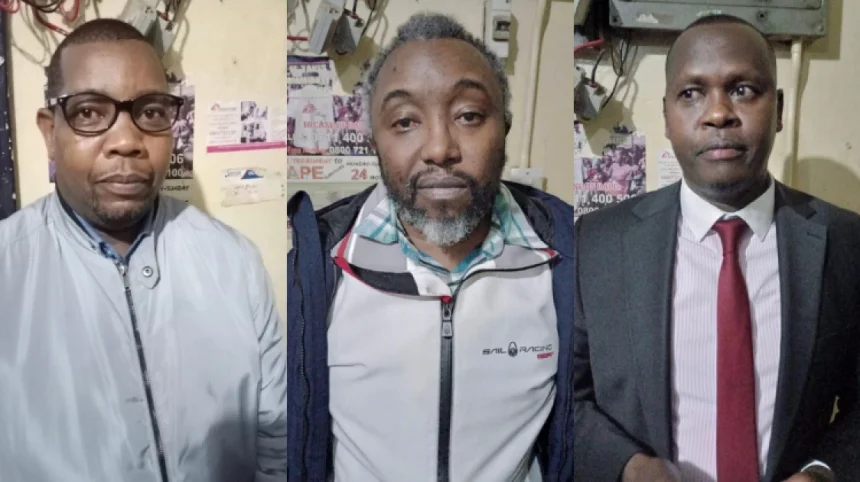
In a swift operation that has sent shockwaves through the corridors of the Attorney General’s office, detectives from the Directorate of Criminal Investigations (DCI) have apprehended three individuals suspected of orchestrating a multi-million shilling fraud at the Office of the Public Trustee.
The arrests, which occurred in Nairobi following a week-long forensic trail, involve the siphoning of approximately Ksh.5.2 million from accounts meant to safeguard the estates of deceased persons and vulnerable beneficiaries. This latest development highlights the persistent vulnerability of state-managed trust funds and the lengths to which syndicates will go to exploit the administrative loopholes in public offices.
The Sting Operation: How They Were Caught
The crackdown began after internal auditors flagged suspicious transactions originating from the Public Trustee’s ledger. The suspects, whose identities were confirmed following their arraignment, were reportedly linked to a series of unauthorized withdrawals and account transfers.
According to sources close to the investigation, the trio operated by masquerading as legitimate beneficiaries or authorized agents of unclaimed estates. By using forged documents—including death certificates and letters of administration—they managed to bypass several layers of security. However, the DCI’s “hawkshaws” (detectives) utilized digital footprints and banking records to trace the flow of funds back to accounts controlled by the suspects.
The Ksh.5.2 million in question is believed to be only a fraction of what may have been targeted, as investigators are now expanding their search to see if there are internal collaborators within the Office of the Public Trustee who facilitated the breach.
The Role of the Public Trustee
To understand the gravity of this crime, one must look at what the Office of the Public Trustee represents. Under the Ministry of Justice and the Attorney General’s office, the Public Trustee is the legal custodian for the estates of persons who die without a will (intestate), or where the executors are unable or unwilling to act.
This office manages billions of shillings in assets, ranging from land and commercial buildings to cash savings and insurance payouts. Most of these funds belong to orphans, widows, and other vulnerable dependents. When a syndicate targets this office, they are not just “robbing the government”; they are effectively stealing from the most vulnerable members of Kenyan society.
A Pattern of Public Office Scams
This Ksh.5M fraud is not an isolated incident. In recent months, Kenya has seen a surge in white-collar crimes targeting government institutions. From land fraud cases at Ardhi House to the recent jet fuel theft bust at Wilson Airport, the appetite for illicit enrichment remains a significant challenge for the 2026 administration.
The Public Trustee fraud, however, is particularly sophisticated because it requires intimate knowledge of the succession process. Fraudsters often wait for years, identifying “dormant” estates where no one has come forward to claim the assets. They then “resurrect” these cases with a paper trail of high-quality forgeries that can deceive even experienced registrars.
The “Unclaimed Assets” Goldmine
The Unclaimed Financial Assets Authority (UFAA) currently holds billions of shillings in assets that Kenyans have failed to claim. The Office of the Public Trustee operates in a similar space, dealing with physical estates and trust funds.
The syndicate arrested this week reportedly focused on estates that had remained inactive for over five years. By focusing on these accounts, they hoped the transactions would go unnoticed. The discovery of this Sh5.2 million hole suggests that a more robust, digitized system for tracking estate disbursements is urgently needed to prevent such “silent” thefts.
Public Reaction and the Call for Reform
As news of the arrests broke, social media platforms and local news cycles in Nairobi were flooded with calls for more stringent vetting of public officials. Many Kenyans are questioning how such a large sum could be moved without multiple high-level approvals.
“The Public Trustee is supposed to be the last line of defense for a child who has lost their parents. If that office is compromised, where is the hope for justice?” – Excerpts from a local community leader’s statement.
The DCI has reassured the public that they are leaving no stone unturned. The focus of the ongoing investigation is now on:
System Vulnerabilities: Identifying how the suspects gained access to private account details.
Internal Audit Gaps: Why the unauthorized transfers were not stopped at the point of origin.
Wider Network: Whether this trio is part of a larger “cartel” operating within the State Law Office.
The Legal Battle Ahead
The three suspects face multiple charges under the Penal Code, including:
Conspiracy to commit a felony.
Forgery of official documents.
Obtaining money by false pretenses.
Money laundering.
If convicted, they face significant prison time and the forfeiture of assets to recover the stolen Sh5.2 million. The Office of the Director of Public Prosecutions (ODPP) has indicated that it will seek heavy penalties to serve as a deterrent to others who might be eyeing public funds.
How to Protect Your Estate
In light of this fraud, legal experts are advising Kenyans to take proactive steps to protect their legacy. To ensure your assets don’t fall into the hands of fraudsters at the Public Trustee:
Write a Will: A clear, legally binding will minimizes the involvement of the Public Trustee and ensures your assets go to your chosen beneficiaries.
Register Your Assets: Ensure all land titles and bank accounts are properly registered and that your next of kin are aware of them.
Regular Check-ups: If you are a beneficiary of a trust, regularly check in with the office to ensure the account is active and the records are accurate.
Conclusion: The Road to Transparency
The arrest of these three suspects is a win for the DCI and a step toward restoring faith in public institutions. However, it also serves as a stark reminder that the fight against corruption in Kenya is far from over.
As the suspects prepare for their next court date, the focus remains on the $5.2 million and the potential for larger-scale reforms within the Attorney General’s office. The “Bottom-Up” economic agenda relies on the integrity of public funds; if the foundation of trust is broken, the entire structure is at risk.