

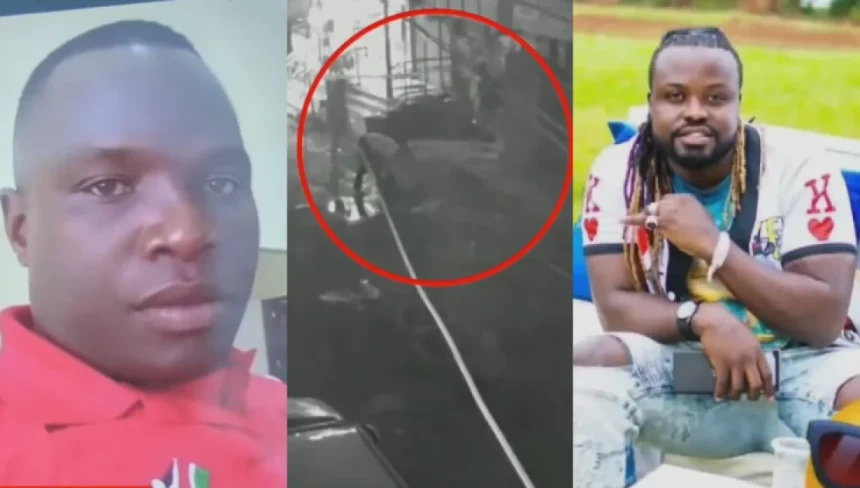
A family in Umoja Estate is demanding justice following the death of a man who allegedly succumbed to injuries sustained after a brutal beating by a military officer.
- What Happened in Umoja?
- Family Demands Accountability
- Rising Concerns Over Military Brutality
- What the Law Says
- Calls for Independent Investigation
- Public Outrage and Community Fear
- A Pattern of Impunity?
- Military Silence Raises Questions
- Human Rights Groups Speak Out
- Why This Case Matters
- What Justice Would Look Like
- Conclusion
The incident has sparked public outrage, renewed debate over security forces’ conduct, and raised serious questions about accountability when uniformed officers are accused of abusing civilians.
As investigations begin, human rights activists and residents are calling for transparency, prosecution, and an end to what they describe as growing impunity among armed officers.
What Happened in Umoja?
According to family members and eyewitnesses, the deceased was allegedly assaulted by a military officer under circumstances that remain unclear. Witnesses claim the beating was severe and sustained, leaving the victim critically injured.
He was later rushed for medical treatment but succumbed to his injuries, plunging the family into grief and anger.
Residents say the incident occurred in full view of members of the public, intensifying calls for swift justice and independent investigations.
Family Demands Accountability
The victim’s family has publicly demanded:
-
Arrest and prosecution of the officer involved
-
An independent post-mortem examination
-
Transparency in investigations
-
Protection of witnesses
Family spokespersons say they fear the case could be covered up due to the suspect’s military status, a concern shared by many Kenyans in similar past cases.
“This was a human being. Wearing a uniform should not put anyone above the law,” a family member said.
Rising Concerns Over Military Brutality
The case has reignited concerns over military involvement in civilian spaces, particularly in urban residential areas.
Under Kenyan law, civilian policing is the mandate of the National Police Service, while the military is primarily tasked with national defence.
Legal experts argue that when military officers engage civilians outside official deployment, lines of accountability become blurred, often disadvantaging victims.
What the Law Says
Kenya’s Constitution guarantees:
-
The right to life
-
Protection from torture and cruel treatment
-
Equality before the law
If proven, the alleged assault would constitute:
-
Excessive use of force
-
Violation of human rights
-
Potential manslaughter or murder
Human rights lawyers stress that military officers are not immune from prosecution and can be charged in civilian courts for crimes committed against civilians.
Calls for Independent Investigation
Civil society groups are calling for investigations independent of military structures, arguing that internal probes often lack transparency.
They want:
-
The Independent Policing Oversight Authority (IPOA) involved
-
Civilian-led forensic analysis
-
Public release of findings
Activists warn that failure to act decisively could embolden future abuses.
Public Outrage and Community Fear
Following news of the death, Umoja residents expressed fear and anger, with many saying:
-
Encounters with armed officers feel increasingly unsafe
-
Civilians are often powerless during confrontations
-
Victims rarely receive justice
Some residents reported witnessing similar incidents that went unreported due to fear of retaliation.
A Pattern of Impunity?
Kenya has witnessed several past cases where civilians died following encounters with security officers, leading to public skepticism over accountability.
Critics argue that:
-
Investigations are slow
-
Officers are rarely convicted
-
Families are left without closure
The Umoja case has become a symbol of a broader struggle against state-linked violence.
Military Silence Raises Questions
As of the time of reporting, the Kenya Defence Forces had not issued a detailed public statement clarifying:
-
Whether the officer was on duty
-
The circumstances leading to the confrontation
-
Disciplinary measures taken
Rights groups argue that silence deepens mistrust and fuels speculation.
Human Rights Groups Speak Out
Human rights organizations have condemned the alleged beating, calling it:
-
Unacceptable
-
Unconstitutional
-
A threat to civilian safety
They insist that justice in this case would send a strong message that uniformed officers are accountable to the same laws as ordinary citizens.
Why This Case Matters
Legal analysts say this case could become a turning point if handled properly. A transparent process would:
-
Restore public confidence
-
Deter future abuses
-
Reinforce the rule of law
Failure, however, would deepen fear and resentment toward security agencies.
What Justice Would Look Like
Experts outline key steps toward justice:
-
Immediate arrest of the suspect
-
Independent post-mortem
-
Witness protection
-
Public prosecution in civilian court
-
Compensation for the family if liability is established
Anything less, they argue, would amount to institutional failure.
Conclusion
The death of a man in Umoja following an alleged beating by a military officer is a tragic reminder of the fragile relationship between civilians and security forces.
As the family mourns, the nation watches closely. This case is not just about one life lost — it is about whether justice applies equally to all, regardless of uniform or rank