
When Minister for Foreign Affairs Samuel Okudzeto Ablakwa announced the visa waiver today, he wasn’t just speaking to diplomats; he was speaking to the thousands of Ghanaian students in Lusaka, the Zambian copper traders looking at West African markets, and the families separated by bureaucratic red tape.
1. Mobility for the Next Generation
For the first time in the history of Ghana-Zambia relations, the bureaucratic “wall” has fallen.
The Student Benefit: With dozens of Zambian students currently enrolled in Ghanaian universities (and vice versa), the removal of visa fees and renewal hurdles means more resources can go toward tuition and research.
The Tourism Surge: Zambia’s Victoria Falls and Ghana’s Cape Coast Castle are now effectively “local” destinations for citizens of both nations. Travel agencies in Accra and Lusaka are already reporting a spike in inquiries for Easter and Summer 2026 packages.
2. Strengthening the African Passport
By February 2026, Ghana has become a global leader in “Passport Diplomacy.”
The Global Ranking: The Ghanaian passport now ranks significantly higher in global mobility, thanks to reciprocal deals with nations like Colombia, Mozambique, and now Zambia.
Leading by Example: Ghana is now one of only a handful of African nations—including Rwanda, Seychelles, The Gambia, and Benin—to offer such wide-reaching visa-free access to fellow Africans. This “Open Door” policy is the engine room of the African Continental Free Trade Area (AfCFTA).
3. The “Mahama Ultimatum”: A Policy Win
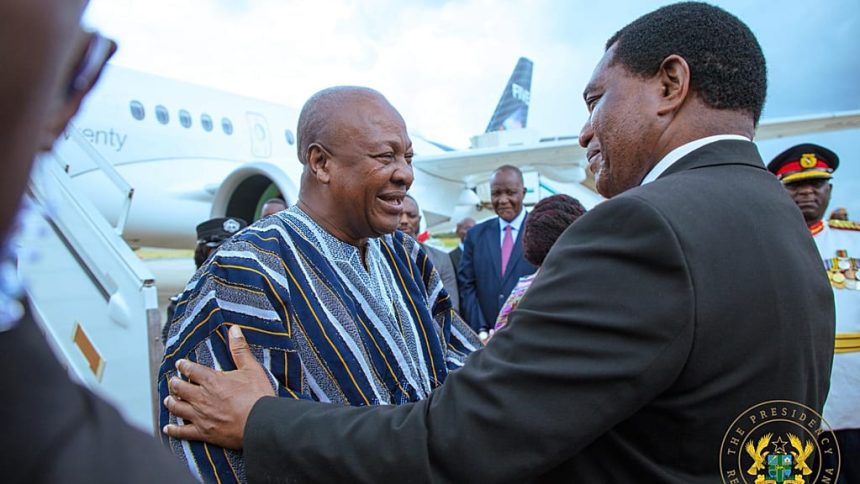
Interestingly, it was revealed that President John Dramani Mahama made the visa waiver a “condition” for his State Visit.
The Directive: Mahama reportedly told his foreign ministry, “If you don’t make this happen, don’t join me on this visit.”
The Result: This high-level pressure resulted in a comprehensive 90-day waiver that sets a new gold standard for bilateral agreements in Africa. It proves that with enough political will, the “Border-Free Africa” vision of Agenda 2063 is achievable right now.