

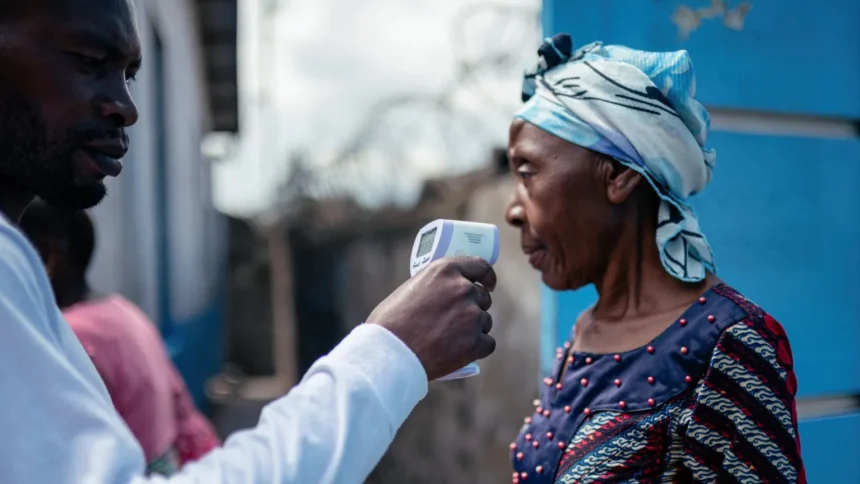
The international community is facing a familiar, formidable health threat with a highly dangerous twist. In an official briefing, World Health Organization Director-General Dr. Tedros Adhanom Ghebreyesus designated the escalating Ebola epidemic originating in the eastern Democratic Republic of the Congo (DRC) as a Public Health Emergency of International Concern (PHEIC).
The declaration underscores the significant risk of regional spillover across East and Central Africa, driven by dense population movements, cross-border trading routes, and active humanitarian challenges in the affected provinces.
Importantly, while the WHO clarified that the outbreak does not currently meet the operational criteria of a global pandemic emergency, the legal threshold for coordinated international intervention under the International Health Regulations (IHR) has been fully breached.
1. The Current Numbers: A Rapidly Evolving Picture
The epicentre of the transmission grid sits squarely in the Ituri Province of northeastern DRC, with high-intensity clusters actively reported in the Mongwalu and Rwampara health zones.
As of mid-May, local surveillance and Africa Centres for Disease Control and Prevention (Africa CDC) teams have registered staggering preliminary figures:
Suspected/Confirmed Cases: Over 246 suspected cases under monitoring.
Fatalities: At least 80 suspected deaths, representing a baseline case fatality rate fluctuating between 30% and 50%.
Frontline Vulnerability: At least four documented deaths among local healthcare workers, a critical indicator pointing to early breaches in hospital-level infection prevention and control (IPC) protocols.
The crisis crossed a dangerous milestone when Ugandan health authorities officially confirmed that the virus had crossed its borders. At least two patients with a history of travel from the DRC were admitted to intensive care units, emphasizing just how fluid the geographical boundary lines are when combating viral pathogens.
2. The Bundibugyo Strain: Why Existing Tools Are Falling Short
The most alarming technical detail keeping epidemiologists awake at night is the genetic profile of the pathogen. Laboratory sequencing conducted by the Institut National de Recherche Biomédicale (INRB) in Kinshasa confirmed that this epidemic is driven by the Bundibugyo ebolavirus (BVD)—not the more common Zaire ebolavirus strain.
This distinction changes the entire playbook for medical countermeasures:
The Structural Deficit in Ebola Countermeasures
┌───────────────────────────────────────┬───────────────────────────────────────┐
│ Zaire Ebolavirus Framework │ Bundibugyo Ebolavirus (2026 Outbreak) │
├───────────────────────────────────────┼───────────────────────────────────────┤
│ • Highly effective licensed vaccines │ • ZERO licensed vaccines currently │
│ (e.g., Ervebo) available. │ approved or deployed globally. │
│ • Validated monoclonal antibody │ • ZERO specific therapeutic treatments│
│ therapies heavily stocked. │ cleared for clinical use. │
└───────────────────────────────────────┴───────────────────────────────────────┘
Because the global stockpiles of vaccines and therapeutics were engineered specifically to lock onto the Zaire strain, the world is essentially entering this battle with a highly constrained medical toolkit.
The response must rely entirely on old-school public health interventions: aggressive contact tracing, rapid diagnostic testing, immediate physical isolation of suspected cases, and safe, dignified burials.
3. Regional Vulnerabilities: Why the Risk of Spread is High
The geographic profile of Ituri and neighboring North Kivu provinces presents an intricate logistical puzzle for emergency responders. Several factors are compounding the difficulty of containing transmission chains:
Mining-Related Mobility: The Mongwalu region is heavily defined by artisanal mining camps. These informal economic hubs see thousands of transient workers arriving and leaving weekly, creating silent, untraceable export loops into neighboring towns.
Cross-Border Trade Corridors: Strong commercial ties connect eastern DRC directly with markets in western Uganda and southern South Sudan. Thousands of merchants cross these land borders daily, making entry-point screening incredibly difficult to scale effectively without paralyzing regional commerce.
Insecurity and Humanitarian Gaps: Ongoing skirmishes involving local armed groups restrict international aid agencies’ access to remote villages. If health teams cannot safely enter a community to investigate unexplained deaths, transmission chains continue to multiply in the shadows.
4. The Global Response Directive: No Borders Closed
Despite the high-stakes emergency designation, the WHO has explicitly advised against the implementation of international travel or trade restrictions targeting the DRC or Uganda. Historical data proves that blanket border closures rarely halt a virus; instead, they force movement into unmonitored, illegal crossing points while devastating the local economies needed to fund the healthcare response.
Instead, the WHO and Africa CDC have activated an immediate regional mandate:
Immediate Strategic Pillars Ordered under the PHEIC:
• Rapid deployment of 5+ metric tonnes of IPC kits and medical tents from Kinshasa to Bunia.
• Activation of the continental Incident Management Support Team (IMST) to coordinate cross-border data sharing.
• Launching aggressive, localized community sensitization campaigns with traditional and religious leaders.
• Fast-tracking emergency regulatory pathways for clinical trials targeting Bundibugyo-specific candidate vaccines.
Conclusion: A Test of Continental Resilience
The PHEIC declaration serves as a global distress signal designed to unlock emergency international financing, technical personnel, and logistical support. The DRC possesses arguably the most experienced frontline health workforce in the world when it comes to managing viral haemorrhagic fevers, having successfully quelled 16 previous Ebola outbreaks since 1976.
However, with the rare Bundibugyo strain operating in a highly volatile, highly mobile regional environment, the coming weeks will put Africa’s unified health architecture to its ultimate test. Success will depend heavily on how quickly global research consortiums can match the speed of the virus on the ground.