
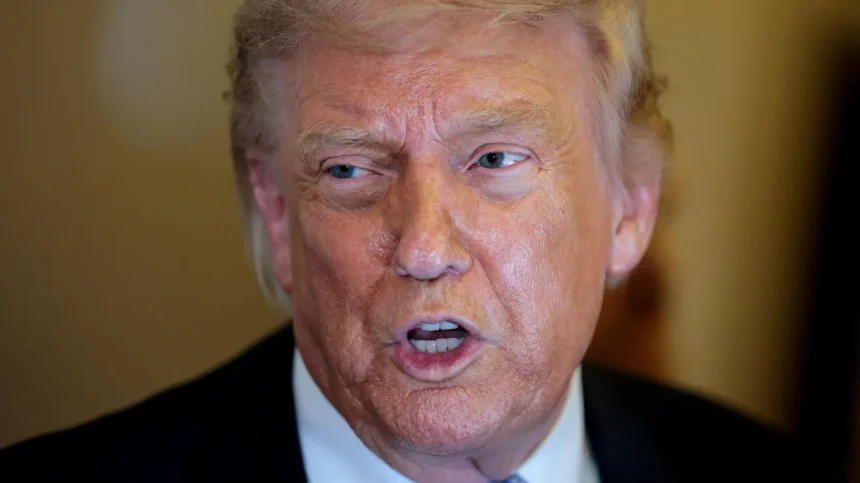
Geopolitical tensions in the Middle East have reached a dangerous new crescendo. In a series of highly charged public statements, United States President Donald Trump issued a chilling ultimatum to Tehran, declaring that the “clock is ticking” and warning the Iranian leadership to accept Washington’s terms immediately or risk catastrophic consequences.
Writing on his social media platform, Truth Social, the US President did not mince words regarding the stalled diplomatic efforts to end the three-month-old military conflict.
“For Iran, the Clock is Ticking, and they better get moving, FAST, or there won’t be anything left of them. TIME IS OF THE ESSENCE!” Trump warned, signaling a massive loss of patience in Washington.
The sudden escalation comes as a fragile, Pakistan-mediated ceasefire teeters on the brink of total collapse. Despite high-level shuttle diplomacy by Pakistani officials in Tehran, peace talks have ground to a complete halt over control of global shipping lanes and aggressive new conditions set by the White House.
The Islamabad Deadlock: Why the Peace Progress Stalled
The current military standoff seemed briefly on the path to de-escalation when the US and Iran agreed to an initial two-week truce brokered by Islamabad. However, the goodwill evaporated almost instantly when the implementation phase hit a diplomatic brick wall.
The breakdown in negotiations centers on several unyielding friction points:
The US Five-Condition Ultimatum: Washington has demanded strict concessions before relaxing its military posture. According to regional intelligence reports, these terms include the immediate transfer of 400 kilograms of enriched uranium out of Iran and an absolute waiver of any wartime financial damages or compensation from the US.
The Strait of Hormuz Leverage: Having seen its conventional air and naval capabilities severely degraded by early US strikes, Tehran is playing its remaining economic trump card. Iran has introduced a highly controversial “professional traffic mechanism” for the Strait of Hormuz—the world’s most vital oil transit chokepoint.
The Maritime Insurance Gambit: Under this newly unveiled system, Iran plans to collect specialized fees and mandate a state-controlled digital insurance platform (payable in cryptocurrencies like Bitcoin) for vessels transiting the strait. Tehran insists that only commercial parties cooperating with its regime will benefit.
In rapid retaliation to this maritime strategy, President Trump issued a strict “shoot-to-kill” order to the US Navy targeting any hostile Iranian vessels attempting to plant mines or choke commercial shipping in the strait. Washington has made it clear that its naval blockade on Iranian ports will remain completely “airtight” until a unified proposal is delivered by Tehran.
The Stalled Islamabad Negotiations
┌──────────────────────────────────────┐
│ 🇺🇸 United States Demands │
│ • Zero payment of wartime damages │
│ • Transfer of 400kg enriched uranium │
│ • Immediate lifting of Hormuz threat │
├──────────────────────────────────────┤
│ 🇮🇷 Iran Leverage & Counter-Claims │
│ • Enforced crypto-transit fees │
│ • Refusal to send peace delegation │
│ • Demand to lift US naval blockade │
└──────────────────────────────────────┘
“I Have All the Time in the World”: Trump Dismisses Media Reports
Beyond targeting the regime in Tehran, Trump used his public addresses to fiercely push back against domestic and international media outlets, including The New York Times and CNN, which had suggested his administration was “anxious” or under immense political pressure to bring the hostilities to a hasty conclusion.
“Please be advised that I am possibly the least pressured person ever to be in this position,” Trump asserted, claiming that the economic and military asymmetrical advantage sits entirely with the United States. “I have all the time in the World, but Iran doesn’t.”
The administration’s stance is that Iran’s economy is buckling under the dual weight of a continuous 79-day countrywide internet blackout and severe domestic shortages of medicine and fuel. By lengthening the timeline, Washington believes the internal economic strain will eventually force Tehran’s fractured leadership to submit.
Regional Spillover: Truces Fraught with Friction
The diplomatic freeze between Washington and Tehran is already severely impacting the wider region. In Lebanon, despite a fragile extension of a localized truce, skepticism is skyrocketing. A recent wave of intense military exchanges in southern Lebanon has displaced thousands of civilians, threatening to drag regional proxies right back into the active theater of war.
Furthermore, adjacent Gulf nations are growing deeply uneasy over the prolonged closure of the Strait of Hormuz. Qatar’s leadership recently warned Iran against using the global shipping corridor as a mere “bargaining chip,” noting that a prolonged energy blockade risks triggering a devastating global economic recession that could alienate Iran’s remaining regional sympathizers.
Wartime Economic Pressures on Iran (May 2026)
• Communication: 79 consecutive days of comprehensive internet blackouts.
• Supply Chain: Severe shortages of critical imports and medical supplies.
• Domestic Front: Rising retiree protests and hyper-inflationary pressure.
• Maritime Action: Forced reliance on alternative digital insurance platforms.
Conclusion: The Window for Diplomacy is Closing
With Vice President JD Vance’s planned diplomatic trip to Islamabad officially shelved by the White House, the conflict has officially transitioned from a quiet negotiating phase back to a high-stakes war of words.
Iran’s leadership, led by Parliament Speaker Mohammad Bagher Ghalibaf, continues to publicly defy Washington, claiming the world is on the “cusp of a new geopolitical order” driven by the Global South. However, with an airtight naval blockade squeezing its ports and the US President openly warning of total operational elimination, the window for a mediated diplomatic exit is closing at a terrifying pace.