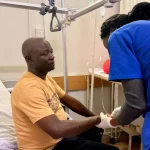


“On public transport, in bars, and at mass gatherings, everyone is talking about Ebola,” says Gloire Mumbesa, his voice heavy with an anxiety that has fast become a collective reality for millions.
A resident of Mongbwalu, a bustling gold-mining town in the eastern Democratic Republic of the Congo (DRC), Gloire is witnessing a familiar horror reawaken. Just six years after the region finally closed the chapter on one of its bloodiest epidemics, a deadly specter has returned to Ituri Province.
The words echoing through the streets of Bunia and the conflict-torn towns of eastern DRC carry a devastating weight: “Ebola has tortured us.” The World Health Organization (WHO) has officially declared the situation a Public Health Emergency of International Concern (PHEIC). This is not just a localized outbreak; it is a fast-evolving regional crisis.
The Threat of a Rare Strain: Why 2026 is Different
The panic paralyzing eastern DRC is not just rooted in historical trauma—it is driven by a terrifying scientific reality. The culprit behind this latest resurgence is the Bundibugyo ebolavirus strain, a less common variant of the virus.
The Guardian
Unlike the more frequent Zaire strain, which ravaged the country in past epidemics, the Bundibugyo strain presents a critical vulnerability for frontline responders:
Wikipedia
The Medical Blindspot: There are currently no approved vaccines or targeted therapeutic treatments available for the Bundibugyo strain of Ebola.
International Rescue Committee
During recent outbreaks, medical teams relied heavily on the Ervebo vaccine to ring-fence communities and halt transmission. In 2026, health workers are fighting a lethal hemorrhagic fever with their hands tied, forced to rely strictly on isolation and supportive clinical care.
World Health Organization (WHO)
+ 1
A Cascade of Deaths: How the Outbreak Exploded
The current epidemic trace back to late April, stealthily gaining traction before health systems sounded the alarm. The suspected index case—a dedicated nurse in the Rwampara health zone—succumbed to severe fever, internal bleeding, and profound weakness on April 24.
World Health Organization (WHO)
+ 1
What followed was a tragic domino effect, amplified by deep-seated cultural traditions. In Mongbwalu, the virus exploded following a massive, open-casket funeral procession traveling from the provincial capital of Bunia.
The Guardian
[Timeline of Acceleration]
April 24: First suspected death (healthcare worker) in Bunia.
Late April: Large open-casket funeral brings virus to Mongbwalu mining hub.
May 1-13: Mortality rate spikes from 9% to 31% in local medical wards.
May 15: Laboratory confirmation of Bundibugyo virus; outbreak declared.
May 16: WHO declares a Global Public Health Emergency (PHEIC).
By the time the emergency was declared, the virus had already infiltrated families. At the Mongbwalu General Referral Hospital, the mortality rate in the internal medicine ward catastrophically leaped from 9% in April to 31% by mid-May, highlighting how quickly the virus overpowers standard medical capacity.
Xinhua
A Perfect Storm: Conflict, Displacements, and Urban Spread
Containing an Ebola outbreak requires meticulous contact tracing, rapid isolation, and trust. However, eastern DRC is a region where trust is a scarce commodity and stability is nonexistent.
World Health Organization (WHO)
+ 1
Ituri and North Kivu provinces have been trapped in an enduring humanitarian crisis, plagued by systemic violence between rebel groups and government forces.
PBS
Why Containment is Struggling
Decimated Health Systems: Decades of conflict and recent international aid cuts have left local hospitals severely underfunded and under-equipped.
The Guardian
The Goma Case: Panic intensified globally when a confirmed case was identified in Goma—a massive, strategically vital border city. A woman traveled to the rebel-adjacent metropolis from Bunia after her husband died of the virus, proving that urban centers are already exposed.
YouTube
+ 1
High Population Mobility: Ituri is an economic crossroads, heavy with migratory gold miners and traders constantly crossing borders.
The Guardian
The security crisis makes tracking the virus incredibly dangerous. Aid organizations, including the International Rescue Committee (IRC) and UNICEF, have warned that ongoing hostilities severely hinder rapid response teams from reaching rural hotspots.
The Guardian
International Spillover: The Regional Clock is Ticking
Ebola does not respect political borders. Because of the heavy trade and migration networks connecting the DRC to East Africa, the virus has already broken containment lines.
World Health Organization (WHO)
Neighboring Uganda has confirmed imported cases of the Bundibugyo strain in its capital city, Kampala, including one fatality. In a desperate bid to shield its population, Rwanda temporarily restricted traffic across its highly volatile border checkpoint with Goma, dealing a massive economic blow to cross-border merchants.
World Health Organization (WHO)
+ 1
The crisis has also touched the international humanitarian community. Dr. Peter Stafford, an American physician working with the medical organization Serge in Bunia, tested positive for the virus after treating infected patients. He, along with several colleagues, has been medically evacuated to specialized isolation facilities in Germany for monitoring.
International Rescue Committee
+ 1
The Human Toll and the Crisis Ahead
As the government scrambles to open dedicated Ebola Treatment Centers across Ituri, the economic panic among everyday citizens is growing just as fast as the medical threat. “We are stunned by the resurgence,” says Dieudonné Lossadekana, a resident of Bunia. “For us, it’s heartbreaking.”
The Guardian
For the people of the DRC, health regulations mean lockdowns, restricted movements, and the closing of markets—measures that cut off the hand-to-mouth survival of families who are already struggling to afford food due to the war.
The Guardian
Current Situation at a Glance (May 2026)
Suspected Cases 540+ and rapidly climbing
Confirmed Fatalities 131+ deaths across DRC and Uganda
Highest Risk Group Frontline healthcare workers (multiple fatalities reported)
Global Status Level 3 Corporate Emergency (UNICEF) / WHO PHEIC
The global community is responding, with tons of emergency supplies, personal protective equipment (PPE), and water purification systems arriving in Bunia. But in a region where the healthcare system is already on its knees, the race against a vaccine-resistant virus is a fight against time.
Unicef
For Gloire, Dieudonné, and millions of others in eastern Congo, the prayer is simple: that the international community moves fast enough to ensure history does not repeat itself.
To monitor this health crisis further:
Track the latest WHO and Africa CDC situation updates
Analyze the differences between Zaire and Bundibugyo Ebola strains