

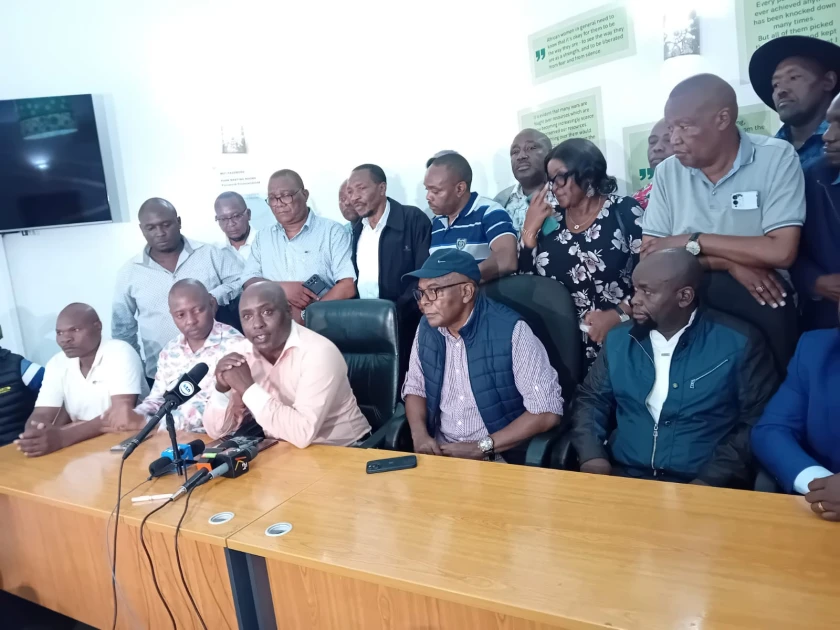
Kenya is facing an unprecedented transport shutdown that threatens to paralyze commuter transit, supply chains, and economic activity across the country. Following a high-stakes, emergency consultative meeting held in Nairobi, a powerful coalition of over 15 industry players under the Transport Sector Alliance umbrella has officially declared a nationwide strike starting at midnight tonight.
The industry-wide downing of tools is a direct, united protest against the latest retail pump price reviews announced by the Energy and Petroleum Regulatory Authority (EPRA). The regulator hit the sector with a massive price surge, pushing Super Petrol to Ksh 214.25 per litre and Diesel to an overwhelming Ksh 242.92 per litre in Nairobi.
The alliance—which commands a near-total monopoly on the country’s logistical and commuter networks—warned that no commercial, public service, or private logistics vehicles will be operating on Monday, May 18, 2026, until their grievances are addressed by the state.
1. The All-Under-One-Roof Alliance: Who is Participating?Unlike previous localized or factional matatu strikes, this specific industrial action represents one of the most coordinated shutdowns in modern Kenyan history. Sector leaders have successfully bridged sub-sector divides to present a completely unified front. The Strike Coalition Matrix
┌───────────────────────────────────────┬───────────────────────────────────────┐
│ Participating Sub-Sectors │ Operational Impact Area │
├───────────────────────────────────────┼───────────────────────────────────────┤
│ • Matatu Owners Association (MOA) │ Urban commuter routes & long-distance │
│ • Truckers Association of Kenya (TAK) │ Port logistics, corridor cargo flows │
│ • Digital Taxi Association of Kenya │ App-based ride-hailing services │
│ • Boda Boda & Tourist Vehicle Groups │ Last-mile transit & holiday safaris │
└───────────────────────────────────────┴───────────────────────────────────────┘
Speaking on behalf of the commercial haulage sector, Truckers Association of Kenya (TAK) General Dennis Kilia—who represents over 20,000 members managing roughly 40,000 trucks—made the stance clear: “From Mombasa to Busia, Mandera to Isebania, no trucks will be on the road on Monday. Keep your truck parked until the government listens to us.” Concurrently, Matatu Owners Association Chairman Albert Karakacha warned that standard transport infrastructure would effectively freeze, stating that operators have also been instructed to implement an immediate 50% increase in fares on any emergency or subsequent routes to sustain baseline operations moving forward. 2. The Hard Demands: What Operators Want From the Government
Transport Sector Alliance has structured a hard-hitting list of ultimatums directed at Energy Cabinet Secretary Opiyo Wandayi, the National Treasury, and state planners.The players argue that while the government claims to have used approximately Ksh 5 billion from the Petroleum Development Levy (PDL) Fund to moderate the price surge, the resulting figures remain completely unlivable for the common mwananchi. The Alliance’s Core Manifest of Demands:
• Immediate Withdrawal: The complete reversal of the May 14 EPRA fuel price increases.
• Price Standardization: Harmonizing fuel brackets to prevent illegal product adulteration with kerosene.
• Institutional Disbandment: Dissolving EPRA, which operators accuse of enabling predatory pricing frameworks.
• Market Liberalization: Dismantling tight state controls to allow fair, market-driven petroleum competition.
The alliance expressed deep frustration over the pricing logic used for the current May–June review cycle. They questioned how the regulator justified raising the price of diesel by a staggering Ksh 46.29 per litre within a single window while leaving kerosene prices completely untouched, citing structural inconsistencies that hurt essential commercial consumers
. 3. The Legal Battle: High Court Challenge Enters the FrayAs the transport infrastructure braces for physical disruptions and planned peaceful demonstrations, the fight has simultaneously spilled over into the judiciary. A formal petition has been filed at the High Court by citizen Francis Awino, seeking an emergency conservatory order to suspend the implementation of the new pump prices entirely. Key Focus Areas of the Awino High Court Petition
1. Lack of Public Participation: Arguing EPRA bypassed constitutional public engagement before raising rates.
2. Financial Transparency: Demanding full disclosure of the exact calculation metrics, including landed costs.
3. PDL Accountability: Requesting a forensic breakdown of how the Ksh 5 billion stabilization fund was spent.
The legal petitioner is challenging the state’s transparency, demanding that the National Treasury publish a line-by-line accounting of all applicable taxes and levies built into the pricing formula, as well as the environmental technical reports behind recent fuel standard waivers. 4. Commuter Safety and Travel Outlook for Monday MorningFor millions of Kenyan workers, students, and business owners, Monday morning presents a massive logistical challenge.
With the strike set to go live at midnight, transit terminals like the Nairobi Central Station, Kencom, Machakos Country Bus, and regional hubs in Kisumu, Mombasa, and Eldoret are expected to be heavily affected.Security teams are urging citizens to exercise extreme caution. While the organizers have insisted that the protests are intended to remain peaceful and constitutional, the Matatu Owners Association has warned that major transport corridors could experience blockages if their cries continue to be ignored. Commuters are highly advised to review their travel plans, stay tuned to live digital news updates, and expect significant delays or absolute service absences during the morning rush hours. Conclusion: A Nation in Suspense
The imminent transport shutdown places significant pressure on President William Ruto’s administration, which is already working to balance structural economic reforms against rising public dissatisfaction over the cost of living. With both public transit systems and heavy commercial logistics lines completely aligned on this industrial action, the cost of a prolonged standoff will be measured in billions of shillings of lost economic productivity. The question now remains: Will the state call for urgent emergency negotiations before Monday morning, or is Kenya heading into a prolonged logistical lockdown?