

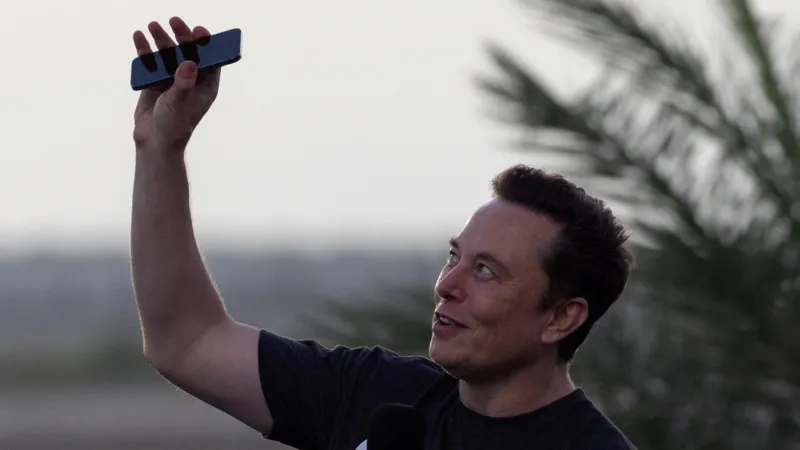
When Elon Musk’s SpaceX executed a staggering $60 billion buyout of Anysphere—the parent company behind the AI-powered code editor Cursor—Wall Street analysts focused entirely on stock prices, valuations, and data center capacities.
But across Reddit, X, and Silicon Valley developer channels, the conversation was completely different. The tech world wasn’t talking about market cap; they were talking about “Vibe Coding.”
Once dismissed as a fleeting tech meme, the concept of vibe coding has officially gone corporate. By backing the world’s most advanced AI editing interface with the sheer computing gravity of his $2 trillion empire, Musk is signaling the end of traditional programming. The deal forces an existential question onto millions of developers worldwide: When an AI can write, debug, and deploy an entire application from a simple text prompt, what happens to the human engineer?
What on Earth is “Vibe Coding”?
To understand the sheer magnitude of this acquisition, one must understand how coding has shifted over the last eighteen months.
Historically, software engineering required deep syntax knowledge, meticulous debugging skills, and hours spent tracking down missing semicolons. Early AI assistants acted like glorified auto-complete tools, suggesting lines of code but still requiring heavy human oversight.
“Vibe Coding” represents a massive paradigm shift. Powered by Cursor’s proprietary Composer and Agent Mode, a developer no longer writes line-by-line code. Instead, they act as a high-level creative director or conductor. They describe the feature they want in plain English, and the AI autonomously traverses the entire codebase—editing dozens of files simultaneously, running local tests, fixing its own bugs, and delivering a finished feature.
[Traditional Coding] -> Write Code -> Debug -> Fix Syntax -> Deploy (Hours/Days)
[Vibe Coding] -> Describe Concept -> AI Agents Execute -> Review -> Deploy (Minutes)
The programmer’s primary job shifts from executing code to managing the vibe and intent of the software. It’s a workflow that has allowed lone builders to launch fully functional SaaS (Software-as-a-Service) products in a single weekend.
The Battle for the Developer’s Desktop
By spending $60 billion to lock down Cursor just days after the historic SpaceX IPO, Musk has successfully intercepted a critical bottleneck in the tech industry: the developer’s desktop environment.
While tech giants like Microsoft (with GitHub Copilot) and Amazon (with Q) have poured billions into their own coding assistants, Cursor has quietly become the darling of elite engineers. Companies like Uber, Shopify, and Adobe have seen massive internal adoption of the tool because its agentic workflows are remarkably fast.
The Coding Tool Landscape
Feature / Capability Cursor AI (SpaceX) Traditional Copilots
Workflow Style Agentic (Multi-file autonomous edits) Linear (Line-by-line suggestions)
Primary Interface Natural Language “Composer” Standard code completion
Compute Engine Powered by xAI’s Memphis Supercluster Standard public cloud networks
Core Target “Vibe Coders” & Rapid Prototyping Traditional full-stack engineers
By integrating Cursor directly into his xAI ecosystem, Musk isn’t just giving developers a better tool—he is building the ultimate data loop. Every time a developer uses Cursor to fix an error, they are training Musk’s underlying neural networks on how to solve complex engineering problems in real-time.
The Developer Dilemma: Evolution or Extinction?
The reaction from the global programming community to the acquisition has been deeply polarized.
Optimists view the merger as the ultimate democratization of technology. With Cursor backed by unlimited capital and processing power, the barrier to entry for building software drops to near zero. A graphic designer, an accountant, or a high school student can now materialize complex software ideas without spending years learning computer science.
Conversely, a wave of anxiety is rippling through junior developers and computer science departments. If a single senior engineer utilizing Cursor’s “Agent Mode” can match the output of an entire five-person development team, the entry-level job market for software engineering faces a severe contraction.
The Bottom Line
Elon Musk did not buy Cursor to build a better text editor; he bought it to command the language of the future. As the software matures under the SpaceX and xAI umbrella, the line between “programming” and “thinking out loud” will dissolve completely.
For the modern software engineer, the message is undeniable: the era of the pure syntax coder is drawing to a close. The age of the vibe coder has officially arrived.