

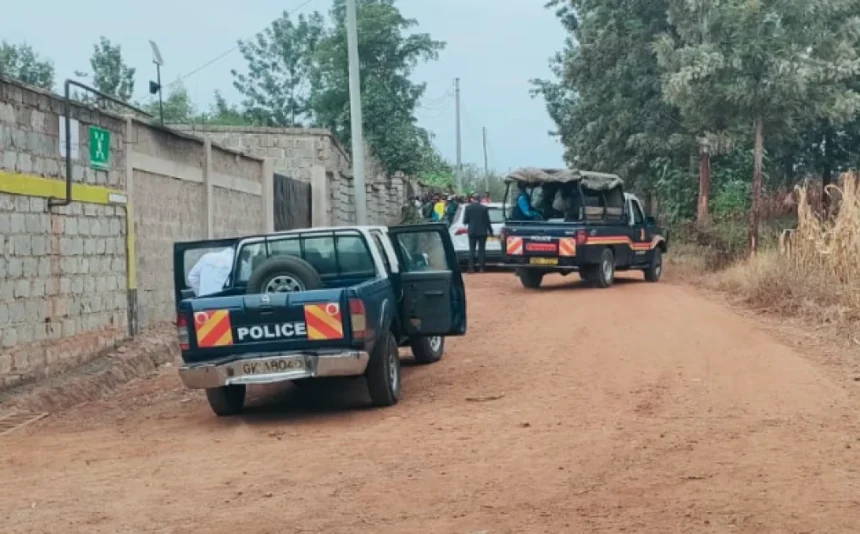
When news broke across Kenya that a senior police commander had been arrested for allegedly directing a sophisticated kidnapping and extortion network within the capital, it marked a turning point in the public’s perception of law enforcement accountability.
For months, victims had shared harrowing stories of being intercepted in broad daylight, bundled into unmarked vehicles, and forced to transfer astronomical sums under the threat of physical harm or fabricated capital charges. But when investigative units from the Directorate of Criminal Investigations (DCI) and internal affairs traced the operational hub of this syndicate straight to an executive office inside the police service, the narrative shifted from isolated street crime to institutional betrayal.
Now, as the case transitions from field investigations to formal judicial proceedings, the nation watches intently. This third deep-dive analysis examines the courtroom charges, the legal hurdles in prosecuting high-ranking officers, the response of civil society watchdogs, and what this landmark trial means for the future of justice in Kenya.
The Legal Framework: Key Charges Facing the Senior Officer
Prosecuting a high-ranking police commander requires a meticulously built case. Unlike civilian criminals who operate outside state structures, a senior officer can leverage procedural knowledge to challenge evidence chain-of-custody, contest mobile geofencing logs, and attempt to intimidate junior witnesses.
The Director of Public Prosecutions (DPP), working alongside specialized investigators, has assembled a battery of severe criminal charges under the Penal Code and anti-corruption statutes:
+———————————————————————————–+
| PRIMARY CHARGES FILED IN COURT |
+———————————————————————————–+
| 1. KIDNAPPING WITH INTENT TO EXTORT (Section 258 of the Penal Code) |
| • Carrying statutory penalties up to life imprisonment. |
| |
| 2. ABUSE OF OFFICE & CORRUPTION (Anti-Corruption and Economic Crimes Act) |
| • Weaponizing state authority, equipment, and personnel for private gain. |
| |
| 3. ROBBERY WITH VIOLENCE (Section 296(2) of the Penal Code) |
| • Extorting funds at gunpoint using state-issued firearms and restraints. |
| |
| 4. CONSPIRACY TO COMMIT A FELONY |
| • Coordinating civilian gang operatives and rogue junior officers. |
+———————————————————————————–+
Each charge targets a specific layer of the operation: the physical act of abduction, the financial extortion via digital money transfers, and the structural corruption that allowed the syndicate to operate undetected across multiple police jurisdictions.
Anatomy of the Prosecution’s Evidence
To secure a conviction against a well-connected senior officer, state prosecutors are relying on three primary pillars of evidence designed to withstand defense objections:
1. Forensic Digital Evidence and Telecommunication Geofencing
Cyber-crime specialists extracted call data records (CDRs) and cell tower handovers showing real-time coordination between the officer’s personal devices, official station radios, and mobile devices used by field abductors. Geofencing data placed the officer’s digital footprint in close proximity to holding safehouses during active ransom negotiations.
2. Financial Intelligence and Asset Tracking
Financial intelligence units audited bank accounts, mobile money wallets, and asset registries linked to the accused officer and immediate associates. Unexplained wealth spikes matching the exact dates and amounts of ransom payouts made by victims’ families provide a direct financial link to the criminal enterprise.
3. Testimonial Evidence from Whistleblowers and Victims
Crucially, state witness protection programs have been activated for junior officers within the station who agreed to testify about compromised station logs, suppressed missing person files, and unauthorized deployments of service vehicles during abduction windows.
Systemic Analysis: Why Prosecuting Rogue Officers Is Challenging
Historically, prosecuting police officers in Kenya has been fraught with legal and logistical hurdles. Understanding why this case is a crucial test for the justice system requires examining the structural obstacles that often complicate police prosecutions:
Trial Challenge Traditional Obstacle Strategy in Current Prosecution
Witness Intimidation Junior officers and civilian victims fear retaliation from colleagues of the accused. Placement of key witnesses under the national Witness Protection Agency (WPA).
Evidence Tampering Station Occurrence Books (OBs) and firearms logs can be altered or misplaced. Early digital imaging and forensic lock-down of physical station records by DCI.
Bail & Interference High-ranking officers often secure early bail, allowing them to influence subordinates. Prosecutors actively opposing bail, citing risks of witness interference and flight risks.
Inter-Agency Friction Conflict between internal police oversight bodies and regular police branches. Joint taskforce execution involving the DPP, DCI, and independent oversight units.
Civil Society and Public Reaction: Demanding Institutional Reform
The arrest and upcoming trial have energized human rights organizations, legal fraternities, and civil society groups across Kenya. Organizations such as the Law Society of Kenya (LSK), the Independent Policing Oversight Authority (IPOA), and human rights networks have issued strong statements calling for systemic overhauls rather than isolated prosecutions.
THE CYCLE OF ACCOUNTABILITY & REFORM
[ High-Profile Arrest ] ➔ [ Transparent Judicial Trial ]
│
▼
[ Independent Oversight ] ◄── [ Systemic Vetting & Audits ]
Civil society leaders argue that prosecuting one senior commander—while necessary—leaves the broader institutional framework vulnerable if root causes are ignored:
The Need for Comprehensive Vetting: Demands have resurfaced for a fresh vetting exercise targeting regional commanders, station commanders (OCSs), and heads of specialized crime units.
Strengthening IPOA’s Operational Independence: Calls to grant independent oversight bodies direct prosecutorial powers rather than relying solely on internal police investigative channels.
Protection for Citizen Informants: Establishing secure, encrypted digital reporting channels where members of the public can report police extortion without fear of retribution.
What This Case Means for the Future of Kenyan Policing
The prosecution of a senior police officer linked to a kidnapping and extortion ring represents more than a dramatic courtroom trial; it is a battle for the soul of public safety in Kenya.
If the justice system delivers a swift, transparent, and legally sound trial resulting in accountability, it will send a powerful deterrent message through the ranks of the police service. It demonstrates that a badge provides no immunity against the rule of law.
However, if the case collapses due to procedural loopholes or compromised evidence, it risks deepening public cynicism and further eroding trust between citizens and those sworn to protect them.
As the judicial process unfolds in the coming months, ordinary citizens, legal experts, and international observers remain unified in one clear expectation: equal justice under the law, regardless of rank or uniform.
Practical Guide: Your Legal Rights During Law Enforcement Encounters
In light of ongoing efforts to root out rogue elements, every citizen should remain informed of their constitutional protections under Kenyan law:
Right to Know the Reasons for Arrest (Article 49 of the Constitution): An officer must immediately inform you of the reason for your arrest in a language you understand.
Right to Remain Silent: You have the right to remain silent and refuse to answer questions until your legal counsel is present.
Right to Communication: You must be allowed to contact your spouse, partner, family member, or lawyer immediately upon detention.
Demand Official Station Booking: Never agree to settle “disputes” or “charges” in unmarked vehicles or secluded locations. Insist that all interactions take place at an official, registered police station desk where your presence is recorded in the Occurrence Book (OB).