

On Monday, May 4, 2026, the political landscape of India underwent a seismic shift as the Bharatiya Janata Party (BJP) secured a historic victory in the West Bengal Assembly elections. Overthrowing the Trinamool Congress (TMC) after 15 years of rule, the BJP has crossed the majority mark of 148 seats, signaling the end of the “Didi” era in Kolkata.
1. The Results: A Saffron Surge
As counting continues, the trends show a decisive mandate for the BJP, marking the first time the party will form a government in West Bengal since India’s Independence.
-
Seat Count: As of early evening, the BJP is leading in over 200 seats, comfortably past the 148 needed for a majority in the 294-member House. The TMC is currently ahead in roughly 70–80 seats.
-
The Big Battle: In a high-stakes showdown in Bhabanipur, Chief Minister Mamata Banerjee maintained a narrow lead over her former aide-turned-rival Suvendu Adhikari, even as her party faced a statewide collapse.
-
Voter Turnout: The election recorded a historic 92.47% voter turnout, the highest since Independence, suggesting a massive wave of anti-incumbency.
2. Why the “Bastion” Fell: 5 Key Factors
Political analysts attribute the BJP’s breakthrough to several strategic and social shifts:
-
The Women’s Vote: Despite the TMC’s popular welfare schemes like Lakshmir Bhandar, the BJP made significant gains among women, specifically highlighting law and order concerns following the RG Kar incident.
-
Anti-Incumbency: After 15 years in power, the TMC faced heavy criticism over teacher recruitment scams and allegations of “goon culture” and corruption at the grassroots level.
-
Government Employee Outreach: Union Home Minister Amit Shah’s promise to implement the Seventh Pay Commission within 45 days of taking power resonated deeply with the state’s significant chunk of government employees.
-
Security Narrative: The BJP successfully campaigned on issues of “security” and “national identity,” accusing the TMC of minority appeasement and failing to protect the state’s cultural heritage.
-
Polarization: The election saw sharp ideological divides, with the BJP focusing on “infiltrators” and Hindutva, while the TMC emphasized “Bengali identity.”
3. The Aftermath: A Resignation and a Celebration
The atmosphere in West Bengal is a study in contrasts as the results solidify:
-
Mamata Banerjee’s Resignation: The Chief Minister has sought an appointment with Governor R.N. Ravi for 4:30 PM today to tender her resignation, effectively ending her decade-and-a-half tenure.
-
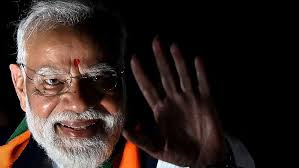
Modi’s Victory Lap: Prime Minister Narendra Modi is scheduled to visit the BJP headquarters in New Delhi at 6:30 PM to celebrate the win, which many view as a crucial stepping stone for the 2029 general elections.
-
Economic Outlook: Bengal’s business community has reacted positively to the news, with market leaders predicting a boom in industrial infrastructure and job creation under a “Double Engine” government.