

1. The “Wrong Signal” to Putin
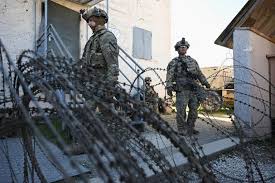
Senator Roger Wicker (R-MS) and Representative Mike Rogers (R-AL)—the chairs of the Senate and House Armed Services Committees—released a startling joint statement expressing “deep concern” over the Pentagon’s plan to pull approximately 5,000 troops (roughly one brigade) from Germany.
-
The Argument: The lawmakers argued that “prematurely reducing” America’s forward presence in Europe undermines the deterrent effect that has kept the peace since 2022.
-
The Recipient: They explicitly stated that the move sends the “wrong signal” to Vladimir Putin, whose invasion of Ukraine has now entered its fifth year.
-
The Alternative: Rather than bringing the troops home, Wicker and Rogers suggested moving them further East (closer to Poland or the Baltics) to maintain a “strong deterrent” against Russian aggression.
2. The Catalyst: A Diplomatic Rift
The withdrawal announcement followed a week of deteriorating relations between Washington and Berlin.
-
The Iran Spat: German Chancellor Friedrich Merz recently criticized the U.S. strategy in the Iran war, claiming Washington was being “humiliated” by Tehran and lacked a clear exit strategy.
-
Trump’s Response: President Trump, seething at European allies over their lack of support for the U.S.-Israel campaign against Iran, retorted that the U.S. would cut troop levels “a lot further” than the initial 5,000.
-
The Missile Blow: As part of the drawdown, the U.S. has also scrapped a Biden-era plan to deploy long-range Tomahawk missiles to Germany—a deterrent Berlin had fought hard to secure.
3. The “5% GDP” Expectation
The withdrawal comes as NATO enters a new era of “burden sharing.”
-
NATO’s Stance: NATO spokesperson Allison Hart noted that the adjustment underscores the need for Europe to take on more responsibility.
-
The New Target: Many NATO allies are now moving toward a defense spending target of 5% of GDP, a massive increase from the previous 2% benchmark.
-
The Warning: Wicker and Rogers cautioned that while Europe is stepping up, building the capacity to replace conventional U.S. deterrence “will take time,” and a sudden vacuum could be dangerous.