
The Hard Data That Made Brighton Yegon Bomet’s Top-Performing MP

When leadership rankings come out, it is easy for critics to dismiss them as clever public relations stunts. But in the case of Konoin MP Hon. Leonard Yegon Brighton, the…

Christopher Ajwang

Gachagua’s Strategy to Delay Naming the 2027 Flagbearer

The United Opposition in Kenya is currently playing a high-stakes game of political poker, and Democracy for the Citizens Party (DCP) leader Rigathi Gachagua just raised the ante.   For…

Christopher Ajwang

How the Freedom 250 Naval Stage Became a Political Battleground

The celebration of America’s 250th Independence Day will be remembered for generations—not just for the jaw-dropping scale of its maritime display, but for the fierce ideological lines drawn right in…
Christopher Ajwang

How the Freedom 250 Naval Stage Became a Political Battleground

The celebration of America’s 250th Independence Day will be remembered for generations—not just for the jaw-dropping scale of its maritime display, but for the fierce ideological lines drawn right in…

Christopher Ajwang

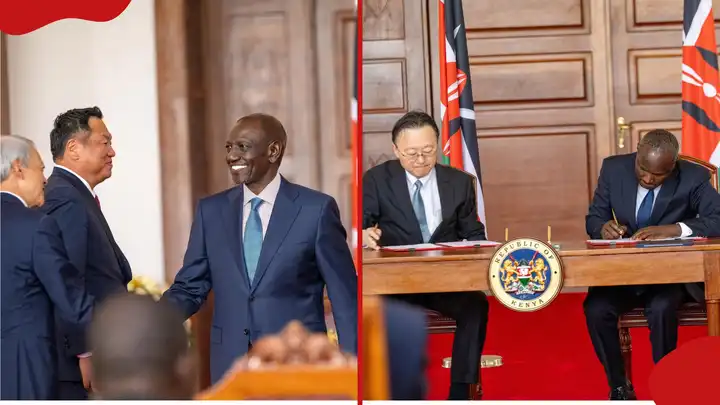
While the industrial impacts of the newly signed KSh 22.1 billion (25 billion Yen) package between Nairobi and Tokyo have been highly celebrated by manufacturers, economists are closely analyzing the structural mechanics of the financing itself.The agreement, finalized at State House by National Treasury Cabinet Secretary John Mbadi and Atsuo Kuroda, CEO of Nippon Export and Investment Insurance (NEXI), is intentionally structured through a Samurai Bond framework. This move represents a major, tactical evolution in how the Kenyan government intends to manage its national debt portfolio moving forward. What is a Samurai Bond?A Samurai bond is a yen-denominated bond issued in Tokyo by a foreign government or non-Japanese corporation. These instruments are strictly subject to Japanese regulations and are primarily marketed toward institutional Japanese investors.[Kenyan National Treasury] ─── Issues Yen Debt ───> [Tokyo Capital Market] │ │ (Backed by NEXI Guarantee) (Buys Low-Yield Samurai Bonds) ▼ ▼ Spends KSh 22.1B in Nairobi Receives Stable, Low-Risk Interest By entering the Japanese capital markets through this specialized pathway, the National Treasury is intentionally moving away from traditional, expensive dollar-denominated Eurobonds.The Fiscal Strategy: Lowering the “Very High” Cost of DebtThe decision to utilize a Samurai structure is a key component of a broader, defensive debt management strategy outlined by the National Treasury’s Directorate of Debt Management.With international markets remaining highly volatile and U.S. Federal Reserve interest rates keeping commercial dollar borrowing exceptionally expensive, Kenya has actively shifted its focus. According to Treasury officials, the primary objective is no longer managing short-term refinancing risks, but aggressively lowering the actual baseline cost of servicing external debt. Why Yen-Denominated Borrowing Makes Fiscal Sense:The Interest Rate Advantage: Historically, the Bank of Japan maintains significantly lower benchmark interest rates compared to the U.S. Federal Reserve or European Central Bank. Borrowing in Yen allows Kenya to lock in highly favorable coupon rates that would be impossible to secure on the open Eurobond market.The NEXI Credit Shield: The KSh 22.1 billion facility is backed by credit insurance and trade guarantees from NEXI, alongside Japanese commercial banking syndicates. This sovereign Japanese backing drastically lowers the risk profile for investors, driving down the borrowing premium (spread) that Kenya has to pay. Long-Term Breathing Room: The Samurai facility features a structured seven-year term. This extended runway gives the localized ministries of Energy and Industry ample time to convert the capital injection into functional economic productivity before principal repayments scale up. Balancing the Volatility: The Risk of Exchange Rate FluctuationsWhile the Samurai bond format offers immediate relief from high interest rates, it introduces a unique macroeconomic challenge: currency risk.Because the loan is denominated entirely in Japanese Yen, the true cost of repayment is tied directly to the future performance of the Kenyan Shilling ($KSh$) against the Yen ($¥$).Economic ScenarioImpact on Treasury LedgerDebt Servicing ConsequenceShilling Strengthens Against YenFewer Shillings required to purchase repayment YenThe real cost of the loan decreases for taxpayersYen Appreciates / Shilling WeakensMore Shillings required to clear the same 25B Yen debtThe domestic debt burden artificially expandsTo protect the national budget against sudden foreign exchange shocks over the seven-year timeline, the National Treasury is expected to deploy structured hedging mechanisms, coordinating parallel sustainability-linked bonds and debt swaps to keep repayment lines highly predictable.A New Era of Diversified FundraisingKenya’s entry into Tokyo’s capital markets signals a calculated transition toward a highly diversified, multi-currency debt portfolio. Beyond the Samurai bond framework, the National Treasury is actively laying the groundwork for alternative international issuances, including exploring Panda bonds denominated in Chinese Yuan and targeted green bonds in Europe. By steering capital collection toward low-interest, project-specific frameworks that directly fund industrial infrastructure—like expanding local vehicle manufacturing lines and fixing 23% energy grid transmission losses—the state intends to ensure that every shilling of external debt directly expands the country’s tax base, rather than simply servicing older liabilities.You can view the official government address and see the structural parameters discussed during the signing ceremony by watching the State House Kenya-Japan Investment Forum, which highlights the specific milestones targeted under this bilateral economic framework. This footage provides direct context on how both nations plan to implement the automotive localization policies.

When discussing the newly signed KSh 22.1 billion Kenya-Japan Samurai Bond agreement, public attention naturally gravitates toward the glitz of brand-new, locally assembled vehicles and electric mobility lines rolling out…

Christopher Ajwang

The Secret Resignations: Inside the Cabinet Mutiny and Flawed Security Vetting That Ended Starmer’s Career

The public image of Sir Keir Starmer’s exit will forever be anchored to his emotional speech outside 10 Downing Street. But behind the heavy black door, the final 72 hours…

Christopher Ajwang

The Makerfield Test: How Andy Burnham’s Bold 2026 Strategy Restructured the Labour Party Rules

The sudden collapse of Sir Keir Starmer’s premiership was not just a product of sliding poll numbers; it was the culmination of a meticulously executed, high-stakes political chess game. At…

Christopher Ajwang

The Gikomba Conspiracy: Cartels, Compensation Wars, and the Political Heat Following the Latest Market Inferno

As the smoke finally clears over the charred remains of the Gorofani and fish sections at Nairobi's Gikomba Market, the conversation on the ground has rapidly shifted from immediate grief…

Christopher Ajwang

Europe’s Economic Toll: Bank of France Issues Warning Over Devastating Medium-Term Impacts of Heatwaves

As millions of French citizens endure a brutal, record-shattering summer heatwave that has triggered maximum "Red Alerts" across 35 departments, the crisis has rapidly spilled over from a public health…

Christopher Ajwang

US-Iran Shock: Trump Threatens Harsh ‘Hormuz Tolls’ as Iran Shuts Shipping Lane Over Lebanon Fighting

The newly signed interim peace agreement between Washington and Tehran has faced a severe bottleneck just hours before technical negotiations were set to open in Switzerland. In a dramatic escalation…


Christopher Ajwang
error: Content is protected !!