
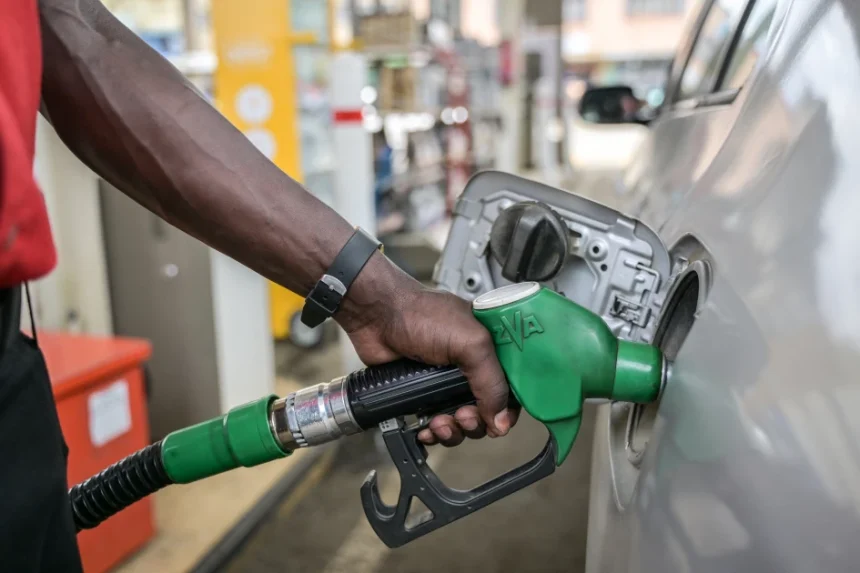
On the surface, the Energy and Petroleum Regulatory Authority’s (EPRA) June 14, 2026 pricing announcement reads like regular free-market relief. Commuters and transport operators woke up to the news that diesel prices have dropped by an absolute Ksh.10.00 per litre, retailing at Ksh.222.86 in Nairobi, while super petrol saw a minor reduction of 22 cents to settle at Ksh.214.03.
However, look beneath the official regulatory notices and a much more complex political narrative emerges.
This drop is not the result of a sudden drop in global oil costs. Instead, it represents a high-stakes damage control operation by State House. The Ksh.10 reduction is the direct execution of a political promise made by President William Ruto on May 22, designed to stop a massive public transport strike that threatened to paralyze the national economy. To make this promise a reality, the state has had to lean heavily on public funds, dipping deep into national reserves to artificially lower pump prices.
The Road to the Cut: How Matatu Operators Forced the State’s Hand
To understand why diesel dropped so sharply in June, you have to look back at the chaos of mid-May. Following a massive surge in international oil prices tied to geopolitical supply shocks, EPRA initially raised diesel prices by an incredible Ksh.46.29 per litre, pushing local pump prices to an historic high of Ksh.242.92.
THE DIESEL PRICE ROLLERCOASTER (NAIROBI)
Mid-May Peak (EPRA Price Hike) │ █████████████████████████ Ksh.242.92
───────────────────────────────────┼──────────────────────────
Late-May Ad-Hoc Lowering │ █████████████████████ Ksh.232.86
───────────────────────────────────┼──────────────────────────
Current June-July Cycle │ ████████████████████ Ksh.222.86
└──────────────────────────
0 50 100 150 200 250 (Ksh)
The massive increase triggered a massive backlash. Public transport operators immediately launched a nationwide strike, leaving thousands of commuters stranded and completely halting commerce in major urban hubs.
Following intense, six-hour crisis negotiations at State House, the government agreed to an immediate ad-hoc price reduction to get drivers back on the road, with President Ruto pledging that an additional Ksh.10 per litre would be permanently trimmed off during the June 14 review. This weekend’s EPRA announcement represents the official delivery of that political promise.
Financial Engineering: The Ksh.10 Billion Stabilization Shield
While the political promise has been fulfilled, the underlying economic data shows that the government is fighting against global market realities.
EPRA’s official landed cost metrics reveal that the international cost of importing refined diesel actually increased by 0.21 percent over the last month, climbing from $1,291.98 to $1,294.71 per cubic metre. Under normal market conditions, local diesel prices should have gone up.
To force a Ksh.10 drop despite rising import costs, the National Treasury had to engineer a massive financial intervention:
The PDL Fund Mobilization: The state drew a massive Ksh.10 billion from the Petroleum Development Levy (PDL) Fund to act as a primary price shield.
The Per-Litre Subsidy: This multi-billion-shilling cash cushion translates to a massive government subsidy of Ksh.34.07 per litre for diesel and Ksh.55.68 per litre for kerosene to absorb market pressures.
The Tax Component: Prices were calculated using a lower, temporary 8% Value Added Tax (VAT) rate on petroleum products, executed under Legal Notice No. 70 of April 15, 2026, to prevent prices from climbing higher.
Political Friction: Opposition Stays on the Attack
Despite the relief for transport operators, opposition leaders have completely dismissed the price review, framing the cuts as an unsustainable, artificial strategy ahead of next year’s general elections.
THE GEOPOLITICAL STIMULUS VS. LOCAL OPPOSITION
The State House Strategy The Opposition Critique
┌───────────────────────────────┐ ┌───────────────────────────────┐
│ • Deployed Sh10B in PDL funds │ │ • Kalonzo Musyoka labels the │
│ to honor stakeholder vows. │ VS │ cut a “temporary token.” │
│ • Eased immediate business │ │ • Demands structural budget │
│ operating cost pressures. │ │ trims to hit a Sh170 target.│
└───────────────────────────────┘ └───────────────────────────────┘
Speaking at a public event in Bungoma County, Wiper Democratic Movement leader Kalonzo Musyoka argued that keeping diesel above the Ksh.220 mark does not fix the broader structural failures hurting Kenyan families. The opposition maintains that rather than burning through emergency stabilization funds to temporarily depress prices, the government should permanently lower the cost of living by aggressively cutting state spending and removing core fuel levies.
Regional Price Variations: The Spatial Log
Because of internal distribution costs, pipeline transit charges, and varying margins, the benefits of the Ksh.10 cut vary depending on geography:
Trading Hub Super Petrol (Ksh/Litre) New Diesel Price (Ksh/Litre) Kerosene Status (Ksh/Litre)
Nairobi Ksh.214.03 Ksh.222.86 Ksh.191.38
Mombasa Ksh.210.87 Ksh.219.58 Ksh.188.09
Thika Ksh.213.70 Ksh.222.50 Ksh.191.02
Nakuru Ksh.212.92 Ksh.222.27 Ksh.190.81
Kisumu Ksh.213.69 Ksh.223.08 Ksh.191.63
The Road Ahead: How Long Can the Shield Hold?
By tapping the Petroleum Development Levy for Ksh.10 billion, the government has successfully restored order to the transport sector and brought short-term peace to Kenya’s roads.
However, energy analysts warn that using subsidies to mask international landed costs is a high-risk long-term strategy. If global crude prices experience another sharp spike due to ongoing international conflicts, the PDL fund could quickly be depleted. For the next 30 days, transport operators can enjoy lower operating costs, but the broader economy remains highly exposed to the volatile realities of international energy markets.
Related Broadcast Analysis
To see a comprehensive televised breakdown of the political negotiations between State House and transport syndicates, including live reactions from long-distance truck drivers and matatu crews, watch this Citizen TV Financial Reporting Segment on the June Fuel Review. This broadcast offers essential context on the sustainability of Kenya’s fuel stabilization framework.