

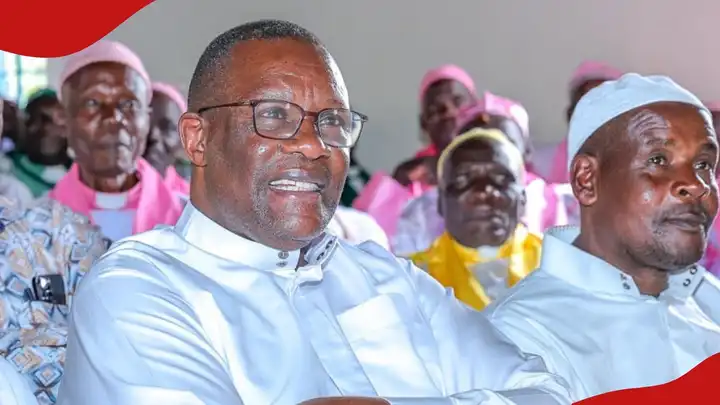
Kenya’s political space is already warming up for the 2027 General Election following a bold declaration by Eliud Owalo, who has openly stated his intention to seek the country’s top seat. By anchoring his ambition on what he calls a proven track record, Owalo has ignited fresh debate about leadership, experience, and what voters should prioritize in the next election.
Although the polls are still years away, his announcement has thrust him into early conversations around potential presidential contenders.
A Confident Entry into the 2027 Conversation
Owalo’s declaration was brief but pointed. By saying he believes in his track record, he positioned himself as a results-oriented leader rather than a career politician driven by slogans. The statement immediately drew attention, not just because of the ambition itself, but because of its timing.
Political analysts say early declarations often signal a desire to shape the narrative early, allowing a candidate to define their strengths before rivals do. For Owalo, that strength appears to be performance in previous roles.
Evaluating Owalo’s Track Record
Supporters argue that Owalo’s experience in government gives him an advantage in understanding how systems work. They point to his involvement in policy development, administration, and public sector leadership as evidence that he is not new to the complexities of governance.
Backers say Kenya needs leaders who:
Understand economic planning
Appreciate institutional reforms
Focus on service delivery
Are comfortable with data and policy
In their view, Owalo represents a technocratic approach to leadership—one that prioritizes efficiency and accountability.
Critics, however, caution that experience alone does not guarantee electoral success.
Public Reaction: Mixed but Curious
Reactions from Kenyans have been divided. On social media, some welcomed the announcement, arguing that the country needs leaders who can be judged on performance rather than political noise.
Comments such as “At least he is talking about track record” and “We need serious leadership in 2027” reflected support for his message.
Others were more skeptical, questioning whether Owalo has the grassroots networks and political machinery required to compete with established heavyweights. Some argued that Kenyan elections are often influenced by alliances, regional balance, and mobilization power—factors that may challenge a technocrat-heavy campaign.
Still, even critics acknowledged that the announcement had successfully placed Owalo in the national spotlight.
The Crowded Road to 2027
Owalo’s declaration comes at a time when several leaders are quietly or openly positioning themselves for 2027. The early signaling suggests the race may be one of the most competitive in recent history.
Political observers note that early entrants into the race often aim to:
Test public sentiment
Build name recognition
Attract potential coalition partners
Strengthen negotiating positions
By speaking early, Owalo may be seeking to avoid being sidelined later when coalition talks intensify.
Track Record vs Popular Appeal
One of the key debates sparked by Owalo’s announcement is whether performance-based leadership can outweigh popularity-driven politics. Historically, Kenyan elections have often favored candidates with strong emotional appeal, regional backing, and well-oiled political machines.
Owalo’s emphasis on track record suggests a different approach—appealing to voters tired of unfulfilled promises and eager for measurable results.
Whether this message will resonate widely remains uncertain. Analysts argue that successful presidential bids usually combine:
Proven performance
Strong messaging
Grassroots engagement
Broad alliances
Owalo’s challenge will be blending technocratic credibility with mass appeal.
What Owalo Must Do Next
If his presidential ambition is to gain traction, analysts say Owalo will need to:
Build visible grassroots structures across counties
Clarify his policy agenda beyond credentials
Engage young voters and first-time voters
Position himself clearly within or alongside major political coalitions
How he handles these next steps will determine whether his announcement evolves into a serious national campaign or remains an early signal.
Why the Announcement Matters
Even if the final 2027 ballot looks different, Owalo’s declaration matters because it broadens the conversation around leadership. It challenges voters to consider whether experience, competence, and delivery should take precedence over charisma and political theatrics.
For Kenya’s democracy, such debates are critical as the country reflects on governance, accountability, and long-term development.
Final Thoughts
Eliud Owalo’s decision to declare interest in the 2027 presidency has added a new voice to Kenya’s evolving political conversation. By placing his track record at the center of his ambition, he has invited Kenyans to scrutinize leadership through the lens of performance.