

The primary focus of this amendment is to simplify the administration of Capital Gains Tax (CGT) and align Kenya with international best practices.
Internal Reorganization: The new law introduces CGT exemptions for property transfers between a company and its shareholders during internal restructuring, provided the shareholding proportions remain unchanged.
Business Efficiency: By removing the tax burden on internal movements of assets, the government aims to encourage firms to reorganize for better operational efficiency without incurring massive tax hits.
Effective Date: Most of these fiscal changes are set to take effect starting July 1, 2026.
2. Special Economic Zones (Amendment) Bill: Upstream & Midstream Focus
This amendment significantly expands the scope of Kenya’s SEZ framework to accommodate large-scale, capital-intensive projects.
Inclusion of Oil and Gas: The SEZ regime now explicitly covers midstream and upstream petroleum operations, allowing energy companies to benefit from fiscal incentives.
Licence Tenure: To accommodate the long project cycles typical of the energy and manufacturing sectors, the law provides a minimum licence tenure of 10 years.
Harmonized Incentives: It removes legal inconsistencies and harmonizes tax incentives across different SEZ entities, making the zones more competitive for foreign direct investment (FDI).
3. The Technopolis Bill: A Home for Innovation
The Technopolis law finally provides a robust legal and regulatory framework for the management of technology and innovation hubs, specifically Konza Technopolis.
Management Framework: It establishes the formal structures for the creation, development, and governance of technopolises across the country.
Digital Hubs: This bill is seen as the legislative “anchor” for the government’s goal to position Kenya as Africa’s “Silicon Savannah,” encouraging research-driven enterprises and high-tech startups.
Political and Economic Context
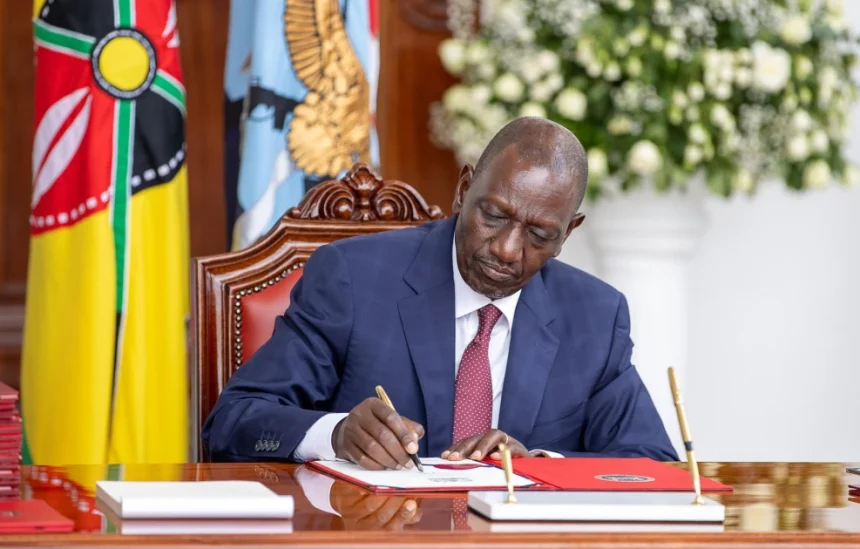
The signing ceremony was attended by Deputy President Kithure Kindiki, ICT Cabinet Secretary William Kabogo, and Attorney General Dorcas Oduor.
President Ruto emphasized that these laws are “tools for job creation,” aimed at moving Kenya from a consumption-based economy to a production-led one. By streamlining the tax code and protecting large-scale investments in SEZs and technology cities, the administration is betting on a surge in industrial activity for the 2026/27 financial year.