
The political rhetoric from opposition leaders and the legal chess game in Nairobi’s High Court have successfully delayed the operationalization of the Nanyuki quarantine site. However, the most severe blow to the project has come from the very individuals expected to navigate Kenya’s frontline defenses: the medical community.
The growing Laikipia Ebola centre medical backlash has completely shifted the debate from public administration to raw biosecurity. Led by powerful medical unions and independent healthcare experts, Kenya’s frontline professionals are refusing to accept a narrative that treats the country’s fragile health ecosystem as a convenient buffer zone for foreign geopolitical interests.
Consumers Federation of Kenya (COFEK)
“Apartheid Healthcare”: The KMPDU Strike Threat
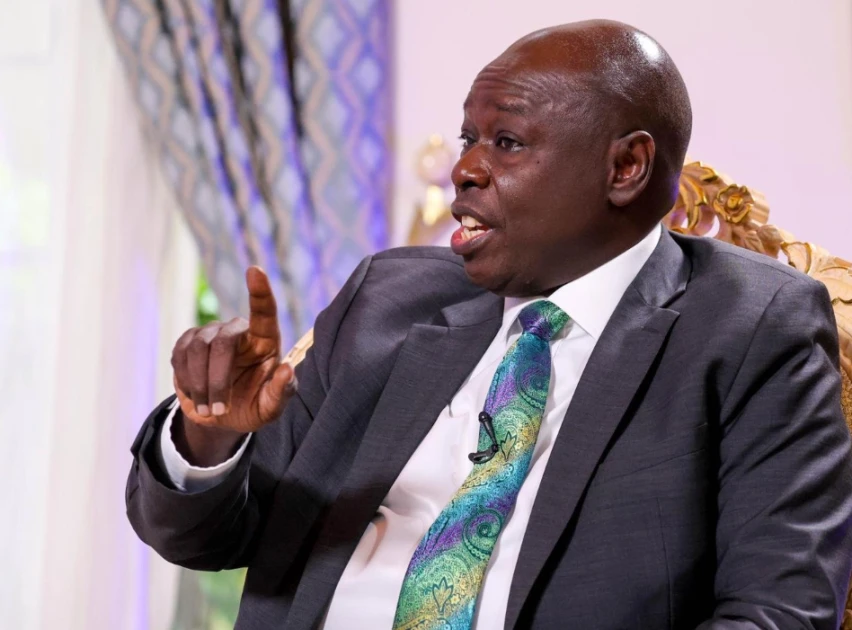
The medical resistance found its voice through Dr. Davji Bhimji Attelah, the Secretary-General of the Kenya Medical Practitioners, Pharmacists and Dentists Union (KMPDU). In a fiery press conference that went viral across East Africa, Attelah slammed the bilateral deal as an insult to local medical sovereignty and a dangerous exploitation of the country’s economic vulnerabilities.
The primary point of outrage for local doctors is the highly exclusionary operational model of the 50-bed field hospital. Initial plans revealed that the facility, despite being built on Kenyan soil at the Laikipia Air Base, was designed to be staffed exclusively by American healthcare workers flown in directly from Washington, tasked solely with treating foreign nationals evacuated from neighboring conflict zones.
Consumers Federation of Kenya (COFEK)
“We are utterly disgusted by the government’s apparent willingness to trade national biosecurity and the lives of its citizens for foreign aid. We will not sit back and watch Kenya be treated as a containment colony for a lethal pathogen that we did not generate. We will not tolerate an apartheid healthcare model on Kenyan soil. If it is too dangerous for America, it is too dangerous for Kenya.”
— Dr. Davji Bhimji Attelah, KMPDU Chairperson.
KMPDU has issued a non-negotiable 48-hour ultimatum demanding the immediate publication of all clinical safety frameworks. Failure to comply, the union warns, will trigger an immediate, nationwide industrial strike across all public hospitals—a move that would instantly paralyze Kenya’s entire healthcare sector.
The Clinical Reality: Why Medics Fear the Bundibugyo Strain
The intense anxiety within the medical community is not just a political stance; it is rooted in cold, clinical reality. The Ebola outbreak currently spreading across the border involves the highly lethal Bundibugyo strain, a variant that presents profound management challenges compared to the more common Zaire species.
Daily Maverick
To understand why Kenyan health professionals are treating this facility as an existential biohazard, it helps to look at the specific epidemiological traits of the virus:
No Approved Vaccines: While the medical world successfully developed the Ervebo vaccine to combat the Zaire strain, there is currently no approved vaccine or definitive therapeutic treatment for the Bundibugyo variant. Containment relies entirely on strict palliative isolation.
The Vector Threat to Casual Staff: While patients might be managed by American doctors, the peripheral operations of the Laikipia Air Base rely heavily on hundreds of local Kenyan casual laborers, cooks, and laundry handlers. A single tear in a protective suit or a lapse in surface decontamination could introduce a highly transmissible hemorrhagic fever into Nanyuki’s dense residential estates.
Systemic Fragility: Public health experts note that if an accidental leak occurs, Kenya’s local public hospitals lack the advanced negative-pressure isolation wards, specialized personal protective equipment (PPE), and intensive care infrastructure required to halt a rapid localized outbreak.
The Breaking Point: Shifting the Containment Strategy
For local epidemiologists, the Trump administration’s strategy represents a troubling departure from established global health protocols. Historically, when Western citizens or aid workers were exposed to highly infectious pathogens in sub-Saharan Africa, they were immediately medically evacuated back to high-containment units in their home countries—such as Emory University Hospital in Atlanta or the Royal Free Hospital in London.
The 2026 policy intentionally disrupts this precedent. US Secretary of State Marco Rubio made Washington’s domestic priorities explicit, stating that the US would not allow active Ebola risks to cross into American territory. By establishing a 50-bed staging ground in Laikipia, the US avoids the domestic political fallout of treating Ebola patients at home, while utilizing aircraft on standby to move personnel only after they are cleared or stabilized.
Furthermore, the involvement of Great Britain—which maintains a permanent, massive logistical footprint nearby through the British Army Training Unit Nanyuki (BATUK)—has added fuel to the fire. Reports that British officials are negotiating joint access to the base for their own exposed personnel have convinced local health advocates that Nanyuki is being turned into a multi-national dumping ground for biological risks.
The Medical Dilemma: Aid vs. Autonomy
The fundamental tragedy of the Laikipia controversy is the division it has caused within Kenya’s health leadership. While frontline doctors and union representatives are ready to strike to protect national biosecurity, state bureaucrats like Health PS Ouma Oluga have pleaded for calm, reminding the public that viruses “do not respect political opinions.” The Ministry maintains that the $13.5 million development package will permanently upgrade Kenya’s disease surveillance laboratories.
YouTube
+ 1
But for the nurses, clinicians, and doctors who would have to risk their lives if an accidental infection breaches the gates of the Air Base, a KSh 1.8 billion infrastructure grant is a poor trade-off for an unvetted biological hazard. Until the state can prove it has the infrastructure to guarantee absolute containment, the medical community’s message remains clear: national sovereignty and the lives of Kenyan citizens cannot be bought.
For an in-depth perspective on the medical arguments and the escalating union resistance surrounding this facility, you can review the KMPDU and Civil Society Response on the US Ebola Camp. This video provides crucial context on the specific biosecurity warnings issued by Kenyan doctors and details the union’s stance against turning local military installations into foreign quarantine zones.