

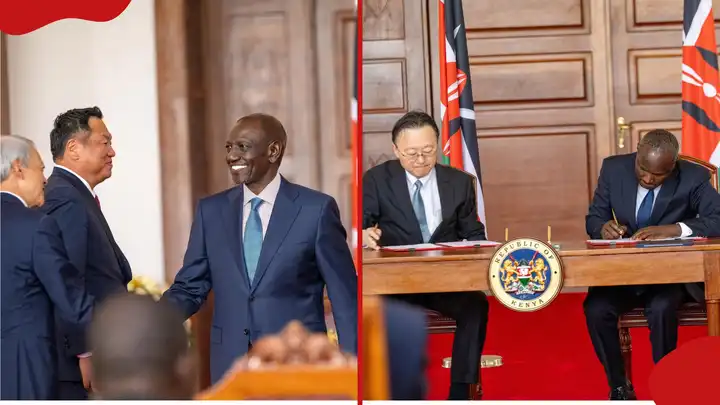
When discussing the newly signed KSh 22.1 billion Kenya-Japan Samurai Bond agreement, public attention naturally gravitates toward the glitz of brand-new, locally assembled vehicles and electric mobility lines rolling out of Nairobi factories.
However, veteran automotive manufacturers know a painful truth: you cannot run a competitive, modern heavy manufacturing plant on an unstable, expensive power grid.
To directly solve this structural bottleneck, a critical KSh 5.0 billion slice of the Japanese financing facility has been strictly ring-fenced for the Ministry of Energy. The goal is to launch an aggressive infrastructure overhaul designed to systematically crush the country’s severe grid transmission losses and, in turn, lower the baseline cost of industrial power tariffs.
The Industrial Hurdle: Why Kenya’s Grid Kills Local Assembly
For years, Kenya’s manufacturing sector has fought an uphill battle against high power costs. While the country successfully generates a massive percentage of its electricity from clean, renewable sources like geothermal energy in Olkaria, delivering that power to industrial zones like Thika, Mombasa, and Nairobi is where the system breaks down.
Kenya’s national grid suffers from an average transmission and distribution loss of roughly 23%. This means nearly a quarter of all electricity generated is simply lost as heat or wasted due to aging lines, overloaded substations, and outdated transformers before it ever reaches a factory floor.
[ Olkaria Geothermal Plant ] ── Generates 100% Clean Power ──> [ Aging Grid Lines ]
│
(23% TRANSMISSION LOSS)
▼
[ Industrial Manufacturer ] 🔻 Receives Only 77% Efficiency 🔻 Pays Higher Tariffs to Cover Leakage
Because the state utility must absorb the financial cost of this wasted energy, the financial burden is passed directly to the consumer. For manufacturers running heavy welding bays, stamping presses, and automated assembly tracks, these inflated tariffs make local production significantly more expensive than importing fully built units from Asia or Europe.
Inside the KSh 5.0 Billion “Reduction of Energy Losses” Blueprint
The Japanese-backed energy intervention approaches this infrastructure deficit with engineering precision. The fund will be deployed across three technical target zones:
1. High-Efficiency Transformer Overhauls
A massive portion of distribution leakage occurs at localized step-down transformers. The funding allows for the replacement of obsolete, leaking units with modern, high-efficiency Japanese amorphous metal transformers, which reduce core energy losses by up to 80% during low-load periods.
2. Reconductoring Industrial Corridors
The Ministry of Energy will fast-track the reconductoring of primary high-voltage transmission lines serving heavy industrial zones. Replacing older aluminum conductors with modern composite-core wires allows the grid to safely carry higher currents without overheating, eliminating thermal efficiency drops.
3. Smart Grid Integration and Stabilization
Fluctuations in power quality can damage sensitive robotic assembly equipment. The pact finances the integration of automated static var compensators (SVCs) and real-time smart grid monitoring systems. This tech stabilizes voltage levels, ensuring that factories receive a continuous, clean wave of electricity.
The Ultimate Payoff: Competitive Car Manufacturing
By aggressively tackling grid leakage, the government aims to force down the overall cost of doing business, clearing a path for the primary KSh 13.1 billion automotive manufacturing component of the deal to succeed.
Grid Metric Current Baseline Target Under Japan Pact Impact on Car Plants
National Transmission Losses ~ 23% Below 15% Billions saved in wasted utility revenue
Unscheduled Factory Outages Frequent / Monthly Near Zero in Industrial Hubs Protects sensitive assembly robotics
Industrial Tariff Competitiveness High Regional Average Regionally Competitive Lowers production cost per vehicle unit
When the cost per kilowatt-hour drops for local parts manufacturers, the financial savings ripple through the entire supply chain. It makes manufacturing heavy components locally—such as brake discs, exhaust systems, and chassis structures—financially viable.
Through this calculated pairing of energy reforms and industrial policy, Kenya is not just building a factory line; it is structurally fortifying the foundational power grid needed to keep the wheels of its automotive revolution turning permanently.