

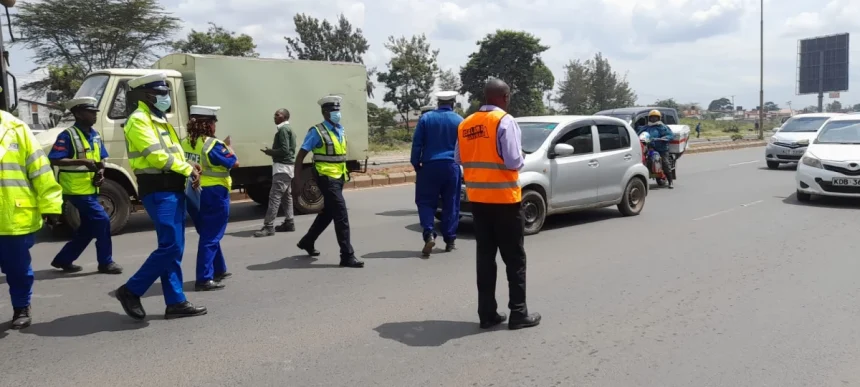
The National Transport and Safety Authority (NTSA) has made a dramatic U-turn that is raising eyebrows across Kenya. In a move few saw coming, the authority is now seeking to withdraw a court case tied to the controversial rollout of instant traffic fines—a system that had already sparked intense public backlash.
This unexpected development has left many Kenyans wondering: is the government backing down, or is this just a temporary pause before a stronger comeback?
When the instant fines system was first introduced, it was marketed as a bold step toward modernizing traffic enforcement. The idea was to eliminate delays, reduce court congestion, and deal with offenders on the spot. In theory, it sounded efficient and long overdue.
But in reality, things quickly spiraled.
Motorists, legal experts, and civil society groups pushed back almost immediately. The biggest concern? Fairness. Many argued that issuing instant penalties without giving drivers a proper chance to defend themselves could violate fundamental rights. Others questioned how the system would ensure transparency and avoid abuse.
The result was a legal showdown that forced the courts to step in and temporarily halt the rollout.
Now, NTSA’s decision to withdraw the case has added a new twist to the saga. While the authority has not fully explained the reasoning behind the move, it strongly suggests that the initial approach may have hit more resistance than expected.
For many observers, this looks like a strategic retreat.
Rather than risk a prolonged legal battle—and possibly a damaging court ruling—NTSA could be choosing to regroup behind the scenes. This could involve reviewing the legal framework, improving system design, and engaging stakeholders more effectively before attempting another rollout.
Public reaction has been mixed. Some motorists see this as a victory, a sign that citizen concerns are being heard. Others remain cautious, believing the system could return at any moment, perhaps in a more refined but equally strict form.
What’s clear is that trust has become a central issue. For any policy like instant fines to succeed, it must not only be efficient but also perceived as fair and transparent. Without public confidence, even the best-designed systems can fail.
In the meantime, Kenyan drivers can breathe a small sigh of relief. The immediate threat of automated, on-the-spot penalties has been put on hold, at least for now. Traditional traffic enforcement remains in place, giving motorists a familiar framework to operate within.
However, this pause should not be mistaken for the end of the story.
If anything, it signals that major changes are still on the horizon. The government’s commitment to reforming traffic enforcement has not disappeared—it is simply being reshaped.
As NTSA recalibrates its strategy, one thing is certain: the debate over instant traffic fines is far from settled. And when the system returns—because it likely will—it could come back more structured, more refined, and harder to challenge.