

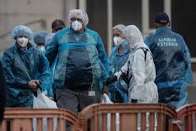
The passengers arrived at Offutt Air Force Base early Monday and were transported to the ASPR Regional Emerging Special Pathogen Treatment Center in Omaha.The Positive Case:
One American passenger has already tested positive for the Andes virus. Notably, this individual is currently asymptomatic, meaning they feel healthy despite carrying the virus.
The Symptomatic Case: A second passenger is being treated for “mild symptoms” consistent with the early stages of the virus. The 42-Day Window: Because the incubation period for hantavirus can be exceptionally long, officials have set a 42-day monitoring period. While some may stay in Nebraska, others may eventually transition to “home-based management” with daily check-ins from local health departments. Why the Public Risk is “Very Low”The CDC’s acting director, Jay Bhattacharya, was firm in stating, “This is not COVID.”
Here is why health officials are confident that the general public is not at risk:Not Airborne in the Traditional Sense: Hantavirus does not stay suspended in the air like a cold or flu. It typically requires prolonged, close contact (such as sharing a cabin or household) or direct contact with bodily fluids to spread between humans.
No “Community Spread”: The outbreak is currently confined to a specific group of travelers with a known exposure point (the ship). There is no evidence of the virus circulating in any US city or public space. No Natural Reservoir in the US:
The Andes strain is native to South America. The specific rodents that carry it do not live in North America, preventing the virus from “jumping” into the local environment.
Symptoms to Watch ForFor those under monitoring, the first signs of Hantavirus Pulmonary Syndrome (HPS) are often indistinguishable from the flu.
Early Phase (Days 1–5): Fever, fatigue, and deep muscle aches (thighs, hips, and back). Some patients report headaches, dizziness, and abdominal pain. Late Phase: Four to ten days after the initial symptoms, the “respiratory phase” begins, characterized by coughing and severe shortness of breath as the lungs fill with fluid.
Crucial Note: There is no specific vaccine or antiviral for hantavirus. Treatment is supportive, meaning doctors help the body breathe and stay hydrated until the immune system clears the virus. Early medical intervention in a specialized ICU is the single biggest factor in survival. What Happens Next?
The CDC is currently tracing passengers across at least six states—Arizona, California, Georgia, New Jersey, Texas, and Virginia. As these travelers return home, local health departments will conduct daily temperature and symptom checks.