

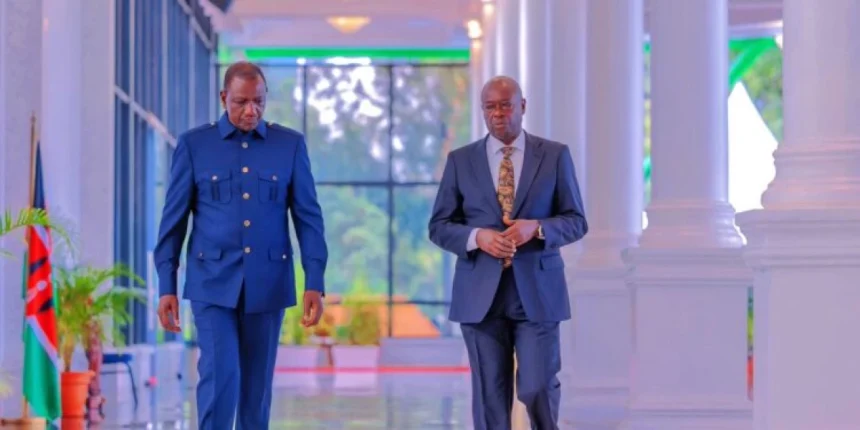
The political duel between President William Ruto and former Deputy President Rigathi Gachagua has escalated into a direct battle over performance records, economic metrics, and long-term national planning. Following President Ruto’s announcement of a nationwide consultation for Kenya’s development blueprint beyond Vision 2030 (dubbed “Vision 2060”), Gachagua has issued a high-stakes counter-strike.
YouTube
Speaking at his Wamunyoro residence in Nyeri while hosting delegations of Maasai and Central Kenya leaders, the Democracy for Citizens Party (DCP) leader revealed that he will publicly release an exhaustive, itemized “Audit of Ruto’s Four-Year Tenure” on August 10—intentionally scheduled two days before the government launches its national conversation on August 12.
People Daily
This duel reflects two starkly opposing political narratives: an executive branch pitching long-term structural transformations for future decades, contrasted with a rising opposition demanding immediate accountability for the cost of living, public sector management, and current economic conditions.
YouTube
1. The Preemptive Strike: August 10 Audit vs. August 12 National Conversation
The timing of Gachagua’s announcement is a calculated attempt to seize control of the public agenda. By presenting his audit on August 10, the DCP leader aims to frame the baseline for public discussion before the administration opens its Post-Vision 2030 public participation forums.
Citizen Digital
timeline of upcoming August political flashpoints
┌──────────────────────────────────────────────────────────────────────────┐
│ MONDAY, AUGUST 10, 2026 │
│ Gachagua releases “4-Year Audit of William Ruto’s Administration” │
│ Focus: Taxation, healthcare transition, public debt, living costs │
├──────────────────────────────────────────────────────────────────────────┤
│ WEDNESDAY, AUGUST 12, 2026 │
│ Government launches “National Conversation Beyond Vision 2030” │
│ Focus: 30-year economic charting, digital infrastructure, charter frameworks │
├──────────────────────────────────────────────────────────────────────────┤
│ LATE AUGUST 2026 │
│ Public participation forums open across 47 counties │
└──────────────────────────────────────────────────────────────────────────┘
“While you wait for August 12, I will be presenting a comprehensive audit of what has been achieved—or failed to be achieved—over these four years. Tell us what you have done today before asking us to plan for 60 years from now.”
— Rigathi Gachagua, DCP Party Leader
Gachagua’s approach seeks to pull public focus back to immediate economic pressure points, arguing that long-range vision exercises risk functioning as political diversions from present-day administrative metrics.
2. What to Expect in the August 10 Report: The Core Battlegrounds
While Gachagua has kept the specific statistical breakdowns of his report guarded, hints dropped during his engagements at his Wamunyoro residence highlight key focus areas:
┌─────────────────────────────────────────┐
│ GACHAGUA’S 4-YEAR AUDIT REPORT │
└────────────────────┬────────────────────┘
│
┌──────────────────────┬──────────────┴──────────────┬──────────────────────┐
▼ ▼ ▼ ▼
┌───────────────┐ ┌───────────────┐ ┌───────────────┐ ┌───────────────┐
│ HEALTHCARE │ │ AGRICULTURAL │ │ TAXATION & │ │ DEBT & AUDIT │
│ TRANSITION │ │ RETURNS │ │ LIVING COSTS │ │ INTEGRITY │
├───────────────┤ ├───────────────┤ ├───────────────┤ ├───────────────┤
│ Implementation│ │ Payouts and │ │ Impact of fuel│ │ Defense of │
│ challenges in │ │ input costs │ │ levies and │ │ Auditor- │
│ the SHA rollout│ │ for tea & │ │ corporate │ │ General’s │
│ and provider │ │ coffee │ │ revenue │ │ independence │
│ dues │ │ sectors │ │ collection │ │ reports │
└───────────────┘ └───────────────┘ └───────────────┘ └───────────────┘
A. The Healthcare Transition (SHA vs. NHIF)
The transition from the National Health Insurance Fund (NHIF) to the Social Health Authority (SHA) remains an active talking point. Opposition analysts emphasize operational disruptions, hospital claim backlogs, and patient out-of-pocket expenses during the transition period as key indicators of policy implementation hurdles.
B. Agricultural Sector Returns
With his primary support base heavily rooted in rural agricultural communities, Gachagua’s audit is expected to present comparative data on fertilizer subsidies, crop bonus payouts, and net profit margins for coffee, tea, and dairy farmers.
C. Fiscal Policy and Cost of Living
The report plans to evaluate the impact of tax policies, fuel price dynamics, and statutory deductions on household purchasing power. While the government points to macroeconomic stabilization—including foreign exchange reserve growth and reduced inflation—Gachagua argues that these figures have not yet translated into lower everyday expenses for citizens.
YouTube
D. Institutional Governance & The Auditor-General
Gachagua has also publicly defended independent constitutional offices, specifically raising concerns regarding executive friction with Auditor-General Nancy Gathungu over fiscal reporting. Expect the August 10 document to draw heavily from official Auditor-General reports to substantiate claims of budgetary misallocations.
People Daily
3. The Administration’s Stance: Long-Term Visioning & Macro Economic Stabilization
In defense of the administration’s record and long-term planning, President William Ruto and his cabinet allies maintain that establishing a post-Vision 2030 framework is a necessary constitutional and economic imperative.
┌────────────────────────────────────────┐
│ KENYA KWANZA ECONOMIC DEFENSE │
└───────────────────┬────────────────────┘
│
┌─────────────────────┴─────────────────────┐
▼ ▼
┌─────────────────────────────────────┐ ┌─────────────────────────────────────┐
│ MACROECONOMIC STABILIZATION │ │ POST-VISION 2030 ROADMAP │
├─────────────────────────────────────┤ ├─────────────────────────────────────┤
│ • Foreign Exchange Reserves > $15B │ │ • Public participation launching │
│ • Controlled inflation rates │ │ August 12, 2026 │
│ • Stabilization of the Kenya Shilling│ │ • Institutional charters for digital│
│ • Expanded housing & digital hubs │ │ and industrial expansion │
└─────────────────────────────────────┘ └─────────────────────────────────────┘
Speaking during his Special National Address, President Ruto highlighted structural economic accomplishments:
Foreign Reserve Accumulation: National forex reserves reaching historically strong levels above $15 billion.
YouTube
Currency & Inflation Control: Stabilization of the Kenyan Shilling alongside reduced inflation figures compared to previous years.
Capital Investments: Ongoing rollout of Affordable Housing projects, ICT digital hubs in wards, and expanded rural electrification.
Government defenders argue that political opponents are focusing narrowly on short-term adjustments while ignoring foundational structural reforms required to position Kenya alongside rapidly growing emerging economies.
4. Cross-Party Realignments: Opposition Dynamics
The rift between Ruto and Gachagua has altered broader opposition dynamics in Kenya. While Gachagua mobilizes through the Democracy for Citizens Party (DCP), other major opposition factions are navigating their own tactical positioning:
People Daily
+ 1
Political Grouping Key Figures Primary Strategy / Focus Area
Democracy for Citizens Party (DCP) Rigathi Gachagua, Governor Irungu Kang’ata Grassroots mobilization in Mt. Kenya; issuing counter-audits of executive performance.
Linda Mwananchi / Azimio Faction Kalonzo Musyoka, Edwin Sifuna Resisting backroom deal rumors with Kenya Kwanza; focusing on civil liberties and youth advocacy.
Kenya Kwanza Coalition President William Ruto, DP Kithure Kindiki Advancing long-term policy charters, infrastructure delivery, and regional diplomatic standing.
This multi-pronged opposition landscape means the government faces scrutiny from both former internal insiders who understand executive mechanics and traditional opposition figures leveraging civil society concerns.
Citizen Digital
5. Strategic Outlook: The Battle for Public Trust
As August 2026 unfolds, the clash between Gachagua’s August 10 audit and Ruto’s August 12 Vision launch will test which narrative resonates more effectively with the electorate.
For the Government: The key challenge lies in demonstrating how long-term macro-level planning delivers visible, day-to-day relief to households struggling with living costs.
For Gachagua and the DCP: The challenge will be ensuring the August 10 report presents verified, airtight data that stands up to public scrutiny, avoiding accusations of purely political fault-finding.
People Daily
With the 2027 General Election drawing closer, these competing economic briefs mark the official opening of campaign arguments that will shape Kenya’s political landscape over the next twelve months.
People Daily